
3PL Carrier Diversification: Why Single-Carrier Strategies Fail During Peak Season

Michael DeSarno
8 min read
Risk & Contingency
Share
KEY TAKEAWAYS
• Single-carrier shipping strategies fail during peak season due to volume caps, regional congestion, surcharges, and zero fallback options.
• Effective 3PL carrier diversification uses automated rate shopping, zone-based routing, and pre-negotiated surge capacity across 3-4+ carriers.
• Dual-coast warehousing (e.g., NJ + Las Vegas) amplifies carrier diversification by isolating regional disruptions and shortening transit to 2-5 days.
• Start planning carrier diversification in Q1/Q2; lock in peak season capacity by early Q4 to avoid crisis-mode decisions.
Last Updated:
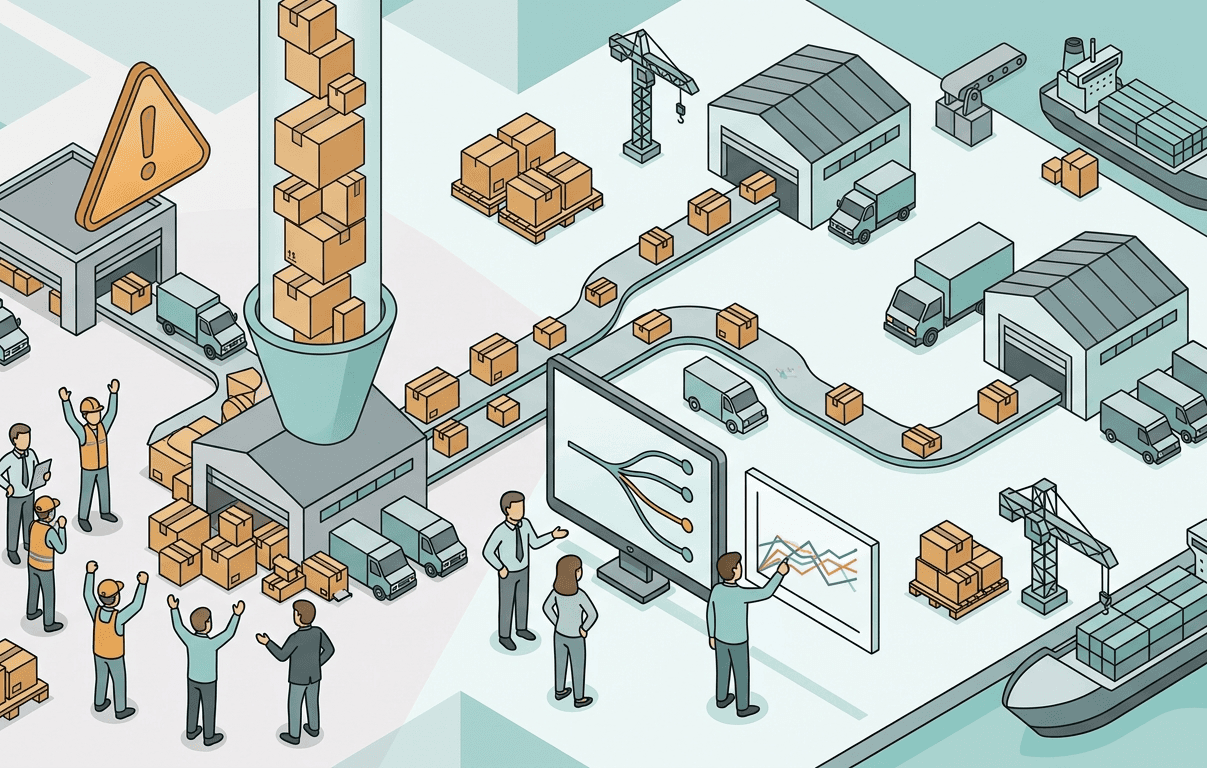
Every peak season, the same story plays out. A brand locks in what looks like a great rate with a single carrier, feels good about the negotiation, and then watches everything unravel the moment volumes spike. Packages sit in limbo. Tracking updates go dark for days. Customer service tickets pile up. And the "great rate" suddenly feels meaningless because your customers are furious.
This is the predictable outcome of a single-carrier shipping strategy, and it is entirely avoidable. 3PL carrier diversification is not just a logistics buzzword. It is a concrete operational strategy that determines whether your brand survives peak season or spends January doing damage control.
Let's break down exactly why single-carrier strategies fail, what a diversified approach looks like in practice, and how to evaluate whether your current 3PL is set up to protect you when it matters most.
The Single-Carrier Trap: How Brands Get Locked In
The appeal of a single-carrier arrangement is straightforward. You consolidate volume with one provider, negotiate a better per-package rate, simplify your operations, and call it a day. On paper, this makes sense. In reality, it creates a massive single point of failure.
Here is what typically happens. A brand shipping 5,000 orders per month negotiates a solid rate with one carrier. Things run smoothly through spring and summer. Then Q4 arrives, volumes triple, and that carrier is now handling a surge from every other brand that made the same bet. Suddenly, your packages are deprioritized. Transit times stretch. Pickup windows get missed. And you have zero leverage because you have no alternative.
This is not a hypothetical scenario. It happens every single year. The brands that navigate peak season successfully are the ones that built carrier diversification into their fulfillment strategy long before the holiday rush.
If you are still evaluating your overall fulfillment approach, our guide on [how to choose a 3PL](https://shipdudes.com/blog/how-to-choose-a-3pl) covers the foundational criteria, including carrier strategy, that should be part of your decision.
Why Peak Season Breaks Single-Carrier Models
Peak season fulfillment is not just "more orders." It introduces a completely different set of variables that expose every weakness in your supply chain. Here are the specific failure modes that single-carrier strategies cannot handle.
Capacity caps and embargoes. Major carriers impose volume caps during peak season. If your single carrier tells you they can only accept 80% of your daily volume starting November 15, you have nowhere to redirect that other 20%. Orders sit. Revenue stalls.
Regional network congestion. Carriers have different strengths in different regions. One carrier might have excellent last-mile coverage in the Northeast but struggle with deliveries to rural Western states. During peak, those regional weaknesses get amplified. A diversified carrier mix lets you route packages based on destination zone performance, not just price.
Service disruptions. Weather events, facility shutdowns, driver shortages, and equipment failures do not wait for convenient timing. When your only carrier experiences a disruption at a major hub, every single one of your packages flowing through that hub is affected. With multiple carriers, you reroute and keep moving.
Rate surcharges. Peak season surcharges from major carriers can add $2 to $5+ per package. These surcharges vary by carrier, service level, and timing. A single-carrier strategy means you eat whatever surcharge they impose. A diversified approach lets you shift volume to the carrier with the most favorable surcharge structure for each shipment profile.
We cover the broader financial impact of peak season in our post on [the real cost of peak season for high-growth brands](https://shipdudes.com/blog/the-real-cost-of-peak-season-how-high-growth-brands-survive-holiday-chaos), which is worth reading alongside this piece.
What 3PL Carrier Diversification Actually Looks Like
Carrier diversification is not as simple as having accounts with three carriers and picking one randomly. Effective 3PL carrier diversification is a systematic approach to routing decisions that optimizes for cost, speed, reliability, and risk mitigation simultaneously.
Here is what a well-executed carrier diversification strategy includes.
Rate shopping at the package level. Every order should be evaluated against multiple carrier options in real time. Weight, dimensions, destination zone, service level requirement, and current carrier performance all factor into the routing decision. This happens automatically through your 3PL's warehouse management system, not through manual guesswork.
Zone-based carrier selection. Different carriers perform better in different delivery zones. A strong fulfillment risk management strategy maps carrier performance data by zone and routes accordingly. For example, a regional carrier might consistently deliver two days faster than a national carrier for shipments within a 300-mile radius of the warehouse.
Surge capacity agreements. Your 3PL should have pre-negotiated agreements with backup carriers that can absorb overflow volume during peak. These relationships need to exist before you need them. You cannot negotiate a new carrier agreement when you are already drowning in orders.
Service level matching. Not every order needs the same carrier. A two-day guarantee order might route through one carrier while an economy ground shipment goes through another. Matching service levels to the right carrier for each scenario keeps costs down and delivery promises intact.
At ShipDudes, our dual-coast warehouse network in [Northern New Jersey](https://shipdudes.com/blog/new-jersey-3pl-fulfillment-why-nj-is-the-strategic-hub-for-east-coast-dtc-brands) and [Las Vegas](https://shipdudes.com/blog/las-vegas-3pl-fulfillment-the-west-coast-hub-smart-dtc-brands-are-choosing) gives us an inherent diversification advantage. By splitting inventory across both coasts, we reduce dependence on any single carrier's regional network and can reach most U.S. customers in 2 to 3 business days ground.
The Cost of Getting It Wrong
Let's talk about what single-carrier failure actually costs your brand. It goes far beyond the shipping line item.
Lost customers. A late delivery during the holidays is not just one bad experience. It is a customer who does not come back. Research consistently shows that delivery experience is the number one factor in repeat purchase decisions for ecommerce brands. One peak season fumble can permanently damage your customer acquisition investment.
Refund and reshipping costs. When packages are significantly delayed or lost, you end up issuing refunds, sending replacements, or both. These costs come directly out of margin and are entirely preventable with proper carrier diversification.
Brand reputation damage. Negative reviews mentioning slow shipping do not disappear after peak season ends. They sit on your product listings year-round, dragging down conversion rates. For brands selling on Amazon or other marketplaces, this can tank your organic ranking.
Operational chaos. Your customer service team spends peak season fielding "where is my order" inquiries instead of handling revenue-generating activities. Your ops team is firefighting instead of optimizing. The ripple effects consume your entire organization.
These costs are why [shipping cost optimization](https://shipdudes.com/blog/shipping-cost-optimization) is about much more than the per-label rate. True optimization accounts for the total cost of fulfillment outcomes, not just the cheapest sticker price.
How to Evaluate Your 3PL's Carrier Strategy
If you are currently working with a 3PL (or evaluating one), here are the specific questions you should be asking about their shipping carrier strategy.
How many carriers do you actively use? The answer should be at minimum three to four, including a mix of national carriers and regional carriers. If they name one carrier and call it a day, that is a red flag.
How do you make routing decisions? Look for automated rate shopping and zone-based optimization. Manual carrier selection does not scale and introduces human error during the most chaotic time of year.
What happens when a carrier has a service disruption? You want to hear a specific contingency plan, not a vague "we figure it out." Ask for examples of how they handled past disruptions.
Do you have pre-negotiated peak season capacity with multiple carriers? This is critical. If they have not locked in capacity commitments before Q4 starts, they are gambling with your orders.
Can I see carrier performance data by zone? A good 3PL tracks this and can show you delivery time performance, exception rates, and damage rates by carrier and by destination zone. If they cannot produce this data, they are not managing carrier performance actively.
Our post on [3PL contract red flags](https://shipdudes.com/blog/3pl-contract-red-flags-12-terms-that-will-cost-you-(and-what-to-negotiate-instead)) goes deeper into the contractual side of this conversation, including what carrier-related terms to negotiate before signing.
Building a Diversified Strategy Before You Need It
The worst time to diversify your carrier strategy is when you are already in crisis. Here is a practical timeline for getting this right.
Q1 and Q2: Audit and plan. Review your previous peak season performance data. Identify where deliveries failed, which zones had the worst performance, and how much carrier issues cost you. Use this data to set requirements for your carrier mix going forward.
Q3: Test and validate. If you are adding new carriers or switching 3PLs, do it now. Run test shipments through new carrier options. Validate performance in your key delivery zones. Work with your 3PL to build routing rules based on real data.
Early Q4: Lock in capacity. By October, your carrier capacity commitments should be confirmed. Surge plans should be documented. Backup carriers should be tested and ready.
Peak season: Execute and monitor. With a diversified strategy in place, your focus shifts from firefighting to monitoring. Watch carrier performance daily and adjust routing in real time if one carrier starts underperforming.
This kind of proactive planning ties directly into [inventory forecasting for multi-channel brands](https://shipdudes.com/blog/inventory-forecasting-for-multi-channel-brands-preventing-stockouts-across-all-sales-channels), because your carrier capacity plan needs to align with your volume projections.
Why Dual-Coast Fulfillment Amplifies Carrier Diversification
Carrier diversification gets even more powerful when combined with a [dual-coast warehouse setup](https://shipdudes.com/blog/nationwide-3pl-fulfillment-why-a-two-coast-setup-beats-a-single-warehouse). Here is why.
When you have inventory on both coasts, you are not just diversifying carriers. You are diversifying the entire network topology. An East Coast order ships from New Jersey through whatever carrier performs best for that zone. A West Coast order ships from Las Vegas through a potentially different carrier that dominates that region.
This means a carrier disruption at a Southeastern hub does not affect your West Coast shipments at all. A snowstorm shutting down Midwest carrier routes does not stop East Coast orders from going out the next day. The combination of geographic diversification and carrier diversification creates resilience that neither strategy achieves alone.
ShipDudes operates four warehouse facilities across our New Jersey and Las Vegas locations specifically to provide this kind of redundancy. Our 75+ platform integrations mean your [omnichannel fulfillment](https://shipdudes.com/blog/omnichannel-fulfillment) flows through optimized carrier routing regardless of which sales channel generates the order.
Stop Hoping Your Single Carrier Will Hold Up
Hope is not a fulfillment strategy. Every peak season, brands learn this the hard way because they trusted a single-carrier relationship to handle a situation it was never designed for.
3PL carrier diversification is not complicated, but it requires intentionality. It requires a fulfillment partner who maintains active relationships with multiple carriers, uses data-driven routing, and has the warehouse infrastructure to back it up.
If your current fulfillment setup relies on a single carrier, or if your 3PL cannot clearly articulate their carrier diversification strategy, it is time to have a different conversation.
ShipDudes operates with a multi-carrier approach across our dual-coast network, with an all-US-based team that manages carrier performance proactively. We work with brands in beauty, supplements, beverages, pet products, food, electronics, and general CPG, and we have built our operations around the principle that no single carrier should hold your brand hostage.
Ready to build a fulfillment strategy that does not crumble under peak season pressure? [Book a call with ShipDudes](https://shipdudes.com/book-a-call) and let's walk through your carrier strategy together.
Frequently Asked Questions
What is 3PL carrier diversification?
3PL carrier diversification is the practice of using multiple shipping carriers within your third-party logistics operation to optimize for cost, speed, and reliability. Instead of routing all packages through a single carrier, a diversified approach evaluates each shipment against multiple carrier options and selects the best fit based on destination zone, package characteristics, service level requirements, and real-time carrier performance.
How many carriers should a 3PL use?
A well-diversified 3PL should actively use at least three to four carriers, including a mix of national carriers (such as UPS, FedEx, and USPS) and regional carriers that offer faster, cheaper delivery within specific geographic areas. The exact number depends on your shipping profile, but the key is having enough options to reroute volume when any single carrier underperforms.
Why do single-carrier strategies fail during peak season?
Single-carrier strategies fail during peak season because carriers impose volume caps, experience network congestion, and apply steep surcharges when demand spikes. With no backup carrier in place, brands face delayed shipments, missed delivery promises, and no leverage to resolve issues quickly. Peak season amplifies every weakness in a carrier network, and a single-carrier approach has no built-in redundancy.
How does dual-coast warehousing improve carrier diversification?
Dual-coast warehousing amplifies carrier diversification by routing shipments from the warehouse closest to the customer, through the carrier that performs best in that specific region. This reduces transit distances, lowers costs, and ensures that a disruption in one carrier's regional network does not affect shipments originating from the other coast. Companies like ShipDudes use facilities in both Northern New Jersey and Las Vegas to provide this combined geographic and carrier redundancy.
When should I start planning my peak season carrier strategy?
Start planning no later than Q2. Use Q1 and Q2 to audit previous peak season performance and identify carrier gaps. Spend Q3 testing new carrier options and validating routing rules. By early Q4, all capacity commitments and surge plans should be locked in. Waiting until November to address carrier strategy is too late.
Ready to Simplify Your Fulfillment?
Let's build a custom pricing model for your brand. No contracts required to start the conversation.