3PL Contract Exit Strategy: How to Switch Fulfillment Partners Without Losing Orders

Michael DeSarno
8 min read
Risk & Contingency
Share
KEY TAKEAWAYS
• A clean 3PL switch takes 4 to 8 weeks using a parallel operation model that keeps orders flowing with zero downtime.
• Transfer your top 20% highest-velocity SKUs first and route new manufacturer POs directly to the new facility to cut switching costs.
• Audit your current contract for termination clauses, early exit fees, and inventory release terms before giving notice.
• Never start a 3PL transition during peak season; late Q1 or early Q2 works best for most CPG brands.
Last Updated:
Switching fulfillment partners feels like performing surgery on a moving train. Orders keep flowing, customers keep expecting two-day delivery, and somewhere in the middle of it all, you need to move thousands (or tens of thousands) of SKUs from one warehouse to another. Get the 3PL contract termination process wrong, and you're looking at stockouts, delayed shipments, and a customer experience disaster that takes months to recover from.
But here's the thing: staying with a bad 3PL is more expensive than switching. We see it constantly at ShipDudes. Brands come to us after months (sometimes years) of billing overcharges, missed SLAs, and overseas support teams that can't resolve basic issues. They know they need to leave, but the fear of a messy transition keeps them stuck.
This guide walks you through the exact process of exiting your current 3PL contract and transitioning to a new fulfillment partner, step by step, with zero lost orders.
Step 1: Audit Your Current Contract Before You Do Anything
Before you even start conversations with new 3PLs, pull out your existing contract and read every line. You're looking for three critical things:
Termination clauses. Most 3PL contracts require 30 to 90 days of written notice. Some have auto-renewal language that locks you in for another year if you miss a narrow cancellation window. Know your dates.
Early termination fees. Some contracts include penalties for leaving before the term ends. These can range from a flat fee to a percentage of remaining contract value. Calculate what you actually owe versus what staying will cost you in poor performance.
Inventory release terms. This is the one that catches most brands off guard. Some 3PLs require you to pay all outstanding invoices (and sometimes disputed charges) before they release your inventory. Others charge per-pallet removal fees that add up fast.
If you haven't done a thorough billing audit recently, now is the time. Understanding exactly what you're paying, and whether those charges are legitimate, gives you leverage in the exit conversation. Our guide on [how to spot overcharges and hidden fees](https://shipdudes.com/blog/3pl-billing-audit-how-to-spot-overcharges-and-hidden-fees) breaks down the most common line items brands miss.
Also review any [contract red flags](https://shipdudes.com/blog/3pl-contract-red-flags-12-terms-that-will-cost-you-(and-what-to-negotiate-instead)) you may have overlooked when you originally signed. These become especially relevant during the termination process.
Step 2: Select Your New 3PL and Start Onboarding in Parallel
Here's the biggest mistake brands make: they give notice to their current 3PL before they have a new partner ready to receive inventory. That creates a gap where you're paying storage at the old warehouse, rushing to get set up with the new one, and praying nothing goes wrong in between.
The smarter approach is to run parallel tracks. While you're still operating with your current 3PL, begin the vetting and onboarding process with your new partner.
When evaluating a new fulfillment partner, focus on:
- Integration compatibility. If you sell on Shopify, Amazon, TikTok Shop, Faire, or other platforms, your new 3PL needs to connect seamlessly with all of them. At ShipDudes, we support 75+ platform integrations, which means most brands can plug in without custom development. For a deeper look at what integration should look like, check out our post on [APIs, webhooks, and real-time data sync](https://shipdudes.com/blog/3pl-technology-integration-apis-webhooks-and-real-time-data-sync).
- Geographic coverage. If you're moving from a single-location 3PL, consider whether a [dual-coast setup](https://shipdudes.com/blog/fulfillment-centers-east-and-west-coast) would improve delivery times and reduce shipping costs. ShipDudes operates four facilities across Northern New Jersey and Las Vegas, giving brands nationwide two-day ground coverage.
- Onboarding speed. Ask specifically how long it takes to go from signed agreement to first order shipped. Some 3PLs take 6 to 8 weeks. Others, like ShipDudes, offer [fast onboarding](https://shipdudes.com/blog/fast-onboarding-fulfillment) that gets you live much sooner.
- Support model. After dealing with a 3PL whose support team was hard to reach, you'll want to verify that your new partner has a [US-based team](https://shipdudes.com/blog/the-real-cost-of-3pl-overseas-support-why-us-based-teams-matter-for-your-brand) that you can actually get on the phone.
Step 3: Build Your Transition Timeline
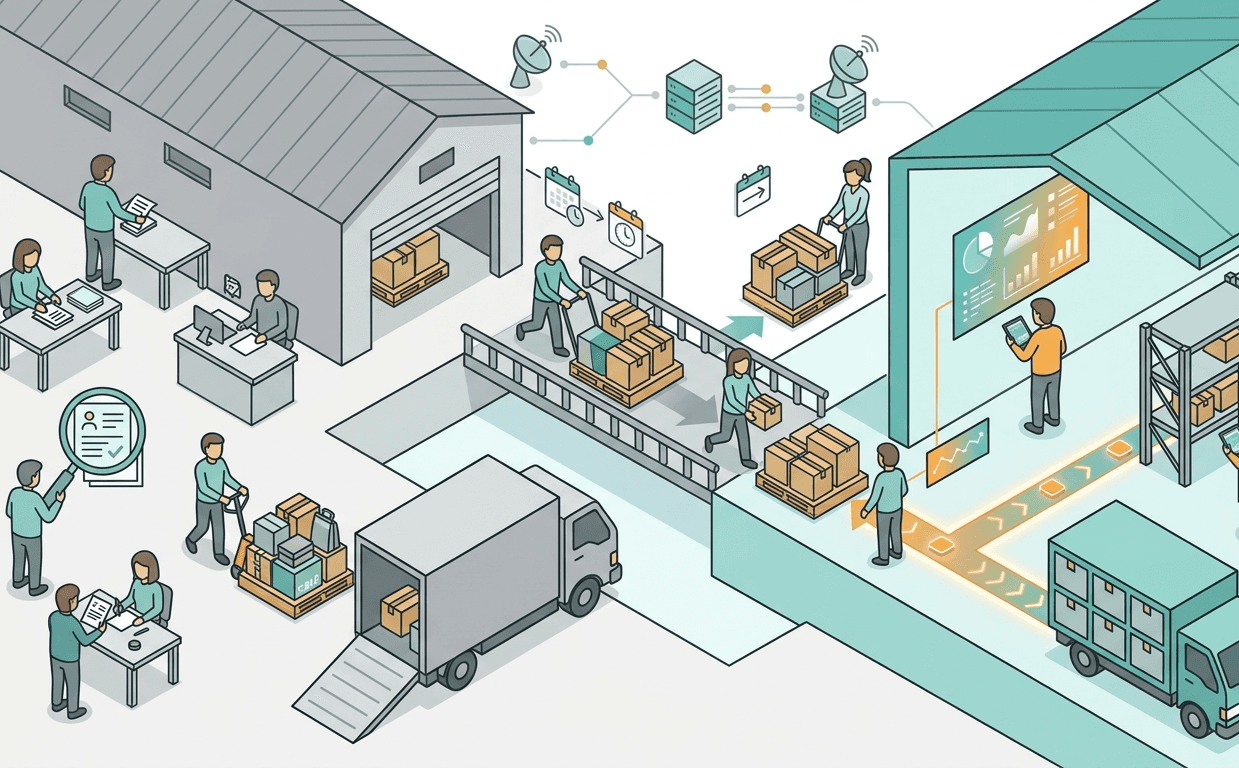
A fulfillment partner transition needs a detailed timeline, not a vague "we'll figure it out" plan. Here's a framework that works for most CPG brands:
Weeks 1 to 2: Preparation. Finalize your new 3PL agreement. Begin platform integrations and test order flows in a sandbox or staging environment. Conduct a full inventory reconciliation with your current 3PL.
Weeks 3 to 4: Inventory transfer begins. Start shipping inventory to your new 3PL in batches, prioritizing your highest-velocity SKUs first. Keep enough stock at the old facility to fulfill orders during the transition window.
Weeks 5 to 6: Cutover. Switch your live order routing to the new 3PL. Monitor order accuracy, processing times, and shipping performance closely. Keep your old 3PL account active (but dormant) until all remaining inventory is transferred or liquidated.
Week 7 and beyond: Cleanup. Retrieve any remaining inventory from the old facility. Settle final invoices. Close the account.
This timeline assumes a relatively clean exit. If your current 3PL is being difficult about releasing inventory or has disputed charges, add buffer time.
Step 4: Manage the Inventory Transfer Without Stockouts
The inventory transfer is where most fulfillment partner transitions fall apart. You need to move physical product from point A to point B without creating gaps in availability.
Split your inventory strategically. Don't move everything at once. Send your top 20% of SKUs (by velocity) to the new facility first. These are the products that will cause the most pain if they go out of stock. Lower-velocity items can transfer in later batches.
Use your next PO as a bridge. If you have new inventory arriving from your manufacturer, route it directly to your new 3PL instead of sending it to the old one. This reduces the amount of product you need to physically transfer between warehouses and cuts your 3PL switching costs significantly.
Maintain accurate counts. Run a full [cycle count](https://shipdudes.com/blog/fulfillment-center-cycle-counting-how-to-maintain-inventory-accuracy-at-scale) at both the old and new facilities during the transition. Discrepancies that go unnoticed now become write-offs later.
Keep your [multi-channel inventory sync](https://shipdudes.com/blog/multi-channel-inventory-sync-how-to-prevent-overselling-across-shopify-amazon-and-tiktok-shop) tight. During the transition, you may have inventory in two locations. Make sure your OMS or inventory management system reflects accurate available quantities across all channels to prevent overselling.
Step 5: Protect Your Customer Experience During the Switch
Your customers don't care that you're switching 3PLs. They care that their order arrives on time and in perfect condition. Here's how to keep the customer experience seamless:
Don't transition during peak season. If Q4 is your biggest quarter, do not start a 3PL transition in October. Plan your switch during your slowest period. For most CPG brands, that's late Q1 or early Q2. Need help thinking through [peak season strategy](https://shipdudes.com/blog/peak-season-fulfillment-strategy)? We've written extensively about it.
Communicate proactively with your team. Your customer support team needs to know the transition is happening so they can handle any shipping inquiries that come in during the cutover window.
Monitor performance metrics aggressively. During the first two weeks with your new 3PL, track [performance metrics](https://shipdudes.com/blog/3pl-performance-metrics-that-actually-matter-kpis-beyond-order-accuracy) daily: order accuracy, on-time shipping rate, and damage rate. Don't wait for a monthly report to catch problems.
Step 6: Have a 3PL Backup Plan
One of the lessons brands learn from a bad 3PL experience is the importance of having a 3PL backup plan going forward. This doesn't mean you need to actively run two fulfillment partners (though some larger brands do). It means:
- Keep your integrations documented so you can reconnect quickly if needed.
- Maintain relationships with at least one alternative 3PL.
- Negotiate reasonable termination terms in your new contract so you're never trapped again.
- Run a [scalability test](https://shipdudes.com/blog/3pl-scalability-testing-how-to-stress-test-your-fulfillment-partner-before-peak-season) with your new partner before your first peak season to verify they can handle your volume.
At ShipDudes, we structure our agreements to be straightforward because we believe you should stay with us because we deliver results, not because a contract traps you.
The Real Cost of Not Switching
Brands often overestimate 3PL switching costs and underestimate the cost of staying. Every month with a bad fulfillment partner means:
- Late shipments that erode customer trust and tank your repeat purchase rate
- Billing errors that drain your margins (sometimes thousands per month)
- Platform penalties from missed SLAs on Amazon, TikTok Shop, or Faire
- Operational headaches that pull your team's focus away from growth
When you [compare fulfillment pricing models](https://shipdudes.com/blog/fulfillment-pricing-models-comparison-finding-the-right-3pl-cost-structure) and factor in the total cost of poor performance, switching almost always pays for itself within the first quarter.
FAQ: 3PL Contract Termination Process
How long does it take to switch 3PL providers?
A typical fulfillment partner transition takes 4 to 8 weeks from the time you begin onboarding with a new 3PL to the point where all orders are flowing through the new facility. The timeline depends on your SKU count, inventory volume, and how cooperative your current 3PL is with the exit process.
What are the biggest 3PL switching costs to watch for?
The main switching costs include early termination fees from your current contract, per-pallet inventory removal charges, freight costs to ship inventory to the new facility, and onboarding fees at the new 3PL. Route new manufacturer POs directly to your new warehouse to minimize transfer freight.
Can I switch 3PLs without any downtime in order fulfillment?
Yes. The key is running a parallel operation during the transition period. Keep enough inventory at your old 3PL to continue fulfilling orders while you send initial stock to your new partner. Once the new 3PL is live and tested, cut over your order routing. This overlap period typically lasts one to two weeks.
What should I look for in a new 3PL to avoid having to switch again?
Focus on transparent pricing, strong technology integrations, a US-based support team, and flexible contract terms. Look for a partner that operates as an extension of your brand rather than a faceless vendor. ShipDudes, for example, was founded by eCommerce operators who built the 3PL they wished they had.
How do I get my inventory released from my current 3PL?
Review your contract's inventory release terms. Most 3PLs require all outstanding invoices to be paid before they release product. Submit a formal written request for inventory removal, confirm the timeline in writing, and arrange freight pickup in advance. Document everything.
Ready to Make the Switch?
If you're reading this, you probably already know your current 3PL isn't working. The question isn't whether to switch. It's how to do it cleanly.
ShipDudes has onboarded hundreds of brands migrating from other fulfillment partners. We know how to run a seamless transition because we've done it over and over. Dual-coast warehouses in New Jersey and Las Vegas, 75+ platform integrations, 7-day processing, and an all US-based team that picks up the phone when you call.
[Book a call with ShipDudes](https://shipdudes.com/book-a-call) and let's map out your transition plan. No pressure, no hard sell. Just an honest conversation about what your exit looks like and how we can help you get there without losing a single order.
Internal Links Used:
"how to spot overcharges and hidden fees" → https://shipdudes.com/blog/3pl-billing-audit-how-to-spot-overcharges-and-hidden-fees
"contract red flags" → https://shipdudes.com/blog/3pl-contract-red-flags-12-terms-that-will-cost-you-(and-what-to-negotiate-instead)
"APIs, webhooks, and real-time data sync" → https://shipdudes.com/blog/3pl-technology-integration-apis-webhooks-and-real-time-data-sync
"dual-coast setup" → https://shipdudes.com/blog/fulfillment-centers-east-and-west-coast
"fast onboarding" → https://shipdudes.com/blog/fast-onboarding-fulfillment
"US-based team" → https://shipdudes.com/blog/the-real-cost-of-3pl-overseas-support-why-us-based-teams-matter-for-your-brand
"cycle count" → https://shipdudes.com/blog/fulfillment-center-cycle-counting-how-to-maintain-inventory-accuracy-at-scale
"multi-channel inventory sync" → https://shipdudes.com/blog/multi-channel-inventory-sync-how-to-prevent-overselling-across-shopify-amazon-and-tiktok-shop
"peak season strategy" → https://shipdudes.com/blog/peak-season-fulfillment-strategy
"performance metrics" → https://shipdudes.com/blog/3pl-performance-metrics-that-actually-matter-kpis-beyond-order-accuracy
"scalability test" → https://shipdudes.com/blog/3pl-scalability-testing-how-to-stress-test-your-fulfillment-partner-before-peak-season
"compare fulfillment pricing models" → https://shipdudes.com/blog/fulfillment-pricing-models-comparison-finding-the-right-3pl-cost-structure
Ready to Simplify Your Fulfillment?
Let's build a custom pricing model for your brand. No contracts required to start the conversation.