3PL Geographic Expansion: Adding New Markets Without Changing Fulfillment Partners

Michael DeSarno
8 min read
Fulfillment Operations
Share
KEY TAKEAWAYS
• Expand into new geographic markets by using a single multi-node 3PL, not by adding a second provider.
• Dual-coast fulfillment (NJ + Las Vegas) cuts shipping zones and enables 2 to 3 day ground delivery nationwide.
• Splitting inventory across two 3PL providers creates fragmentation, tech complexity, and inconsistent brand experience.
• Trigger for a second warehouse node: shipping costs exceed 12 to 15% of revenue or 4+ zone shipments are growing.
Last Updated:
You've built something real. Orders are flowing, your product-market fit is dialed, and customers in your core region love what you're selling. Now the question that every growth-stage CPG brand eventually faces: how do you expand into new geographic markets without blowing up your fulfillment operations?
The knee-jerk answer is to find a new 3PL in the new region. That sounds logical until you realize you're now managing two separate relationships, two sets of inventory, two billing structures, and two sets of problems. 3PL geographic expansion doesn't have to mean 3PL multiplication.
The smarter move is finding (or already having) a fulfillment partner whose warehouse network expansion can grow alongside your brand. Here's how to think about it.
Why Geographic Expansion Breaks Single-Warehouse Fulfillment
Let's start with the math that drives this conversation. When you ship everything from one location, your transit times and shipping costs are directly tied to the distance between that warehouse and your customer. For a brand shipping exclusively from the East Coast, reaching a customer in Los Angeles means crossing five or six carrier zones. That translates to higher costs and 4 to 7 day ground delivery windows.
As your customer base spreads nationally (or as you enter new sales channels like [TikTok Shop](https://shipdudes.com/blog/tiktok-shop-fulfillment-complete-guide-for-social-commerce-success) or retail distribution), the inefficiency compounds. You're paying more per package while delivering a worse experience. At some point, the economics force your hand.
This is the core trigger for fulfillment geographic growth: your customers are telling you where they are, and your warehouse isn't close enough to serve them well.
The Two-Provider Trap (and Why It's Expensive)
The most common mistake brands make during fulfillment market expansion is adding a second 3PL in the new region. On paper, it makes sense. You already have someone on the East Coast, so you find a West Coast provider and split your inventory.
In practice, here's what actually happens:
Inventory fragmentation. You now have to forecast demand by region and decide how to split your SKUs. Get it wrong and you're shipping cross-country from the wrong warehouse anyway, which is the exact problem you were trying to solve.
Tech stack complexity. Your order management system now needs to route orders to the correct facility. If your two providers use different WMS platforms, you're looking at custom integrations that break at the worst possible times. For context on how complex this gets, read about [3PL technology integration and real-time data sync](https://shipdudes.com/blog/3pl-technology-integration-apis-webhooks-and-real-time-data-sync).
Operational inconsistency. Different providers have different packing standards, different quality control processes, and different communication styles. Your customer in New Jersey gets a different unboxing experience than your customer in Nevada.
Double the management overhead. Two sets of SLAs to enforce (here's [how to hold your 3PL accountable](https://shipdudes.com/blog/3pl-sla-enforcement-how-to-hold-fulfillment-partner-accountable-templates)), two billing structures to audit (watch out for [hidden fees and overcharges](https://shipdudes.com/blog/3pl-billing-audit-how-to-spot-overcharges-and-hidden-fees)), and two relationships to manage. For a lean brand team, this is a serious time drain.
What 3PL Geographic Expansion Should Actually Look Like
The ideal scenario for fulfillment market expansion is working with a single 3PL partner that operates facilities in multiple strategic locations. This gives you the geographic coverage you need without the operational headaches of managing multiple providers.
Here's what to look for:
Dual-Coast (or Multi-Node) Warehouse Coverage
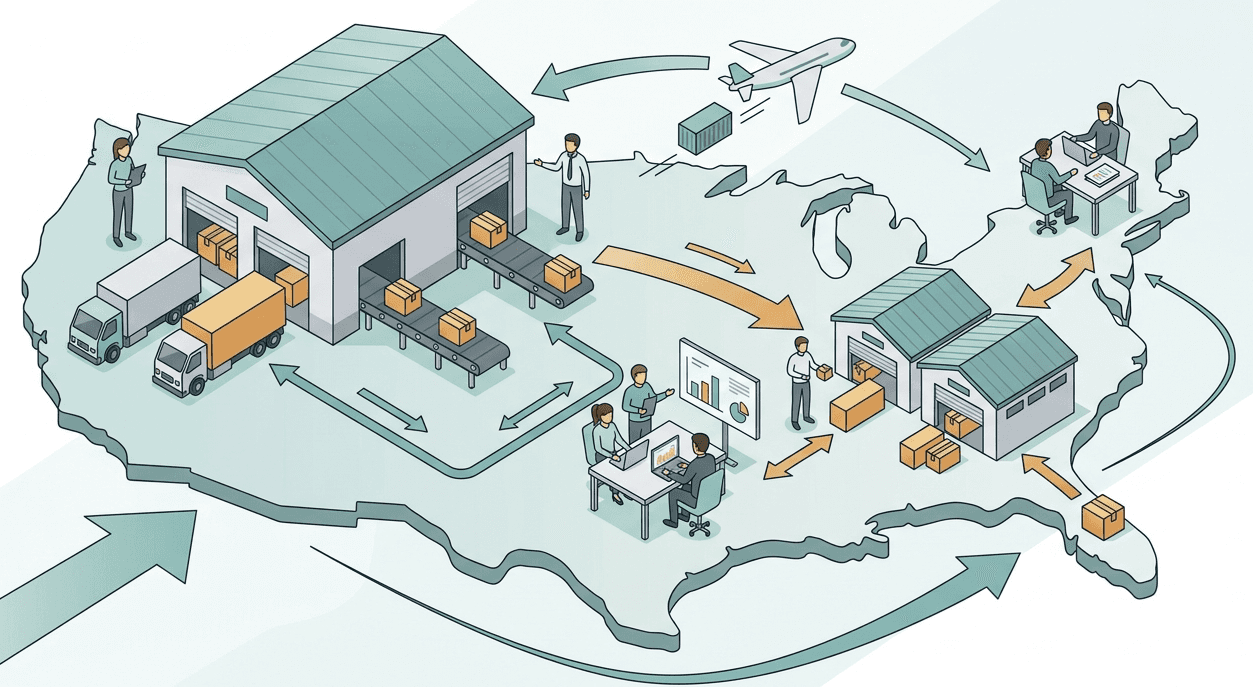
The biggest shipping cost savings come from positioning inventory on both the East and West Coasts. A [dual-coast warehouse setup](https://shipdudes.com/blog/nationwide-3pl-fulfillment-why-a-two-coast-setup-beats-a-single-warehouse) lets you reach the majority of the U.S. population within 2 to 3 day ground shipping. This is exactly the model ShipDudes operates, with two facilities in Northern New Jersey covering the East Coast and two facilities in Las Vegas covering the West.
This isn't just about speed. It's about cost. When you reduce the number of shipping zones each package crosses, you're paying less per order. Over thousands of monthly shipments, the savings are substantial. Learn more about how this works in our guide to [zone skipping fulfillment](https://shipdudes.com/blog/zone-skipping-fulfillment-how-smart-3pls-cut-shipping-costs-beyond-dual-coast).
Unified Technology Platform
When both warehouses run on the same WMS and connect to the same [multi-channel inventory sync](https://shipdudes.com/blog/multi-channel-inventory-sync-how-to-prevent-overselling-across-shopify-amazon-and-tiktok-shop), your order routing happens automatically. An order from a customer in California gets fulfilled from Las Vegas. An order from a customer in New York gets fulfilled from New Jersey. No manual intervention, no routing errors.
ShipDudes integrates with 75+ platforms (Shopify, Amazon, TikTok Shop, Faire, WooCommerce, and more), so your existing sales channels don't need to change just because you're adding warehouse nodes.
Consistent Quality and Brand Experience
When the same company operates every facility, your [quality control standards](https://shipdudes.com/blog/3pl-quality-control-systems-how-to-prevent-order-errors-before-they-reach-customers) are consistent across locations. Same packing materials, same branded inserts, same accuracy benchmarks. Your customer never knows (or cares) which warehouse their order shipped from.
One Relationship, One Invoice, One Point of Accountability
This is the part that matters most for your daily operations. One account manager to call. One [billing structure to audit](https://shipdudes.com/blog/3pl-billing-audit-how-to-spot-overcharges-and-hidden-fees). One set of [performance metrics to track](https://shipdudes.com/blog/3pl-performance-metrics-that-actually-matter-kpis-beyond-order-accuracy). Geographic expansion should make your logistics better, not make your life harder.
How to Plan Your Fulfillment Geographic Growth
Before you activate a second warehouse location, do the work to set yourself up for a clean expansion.
Step 1: Analyze Your Order Data by Region
Pull your shipping data from the last 6 to 12 months. Where are your customers? What percentage of orders are crossing 4+ shipping zones? What are you spending on those long-distance shipments? This data tells you exactly where a second warehouse node would create the most impact.
Step 2: Evaluate Your Current 3PL's Network
Ask your existing provider a direct question: do you have (or plan to add) facilities in the regions where my customers are concentrated? If the answer is no, that's not necessarily a reason to leave, but it is a constraint you need to plan around.
If you're evaluating new partners, geographic coverage should be a top-tier criterion. Check out our guide on [how to choose a 3PL](https://shipdudes.com/blog/how-to-choose-a-3pl) for the full framework.
Step 3: Plan Your Inventory Split
Work with your 3PL to determine the right [inventory forecasting](https://shipdudes.com/blog/inventory-forecasting-for-multi-channel-brands-preventing-stockouts-across-all-sales-channels) approach for a multi-location setup. Most brands start with a simple split (60/40 or 50/50 based on regional demand), then refine as order data accumulates from the new node.
You'll also need to think about how inbound shipments change. Sending product to two locations instead of one means coordinating with your manufacturers on split shipments or routing through a single receiving point with internal transfers.
Step 4: Test Before You Commit
A smart 3PL will let you [stress-test the expansion](https://shipdudes.com/blog/3pl-scalability-testing-how-to-stress-test-your-fulfillment-partner-before-peak-season) before going all-in. Route a percentage of orders to the new location, measure the results (cost savings, transit time improvements, accuracy rates), and scale up once the data confirms the model works.
Step 5: Layer In Your Channels
Geographic expansion often happens alongside channel expansion. You might be adding [B2B retail distribution](https://shipdudes.com/blog/b2b-order-fulfillment-edi-integration-and-retail-distribution-essentials), launching on new marketplaces, or ramping [Amazon FBA Prep](https://shipdudes.com/blog/amazon-fba-prep). Make sure your 3PL can handle [omnichannel fulfillment](https://shipdudes.com/blog/omnichannel-fulfillment) from every node, not just DTC orders.
When Geographic Expansion Isn't the Right Move (Yet)
Not every brand needs a second warehouse location. If 80%+ of your orders are concentrated in a single region, or your monthly volume is still relatively low, the complexity of a multi-node setup might not be worth the savings. In those cases, a strategically placed single warehouse can cover a lot of ground.
For example, a [New Jersey fulfillment center](https://shipdudes.com/blog/new-jersey-3pl-fulfillment-why-nj-is-the-strategic-hub-for-east-coast-dtc-brands) can reach about 70% of the U.S. population within 2 to 3 day ground shipping. A [Las Vegas fulfillment center](https://shipdudes.com/blog/las-vegas-3pl-fulfillment-the-west-coast-hub-smart-dtc-brands-are-choosing) covers the entire western half of the country while avoiding California's regulatory and cost headaches.
The trigger for expansion is usually when shipping costs to the opposite coast start eating into your margins, or when customer expectations for fast delivery are creating competitive pressure. If you're [spending more than 12 to 15% of revenue on shipping](https://shipdudes.com/blog/shipping-cost-optimization), it's time to run the numbers on a second node.
Why ShipDudes Is Built for This Exact Growth Phase
ShipDudes was founded by eCommerce operators who hit this exact inflection point with their own brands. The dual-coast model (Northern New Jersey and Las Vegas) was designed specifically for brands in this growth phase: too big for a single warehouse, too lean to manage multiple 3PL relationships.
With 7-day processing, an all in-house U.S.-based support team, and 75+ platform integrations, ShipDudes handles the operational complexity of warehouse network expansion so you can focus on selling. Whether you're shipping beauty products, supplements, pet products, beverages, or general CPG, the infrastructure is already in place.
There's a reason ShipDudes was named to the Inc. 5000 as the 39th fastest growing company in America. The brands using this model are growing fast, and the fulfillment keeps up.
Frequently Asked Questions
What is 3PL geographic expansion?
3PL geographic expansion refers to the process of adding new warehouse locations or fulfillment nodes to reduce shipping distances, lower costs, and improve delivery times as your customer base spreads across new regions. The best approach is working with a single 3PL partner that operates multiple facilities, rather than managing separate providers in each market.
How does a dual-coast warehouse setup reduce shipping costs?
By positioning inventory on both the East and West Coasts, orders ship from the facility closest to the customer. This reduces the number of carrier shipping zones each package crosses, which directly lowers per-order shipping costs. Most brands see meaningful savings once they split fulfillment across two strategically placed locations.
When should a brand consider adding a second fulfillment location?
The most common triggers are shipping costs exceeding 12 to 15% of revenue, customer complaints about slow delivery, or a significant percentage of orders crossing 4 or more shipping zones. If your order data shows a growing customer base on the opposite coast from your current warehouse, it's time to evaluate expansion.
Can I expand geographically without switching 3PL providers?
Yes, if your current 3PL operates facilities in the regions you need. This is the ideal scenario because it keeps your technology, processes, and account relationship unified. ShipDudes, for example, operates four facilities across New Jersey and Las Vegas, allowing brands to expand their geographic coverage without changing partners.
How do I split inventory across two warehouse locations?
Start with your historical order data broken down by region. Most brands begin with a demand-based split (such as 60/40 or 50/50) and refine over time. Your 3PL should help you forecast the right allocation and manage transfers between locations if one facility runs low on a particular SKU.
Ready to Expand Without the Complexity?
If your brand is hitting the limits of a single warehouse location, you don't need to add a second 3PL to the mix. You need a partner whose network is already built for this.
ShipDudes operates dual-coast fulfillment from Northern New Jersey and Las Vegas, with the technology, team, and processes to make geographic expansion feel seamless. One relationship, one platform, nationwide coverage.
[Book a call with ShipDudes](https://shipdudes.com/book-a-call) to see how a dual-coast setup maps to your specific order data and growth targets.
Ready to Simplify Your Fulfillment?
Let's build a custom pricing model for your brand. No contracts required to start the conversation.