3PL Insurance Requirements: Cargo Coverage, Liability, and What Brands Actually Need
Michael DeSarno
8 min read
Fulfillment Operations
Share
KEY TAKEAWAYS
• Most 3PL warehouse liability policies cap payouts at $0.50 per pound, far below actual inventory value.
• Three insurance types matter: warehouse legal liability, cargo insurance, and your own all-risk policy.
• Always request a Certificate of Insurance and get named as an additional insured before signing.
• Document product condition at every handoff stage to support claims if damage occurs.
Last Updated:
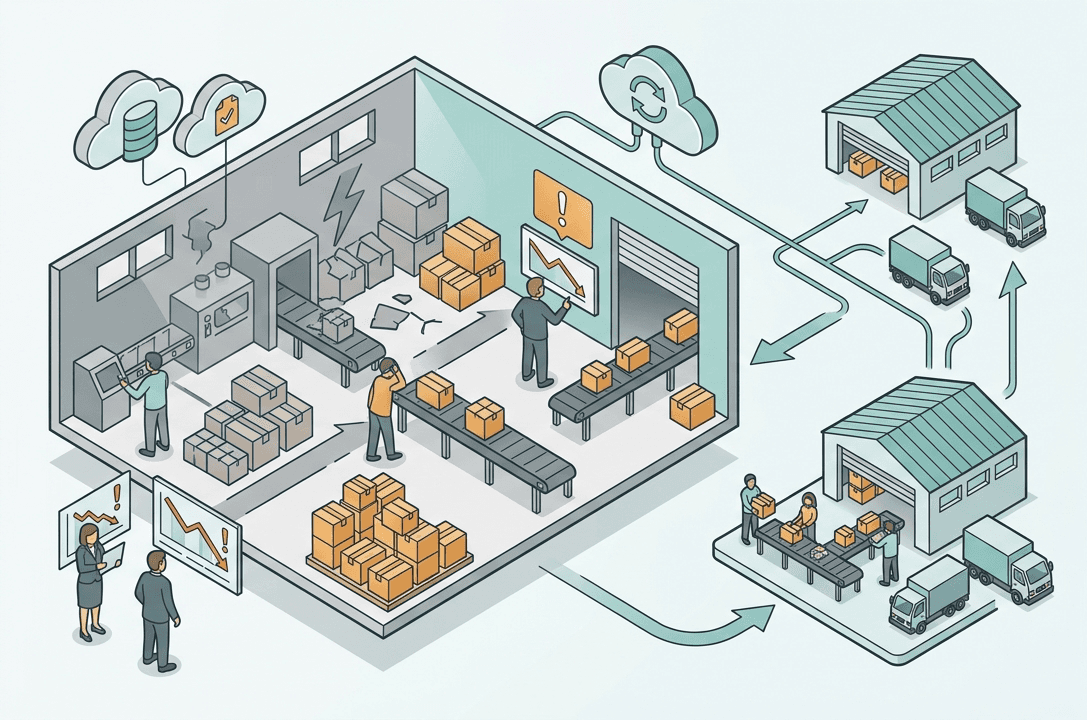
Here is a scenario that plays out more often than it should: a brand ships $80,000 worth of inventory to a fulfillment center. A sprinkler system malfunctions. Product is destroyed. The brand files a claim, and the 3PL points to a clause buried on page nine of their contract that caps liability at $0.50 per pound.
Suddenly, that $80,000 loss turns into a $4,200 payout.
Understanding 3PL insurance requirements is not about reading fine print for fun. It is about protecting the inventory that keeps your business running. If you are evaluating fulfillment partners (or questioning whether your current one has you covered), this guide breaks down exactly what you need to know.
Why 3PL Insurance Requirements Matter More Than You Think
When you hand your inventory to a third-party logistics provider, you are trusting them with a physical asset that directly impacts your revenue. If something goes wrong (fire, theft, water damage, mishandling), someone has to absorb the financial hit.
The uncomfortable truth: most 3PLs carry insurance that protects themselves, not you. Their warehouse liability coverage typically covers the 3PL's legal exposure, not the full retail or wholesale value of your products. The gap between what you assume is covered and what is actually covered can be enormous.
This is why understanding fulfillment center insurance is a non-negotiable part of [choosing a 3PL](https://shipdudes.com/blog/how-to-choose-a-3pl). It should rank right alongside pricing, integrations, and location.
The Three Types of Insurance That Matter in 3PL Relationships
Let's break this down into the three categories that actually affect your brand.
1. Warehouse Legal Liability (WLL)
This is the most common type of insurance carried by fulfillment centers. Warehouse legal liability covers the 3PL when they are proven negligent. The key word there is "negligent."
If a warehouse worker drops a pallet and damages your product, WLL should cover it. But if a natural disaster, a power outage, or a pest infestation damages your goods, WLL may not apply because the 3PL can argue it was not their fault.
Important details to check:
- What is the per-unit or per-pound liability cap?
- Does the policy cover all causes of loss or only negligence?
- What is the deductible, and who pays it?
- How long does the claims process take?
Most WLL policies cap payouts at a fraction of your product's actual value. If you are storing supplements, beauty products, or beverages with high per-unit costs, this gap is significant. Brands storing [supplements with lot tracking requirements](https://shipdudes.com/blog/supplement-fulfillment-fda-compliance-lot-tracking-and-expiration-management) or [temperature-sensitive beverages](https://shipdudes.com/blog/beverage-fulfillment-challenges-glass-liquid-restrictions-and-shipping-solutions) face even more exposure because spoilage and compliance failures compound the loss.
2. Cargo Insurance
Cargo insurance for 3PL operations covers your products while they are in transit, whether inbound to the warehouse or outbound to customers and retailers. This is separate from warehouse liability and often overlooked.
Carrier liability (the coverage that comes standard with UPS, FedEx, and USPS) is notoriously limited. USPS Priority Mail, for example, includes only $100 of coverage. If your average order value is $60, maybe that feels sufficient. But if you are shipping [electronics](https://shipdudes.com/blog/electronics-fulfillment-handling-fragile-tech-products-and-components) or bundled kits worth $200 or more, standard carrier liability leaves you exposed.
Cargo insurance 3PL coverage should address:
- Inbound freight (your inventory shipments to the warehouse)
- Outbound parcel (customer orders)
- B2B and retail distribution shipments
- International transit if applicable
Brands doing [B2B and retail distribution](https://shipdudes.com/blog/b2b-order-fulfillment-edi-integration-and-retail-distribution-essentials) should pay special attention here. A single pallet headed to a major retailer can represent tens of thousands of dollars in revenue, and a damaged or lost shipment can also mean chargebacks and strained relationships.
3. All-Risk Inventory Insurance (Your Own Policy)
This is the policy you carry as the brand owner. It covers your inventory regardless of where it is stored: your garage, a 3PL warehouse, or in transit. All-risk policies typically cover a broader range of events (theft, fire, flood, natural disasters) and pay out based on the declared value of your goods.
If your 3PL's warehouse legal liability caps at $0.50 per pound and your products are worth $30 per unit, your own all-risk policy fills the gap. Many growing CPG brands skip this step because they assume their 3PL has it covered. That assumption is expensive when it turns out to be wrong.
What to Ask Your 3PL About Insurance (Before You Sign)
When you are in the [3PL contract negotiation](https://shipdudes.com/blog/3pl-contract-red-flags-12-terms-that-will-cost-you-(and-what-to-negotiate-instead)) phase, insurance should be a dedicated conversation, not an afterthought. Here is what to ask:
Request a Certificate of Insurance (COI). Every legitimate 3PL should provide this without hesitation. It details their coverage types, limits, and carrier. If a fulfillment center hesitates or dodges this request, that is a red flag.
Ask about liability limits per incident and per occurrence. Some policies have aggregate caps, meaning if the 3PL has multiple claims in a policy period, your claim might exceed their remaining coverage.
Clarify what "cause of loss" triggers are covered. Negligence-only policies leave massive gaps. Ask specifically about water damage, fire, theft, and natural disasters.
Understand the claims process. How do you file a 3PL insurance claim? What documentation is required? What is the typical timeline for resolution? A 3PL that has a clear, documented claims process signals operational maturity.
Ask if you should be named as an additional insured. Being listed as an additional insured on the 3PL's policy gives you direct rights under that policy, which can speed up claims significantly.
At ShipDudes, we walk brands through this during onboarding because we have seen too many operators get burned by assumptions. Transparency about coverage is part of building a real partnership.
The Gap Most Brands Miss: In-Warehouse Damage vs. In-Transit Damage
One of the biggest sources of confusion is where the loss occurred. Warehouse liability coverage and cargo insurance are separate policies with separate triggers. If a product is damaged during the pick and pack process, that falls under warehouse liability. If it is damaged after the carrier picks it up, that falls under cargo or carrier insurance.
The handoff point matters. A strong 3PL has [quality control systems](https://shipdudes.com/blog/3pl-quality-control-systems-how-to-prevent-order-errors-before-they-reach-customers) that document the condition of products at key stages: receiving, storage, pick, pack, and carrier handoff. This documentation is not just for accuracy. It is your evidence trail if you ever need to file a claim.
If your fulfillment partner does not have a solid [warehouse receiving process](https://shipdudes.com/blog/warehouse-receiving-process) or [cycle counting procedures](https://shipdudes.com/blog/fulfillment-center-cycle-counting-how-to-maintain-inventory-accuracy-at-scale), proving when and where damage occurred becomes nearly impossible. You end up in a finger-pointing situation between the 3PL and the carrier, and you are the one left without recourse.
How to Handle Damaged Inventory and Shipping Claims
Even with solid insurance in place, claims happen. The question is how efficiently they get resolved. We have written a detailed breakdown on [how to handle damaged inventory and shipping claims](https://shipdudes.com/blog/when-fulfillment-goes-wrong-how-to-handle-damaged-inventory-and-shipping-claims), but here are the key principles:
- Document everything immediately. Photos, timestamps, lot numbers, and order details.
- Report within the required timeframe. Most policies have strict windows for filing claims (often 30 to 90 days). Miss it, and you forfeit coverage.
- Keep your own inventory records. Having an independent record through your [inventory management system](https://shipdudes.com/blog/3pl-inventory-management-systems-real-time-visibility-and-control) strengthens your position.
- Work with a 3PL that has a defined process. The best 3PLs do not make you chase down answers. They proactively flag issues, provide documentation, and facilitate the claim.
What ShipDudes Does Differently
ShipDudes operates four warehouse facilities across two coasts (Northern New Jersey and Las Vegas), and every one of them is held to the same insurance and operational standards. We carry warehouse legal liability coverage, but more importantly, we are transparent about what it does and does not cover.
During onboarding, our [US-based team](https://shipdudes.com/blog/the-real-cost-of-3pl-overseas-support-why-us-based-teams-matter-for-your-brand) walks you through our coverage, recommends when you should carry your own all-risk policy, and helps you understand exactly where responsibility sits at each stage of the fulfillment process. No surprises. No fine-print traps.
We also maintain rigorous quality control, [carrier diversification](https://shipdudes.com/blog/3pl-carrier-diversification-why-single-carrier-strategies-fail-during-peak-season), and real-time inventory visibility so that if something does go wrong, the documentation exists to resolve it quickly.
A Quick Insurance Checklist for Brands Evaluating 3PLs
Before you sign with any fulfillment partner, confirm the following:
1. Request and review their Certificate of Insurance.
2. Understand their warehouse legal liability limits and triggers.
3. Ask about cargo insurance for inbound and outbound shipments.
4. Clarify liability caps (per pound, per unit, per incident).
5. Ask about the claims process, timeline, and documentation requirements.
6. Determine whether you need your own all-risk inventory policy.
7. Get named as an additional insured if possible.
8. Review insurance-related clauses in the [3PL contract](https://shipdudes.com/blog/3pl-contract-red-flags-12-terms-that-will-cost-you-(and-what-to-negotiate-instead)) carefully.
FAQ
What insurance should a 3PL carry?
At minimum, a 3PL should carry warehouse legal liability insurance, general commercial liability, and workers' compensation. Many also carry cargo insurance for in-transit coverage. The specifics vary, so always request a Certificate of Insurance and review the policy limits and exclusions before signing a contract.
Does 3PL insurance cover the full value of my inventory?
Usually not. Most warehouse liability policies cap payouts at a per-pound rate (often $0.50 per pound), which is far below the retail or wholesale value of most CPG products. Brands should consider carrying their own all-risk inventory insurance to cover the gap.
What is the difference between warehouse legal liability and cargo insurance?
Warehouse legal liability covers damage or loss that occurs while your inventory is stored at the fulfillment center, typically only when the 3PL is proven negligent. Cargo insurance covers products while they are in transit, whether inbound to the warehouse or outbound to customers.
How do I file a 3PL insurance claim?
Start by documenting the damage with photos, timestamps, and order or lot details. Report the issue to your 3PL immediately and file the claim within the policy's required timeframe (typically 30 to 90 days). Your 3PL should provide documentation from their end and facilitate the process with their insurance carrier.
Should I carry my own insurance if my 3PL already has coverage?
Yes, in most cases. Your 3PL's insurance protects them from liability. It does not guarantee full reimbursement for your lost or damaged products. An all-risk inventory policy that covers goods regardless of location (warehouse, in transit, or otherwise) gives you the most comprehensive protection.
Protect Your Inventory, Protect Your Business
Insurance is not the most exciting part of choosing a fulfillment partner, but it might be the most consequential. The right coverage structure gives you peace of mind. The wrong one leaves you absorbing losses that could have been prevented with one conversation during the evaluation process.
If you are evaluating 3PLs and want to understand exactly how your inventory will be protected, the team at ShipDudes is happy to walk you through it. [Book a call](https://shipdudes.com/book-a-call) and let's make sure your brand is covered from warehouse to doorstep.
Ready to Simplify Your Fulfillment?
Let's build a custom pricing model for your brand. No contracts required to start the conversation.