3PL Technology Integration: APIs, Webhooks, and Real-Time Data Sync

Michael DeSarno
8 min read
Channels & Integration
Share
KEY TAKEAWAYS
• 3PL technology integration uses APIs and webhooks to automate order routing, inventory sync, and tracking across all sales channels in real time.
• Webhook-driven architecture eliminates polling delays, preventing oversells during flash sales and multi-channel spikes.
• ShipDudes supports 75+ native integrations covering DTC, B2B/EDI, ERPs, and subscription platforms in a single WMS.
• Red flags include batch-only imports, vague integration descriptions, and separate systems for DTC vs. wholesale.
Last Updated:
You can have the best warehouse operations in the world, but if your 3PL's technology can't talk to your sales channels, your ERP, or your inventory tools, you're going to have problems. Overselling. Delayed shipments. Manual CSV uploads at midnight. Sound familiar?
3PL technology integration is what separates a modern fulfillment partner from a glorified storage unit. It's the connective tissue between where your customers buy and where your products ship from. And if you're evaluating 3PLs right now, the quality of their tech stack should be near the top of your checklist.
This post breaks down how 3PL integrations actually work, what APIs and webhooks do in the fulfillment context, why real-time data sync matters for your P&L, and what to look for when you're comparing providers.
Why 3PL Technology Integration Matters More Than Ever
Most growing CPG brands sell on more than one channel. You might have a Shopify store, an Amazon listing, a TikTok Shop storefront, wholesale accounts through Faire, and maybe a subscription program running through Recharge. Each of those channels generates orders, adjusts inventory, and creates customer expectations around shipping speed.
Without tight [omnichannel fulfillment](https://shipdudes.com/blog/omnichannel-fulfillment) integration, you're stuck managing each channel in a silo. That means inventory counts drift apart, orders get missed, and your ops team spends their time firefighting instead of growing the business.
Here's what's at stake:
- Overselling: Your Shopify store shows 50 units, but Amazon just sold the last 10. Now you've got cancellations and angry reviews.
- Delayed fulfillment: Orders sit in a queue because they weren't pushed to the warehouse management system (WMS) automatically.
- Bad data: You can't forecast demand if your inventory numbers are always 6 to 12 hours behind reality.
- Manual labor: Someone on your team is downloading CSVs, reformatting spreadsheets, and uploading order files. That doesn't scale.
At ShipDudes, we've built our integration layer to handle 75+ platform connections because we know from experience (our founders ran eCommerce brands themselves) that even one broken data handoff can cascade into a week of customer service headaches.
APIs: The Foundation of 3PL Data Sync
An API (Application Programming Interface) is the standard way two software systems exchange information. When your Shopify store and your 3PL's WMS need to share order data, inventory levels, or tracking numbers, they do it through APIs.
Think of an API as a structured conversation. Your eCommerce platform says, "Here's a new order with these SKUs, this shipping address, and this service level." Your 3PL's system responds, "Got it. Here's the order confirmation." Later, the WMS sends back, "Order shipped. Here's the tracking number." Your platform then pushes that tracking info to your customer.
There are two main patterns for how this works:
Polling (Pull-based): Your system periodically asks the 3PL's system, "Any updates?" This might happen every 5, 15, or 30 minutes. It's simple but introduces latency. If you poll every 15 minutes, an order placed at minute 1 might not reach the warehouse until minute 15.
Event-driven (Push-based): The system that has new information pushes it immediately. This is where webhooks come in (more on that below). No waiting. No lag.
For [3PL inventory management](https://shipdudes.com/blog/3pl-inventory-management-systems-real-time-visibility-and-control), the API layer handles several critical data flows:
- Inbound inventory: Receiving ASNs (Advance Shipping Notices) so the warehouse knows what's arriving and can check it in accurately.
- Order ingestion: Pulling new orders from every sales channel into the WMS.
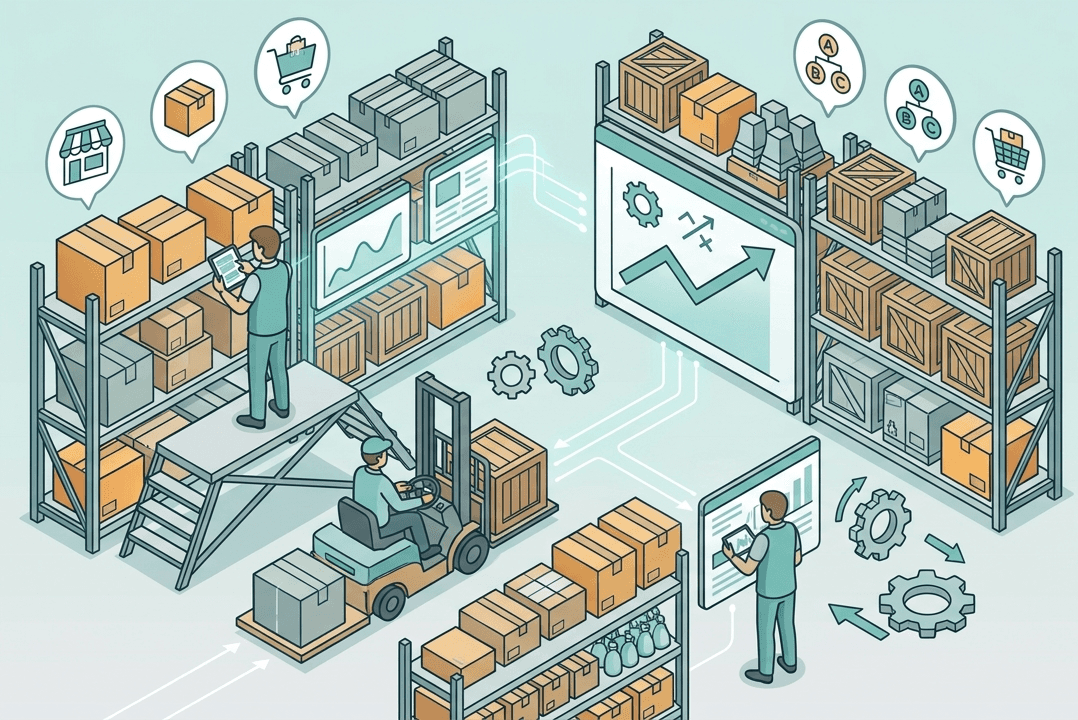
- Inventory updates: Pushing current stock levels back to each channel so available quantities stay accurate.
- Shipment confirmations: Sending tracking numbers, carrier info, and delivery estimates back to the platform and ultimately to the customer.
- Returns processing: Receiving return authorizations and updating inventory when items are inspected and restocked.
The quality of a 3PL's API integration determines how smoothly all of this happens. A well-built 3PL API integration handles edge cases: partial shipments, backorders, address corrections, kit components, and lot-tracked inventory. A poorly built one breaks when anything deviates from the happy path.
Webhooks: Real-Time Event Notifications
Webhooks are the mechanism that makes real-time fulfillment possible. Instead of your systems constantly asking, "Anything new?" a webhook fires automatically when something happens.
Here's how that plays out in practice:
1. A customer places an order on your Shopify store.
2. Shopify fires a webhook to your 3PL's system: "New order created."
3. The 3PL's WMS receives the order instantly and queues it for picking.
4. When the order ships, the WMS fires a webhook back to Shopify: "Order fulfilled. Here's the tracking."
5. Shopify updates the order status and triggers the shipping confirmation email to your customer.
This entire sequence can happen in seconds. No polling delays. No batch processing. No human intervention.
Webhooks are especially critical for [multi-channel inventory sync](https://shipdudes.com/blog/multi-channel-inventory-sync-how-to-prevent-overselling-across-shopify-amazon-and-tiktok-shop). When a unit sells on Amazon, the inventory decrement needs to propagate to Shopify, TikTok Shop, Faire, and every other active channel immediately. Even a 15-minute delay during a [flash sale](https://shipdudes.com/blog/flash-sale-fulfillment-handling-sudden-order-volume-spikes) can result in hundreds of oversold units.
At ShipDudes, our systems use webhook-driven architecture to keep inventory counts synchronized across all connected channels. When you're selling on five or six platforms simultaneously, this isn't a nice-to-have. It's the difference between a smooth operation and a constant stream of oversell cancellations.
Warehouse Management System Integration: The Brain of the Operation
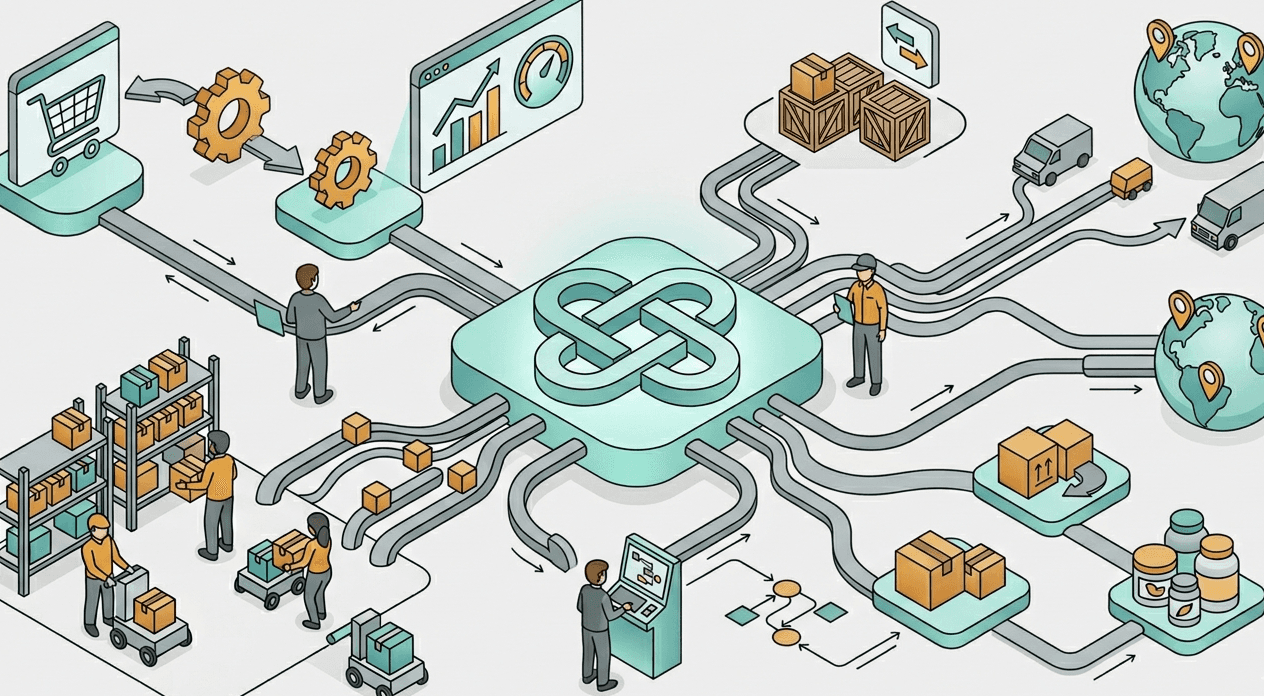
Your 3PL's WMS is where everything converges. It's the system that manages bin locations, pick paths, packing workflows, shipping label generation, and inventory tracking. Warehouse management system integration is about making sure this brain is connected to all the limbs.
A modern WMS should integrate with:
- Sales channels: Shopify, Amazon, WooCommerce, TikTok Shop, Faire, and others.
- ERPs: NetSuite, QuickBooks, SAP, or whatever you use for financial and operational reporting.
- Shipping carriers: UPS, FedEx, USPS, DHL, and regional carriers. Your 3PL should be leveraging [carrier diversification](https://shipdudes.com/blog/3pl-carrier-diversification-why-single-carrier-strategies-fail-during-peak-season) to rate-shop across providers.
- Returns platforms: Loop, Returnly, Happy Returns, or native return flows.
- Subscription platforms: Recharge, Bold, or similar tools for recurring orders.
The depth of these integrations matters. Surface-level connections might sync orders and tracking numbers but miss critical details like gift messages, custom packing instructions, or lot numbers for [supplement fulfillment](https://shipdudes.com/blog/supplement-fulfillment-fda-compliance-lot-tracking-and-expiration-management). If your 3PL's integration can't pass along the data your brand needs, you'll end up patching gaps with manual processes.
One area brands often overlook is [B2B and retail distribution](https://shipdudes.com/blog/b2b-order-fulfillment-edi-integration-and-retail-distribution-essentials) integration. If you're shipping to retailers like Target, Walmart, or specialty stores, your 3PL needs EDI (Electronic Data Interchange) capabilities. EDI is an older, more rigid protocol than modern APIs, but it's still the standard for retail compliance. Your 3PL's WMS needs to handle both modern API integrations for DTC and EDI connections for wholesale without requiring you to manage two separate workflows.
What Real-Time Data Sync Actually Looks Like
Let's make this concrete. Here's what a well-integrated 3PL tech stack does for a brand selling across multiple channels:
Morning: A shipment of 2,000 units arrives at the [New Jersey warehouse](https://shipdudes.com/blog/new-jersey-3pl-fulfillment-why-nj-is-the-strategic-hub-for-east-coast-dtc-brands). The WMS checks in the inventory against the ASN, updates stock levels, and those 2,000 units become available across every connected sales channel within minutes.
Midday: 150 orders come in across Shopify, Amazon, and TikTok Shop. Each order hits the WMS via webhooks, is routed to the optimal fulfillment center based on the ship-to address (maybe the [Las Vegas facility](https://shipdudes.com/blog/las-vegas-3pl-fulfillment-the-west-coast-hub-smart-dtc-brands-are-choosing) for West Coast orders), and enters the pick queue. Inventory decrements are pushed to all channels in real time.
Afternoon: Orders are picked, packed, and labeled. The WMS rate-shops across carriers for the best combination of speed and cost ([shipping cost optimization](https://shipdudes.com/blog/shipping-cost-optimization) at work). Tracking numbers are pushed back to each sales channel, triggering customer notifications.
Evening: The brand owner opens their dashboard and sees: orders fulfilled, current inventory by SKU and location, shipments in transit, and any exceptions that need attention. No spreadsheets. No guessing.
This is what 3PL data sync looks like when it's done right. Every handoff is automated. Every data point is current. The brand team focuses on marketing, product development, and growth instead of logistics firefighting.
Red Flags in 3PL Technology Integration
When you're evaluating a 3PL's tech capabilities, watch for these warning signs:
- "We have a Shopify integration" but they can't tell you specifically what data fields are synced or how frequently. Vague answers mean shallow integrations.
- No webhook support. If they're relying entirely on batch file imports or scheduled polling, your data will always lag behind reality.
- Manual onboarding for new channels. If adding TikTok Shop requires a "custom development project" with a 6-week timeline, the integration layer is fragile. ShipDudes supports 75+ integrations because our [fast onboarding](https://shipdudes.com/blog/fast-onboarding-fulfillment) process was built for brands that move quickly.
- No client-facing dashboard or API access. You should be able to see your data in real time and, ideally, pull it programmatically for your own reporting.
- Separate systems for DTC and B2B. If your 3PL uses one system for eCommerce orders and a completely different one for retail distribution, data will fall through the cracks.
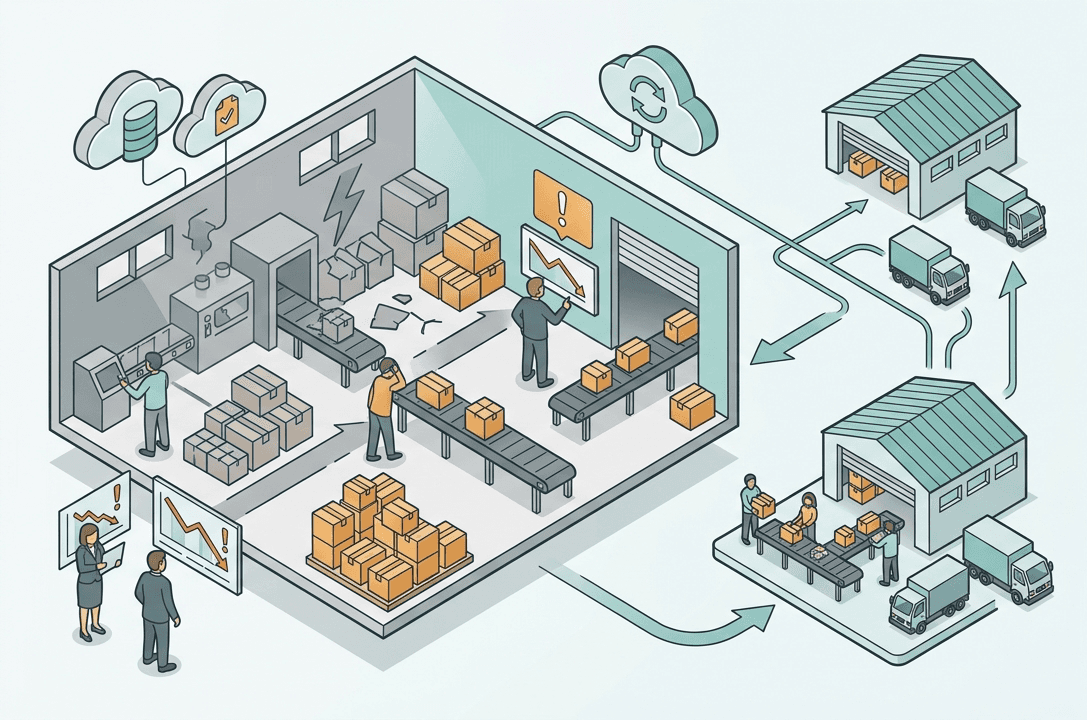
Also, ask about error handling. What happens when an API call fails? Does the system retry automatically? Is there alerting? Are failed orders quarantined and surfaced to your team? The happy path is easy. It's the edge cases that reveal the quality of a 3PL's technology.
How to Evaluate a 3PL's Tech Stack
Beyond avoiding red flags, here's a practical framework for comparing 3PL technology integration across providers:
1. List every platform you use today and plan to use in the next 12 months. Make sure the 3PL supports native integrations for all of them.
2. Ask for a data flow diagram. A good 3PL can show you exactly how an order moves from your sales channel through their WMS to the customer's doorstep, including every data handoff along the way.
3. Test the inventory sync. During onboarding, run a controlled test: sell a unit on one channel and verify how quickly inventory updates across all other channels.
4. Check reporting capabilities. Can you see real-time inventory by location, order status, and shipping performance without emailing someone?
5. Ask about [inventory forecasting](https://shipdudes.com/blog/inventory-forecasting-for-multi-channel-brands-preventing-stockouts-across-all-sales-channels) support. Does the system provide demand signals and reorder alerts, or is that entirely on you?
When we onboard brands at ShipDudes, we walk through every integration point with the brand's ops team. Our [US-based support team](https://shipdudes.com/blog/the-real-cost-of-3pl-overseas-support-why-us-based-teams-matter-for-your-brand) handles the technical setup, so you're not left troubleshooting API errors with an overseas help desk at 2 AM.
FAQ: 3PL Technology Integration
What is 3PL API integration?
3PL API integration is the process of connecting a third-party logistics provider's warehouse management system with your eCommerce platforms, ERPs, and other business tools through standardized programming interfaces. This enables automated order routing, real-time inventory sync, and tracking updates without manual data entry.
How do webhooks improve fulfillment speed?
Webhooks push data the moment an event occurs (like a new order or a shipment confirmation) rather than waiting for a scheduled sync. This eliminates polling delays, gets orders to the warehouse faster, and ensures customers receive tracking information sooner.
How many integrations should a 3PL support?
It depends on your sales channels, but look for a 3PL that supports at least the major eCommerce platforms (Shopify, Amazon, WooCommerce), marketplace channels (TikTok Shop, Faire, Walmart), and common business tools (ERPs, returns platforms, subscription tools). ShipDudes supports 75+ integrations to cover omnichannel brands.
What happens if an integration breaks or an API call fails?
A well-built 3PL system includes automatic retries, error logging, and alerting. Failed orders should be quarantined and surfaced to your team quickly. Ask your 3PL about their error handling before signing a contract. You don't want to discover their failure protocols during peak season.
Can a 3PL integrate with both DTC and B2B/retail systems?
Yes, but not all do it well. DTC fulfillment typically runs on modern APIs, while retail distribution often requires EDI compliance. The best 3PLs handle both within a single WMS so you get unified inventory visibility and reporting across all channels.
Stop Patching Gaps with Manual Workarounds
If you're currently exporting CSVs, manually updating inventory counts, or chasing down tracking numbers to paste into your eCommerce platform, your 3PL's technology is holding you back. The right 3PL technology integration eliminates all of that and gives you real-time visibility into every corner of your fulfillment operation.
ShipDudes was built by eCommerce operators who dealt with exactly these problems before building a better solution. With 75+ native integrations, dual-coast warehouses in Northern New Jersey and Las Vegas, 7-day processing, and an all-US-based team, we help growing CPG brands connect every sales channel to a fulfillment engine that actually keeps up.
Ready to see how our tech stack connects to yours? [Book a call with ShipDudes](https://shipdudes.com/book-a-call) and we'll walk through your specific integration needs.
Ready to Simplify Your Fulfillment?
Let's build a custom pricing model for your brand. No contracts required to start the conversation.