CPG Assembly and Fulfillment Services: Kitting, Packaging, and Distribution

Michael DeSarno
8 min read
Fulfillment Operations
Share
KEY TAKEAWAYS
• CPG assembly and fulfillment consolidates kitting, packaging, labeling, and shipping under one 3PL roof to cut costs and speed launches.
• ShipDudes handles pre-built and on-demand kitting from 2 NJ + 2 Las Vegas warehouses with 7-day processing.
• Dual-coast warehousing delivers 2-3 day ground shipping to most US customers, avoiding expensive air freight.
• 75+ platform integrations enable channel-specific packaging for DTC, Amazon FBA, and EDI-compliant retail orders automatically.
Last Updated:
If you run a CPG brand, you already know that getting your product made is only half the battle. The other half is getting it assembled, packaged correctly, and shipped to the right place, whether that's a DTC customer's doorstep, an Amazon FBA warehouse, or a retail distribution center expecting EDI-compliant pallets. Assembly and fulfillment for CPG is the connective tissue between your product and your revenue, and getting it wrong costs you more than just shipping fees.
This guide breaks down what CPG-specific assembly and fulfillment actually looks like in practice, how kitting and turnkey packaging fit into the picture, and what to look for in a 3PL partner that can handle the complexity of omnichannel CPG distribution.
What "Assembly and Fulfillment" Really Means for CPG Brands
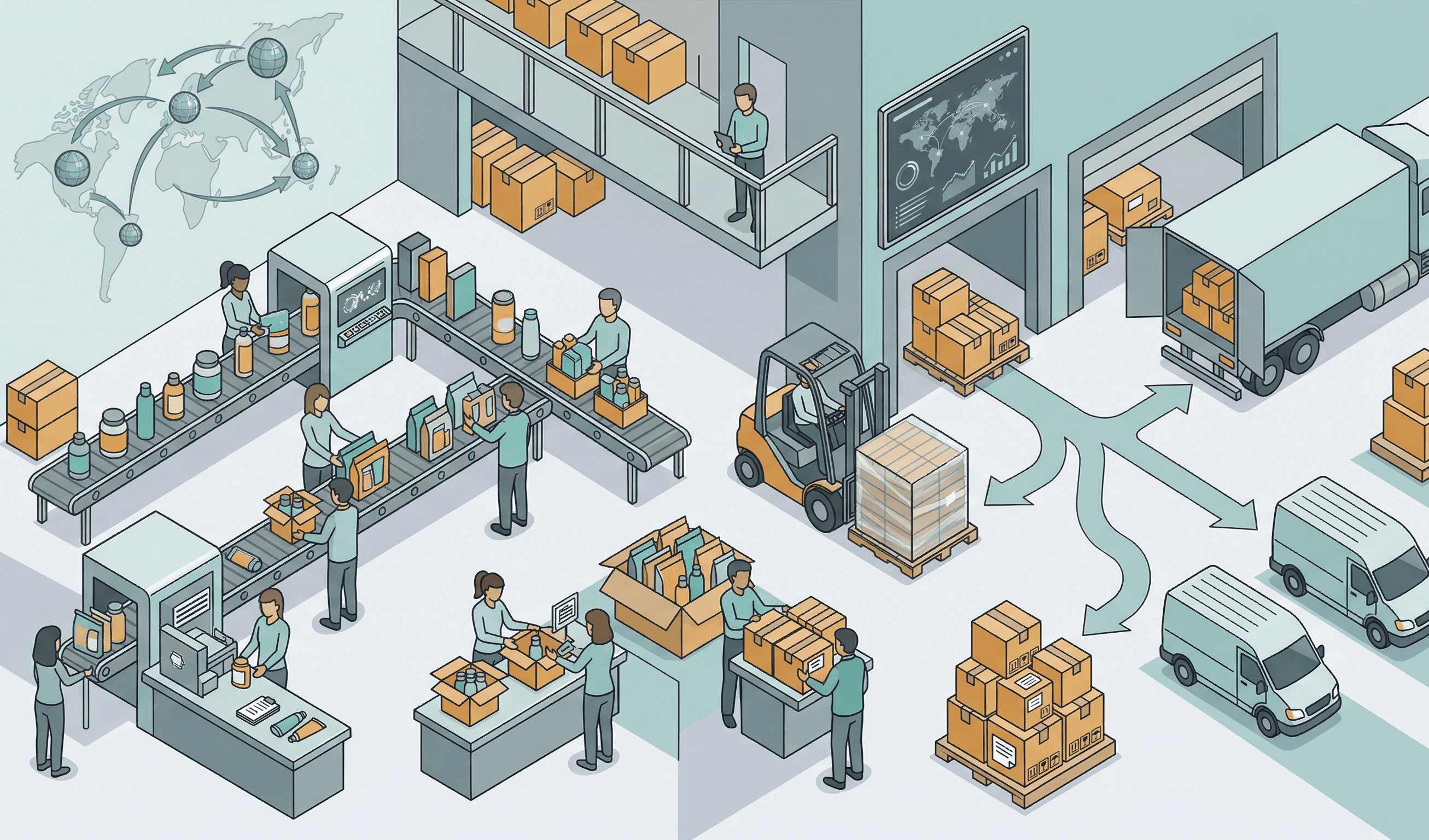
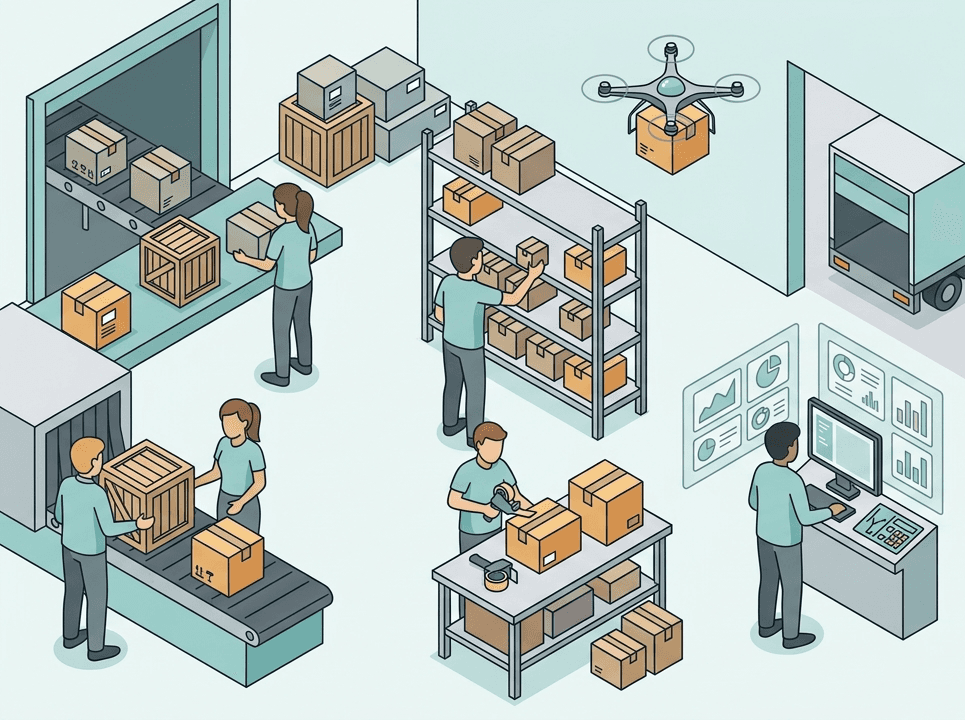
Let's get specific. Assembly and fulfillment for CPG isn't the same as shipping a t-shirt in a poly mailer. CPG products often require multiple steps before they're ready to leave the warehouse:
- Component assembly: Bundling individual SKUs into multi-item kits, variety packs, or gift sets
- Turnkey packaging: Inserting products into branded boxes, adding tissue paper, stickers, inserts, or samples
- Labeling and compliance: Applying lot codes, expiration dates, retail barcodes, or regulatory labels (think FDA for supplements and food)
- Channel-specific prep: Different packaging or labeling for DTC orders versus Amazon FBA versus retail purchase orders
A beauty brand selling a skincare kit, for example, might need three individual products placed in a custom box with a branded insert, shrink-wrapped, and labeled differently depending on whether it ships to a Shopify customer or a Sephora distribution center. That's CPG product assembly fulfillment in action.
At [ShipDudes](https://shipdudes.com/blog/kitting-and-assembly-services), this type of work is core to what we do. Our warehouses in Northern New Jersey and Las Vegas handle kitting, assembly, and packaging for brands across beauty, supplements, beverages, pet products, and general CPG.
Why Kitting and Turnkey Packaging Are Growth Levers (Not Just Logistics Tasks)
Many CPG founders treat kitting and packaging as back-office tasks. That's a mistake. CPG turnkey packaging kitting directly impacts your ability to launch new products, run promotions, and expand into new channels quickly.
Here's why:
Speed to market. When your 3PL can assemble a new bundle or variety pack without you shipping components to a separate co-packer, you cut weeks off your launch timeline. Need a limited-edition holiday kit? Your fulfillment partner should be able to spin it up in days, not months.
Margin protection. Outsourcing assembly to a dedicated co-packer, then shipping assembled products to a separate fulfillment center, means you're paying for double handling and extra freight. Consolidating assembly and fulfillment under one roof eliminates that waste.
Channel flexibility. If you're selling on Shopify, Amazon, TikTok Shop, Faire, and retail simultaneously (true [omnichannel fulfillment](https://shipdudes.com/blog/omnichannel-fulfillment)), your packaging requirements change by channel. A 3PL that handles both assembly and fulfillment can adapt packaging per order without you managing multiple vendors.
ShipDudes integrates with 75+ platforms, which means when a Faire wholesale order comes in with different packaging specs than your DTC Shopify order, the workflow is already built. No manual intervention required.
The Anatomy of CPG Fulfillment: From Receiving to Delivery
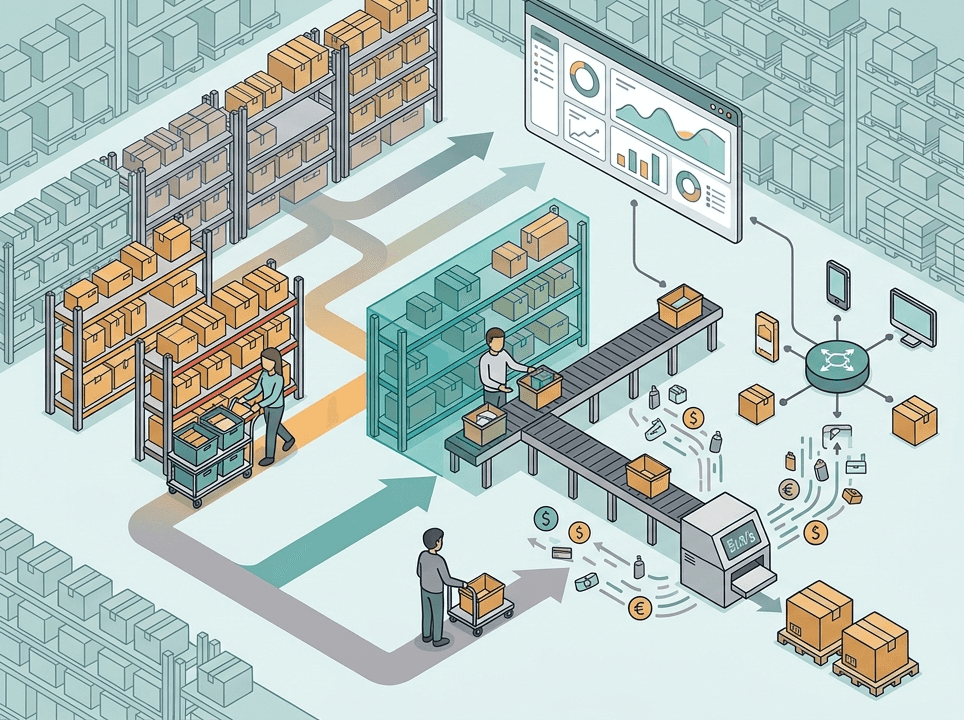
Let's walk through the full lifecycle so you know what to evaluate when choosing a partner.
1. Inbound Receiving and Inventory Management
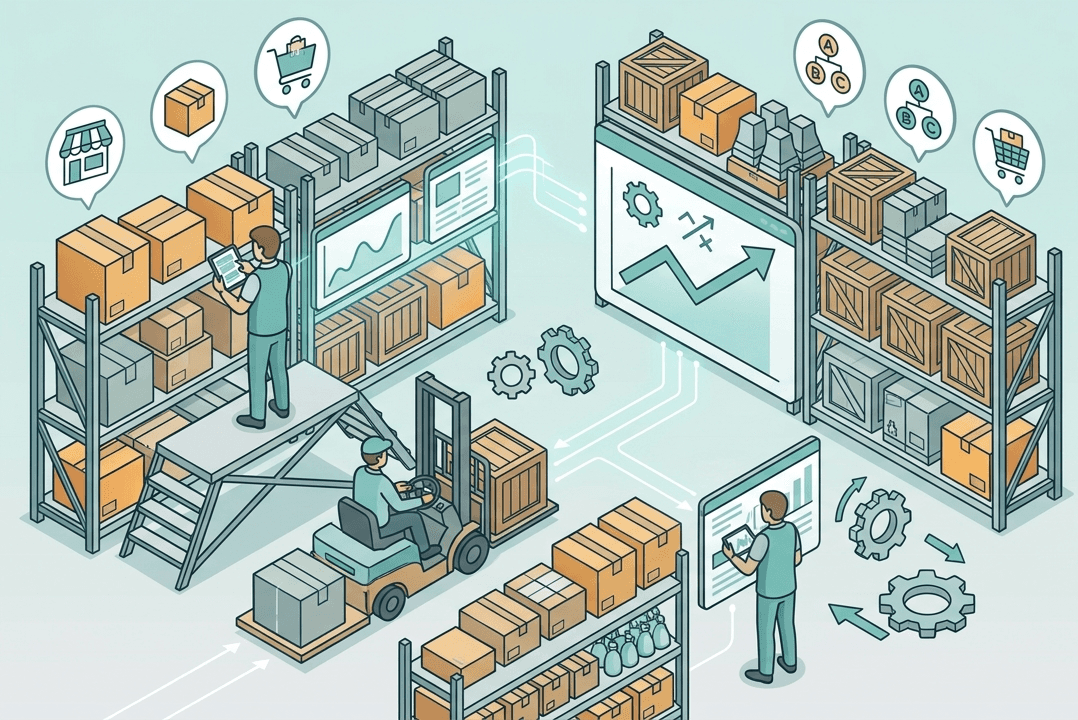
Everything starts with getting your product into the warehouse correctly. For CPG brands, this means lot tracking, expiration date logging, and SKU-level inventory visibility from day one. A bad [warehouse receiving process](https://shipdudes.com/blog/warehouse-receiving-process) creates downstream errors that compound with every order.
At ShipDudes, inbound receiving includes item-level verification, lot and expiration tracking (critical for [supplement fulfillment](https://shipdudes.com/blog/supplement-fulfillment-fda-compliance-lot-tracking-and-expiration-management) and shelf-stable food), and real-time inventory syncing across all connected sales channels.
2. Kitting and Assembly
Once components are received, assembly begins. This could mean building subscription boxes, assembling multi-SKU bundles, or creating retail-ready displays. The key is flexibility: your [kitting and assembly](https://shipdudes.com/blog/kitting-and-assembly-fulfillment) partner needs to handle both pre-built kits (assembled in bulk ahead of demand) and on-demand kits (assembled per order at time of purchase).
Pre-built kitting makes sense for stable, high-volume bundles. On-demand kitting is better for seasonal promotions, limited editions, or when you're testing new combinations. A good 3PL supports both without making you choose.
3. Pick and Pack
After assembly, orders are picked from inventory and packed for shipment. For CPG, this step often involves channel-specific requirements. A DTC order might go in a branded mailer with an insert card. A wholesale order might require case packing on pallets with specific label placements. An [Amazon FBA prep](https://shipdudes.com/blog/amazon-fba-prep) shipment has its own labeling and packaging rules entirely.
ShipDudes handles [pick and pack fulfillment](https://shipdudes.com/blog/pick-and-pack-fulfillment) with 7-day processing, meaning your warehouse is actively shipping orders every day of the week. That's not a marketing claim; it's an operational standard that matters when you're running flash sales or dealing with [peak season volume](https://shipdudes.com/blog/peak-season-fulfillment-strategy).
4. B2B and Retail Distribution
If you're selling into retail, your fulfillment partner needs to handle EDI-compliant orders, routing guides, and retailer-specific packaging requirements. Getting chargebacks from Target or Walmart because your 3PL didn't follow a routing guide is a painful and expensive lesson.
ShipDudes offers full [B2B order fulfillment with EDI integration](https://shipdudes.com/blog/b2b-order-fulfillment-edi-integration-and-retail-distribution-essentials), making retail distribution a natural extension of your existing fulfillment setup rather than a separate operation.
5. Returns Processing
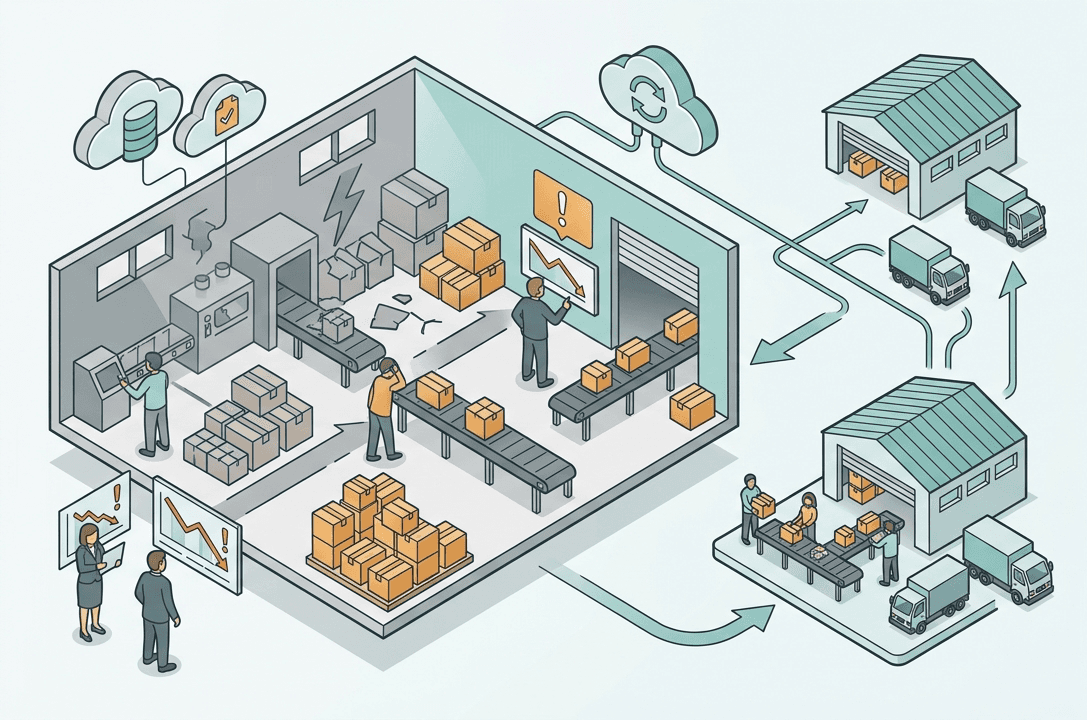
CPG returns are tricky. Some products can be restocked, others can't (opened supplements, for example). Your 3PL needs clear protocols for inspecting returns, restocking eligible items, and disposing of or quarantining the rest. A solid [returns management](https://shipdudes.com/blog/returns-management-3pl) process protects your margins and keeps inventory counts accurate.
Location Matters: Why Dual-Coast Beats Single-Warehouse
Many CPG brands start searching for assembly and fulfillment for CPG in Texas, the Netherlands, or other specific regions based on where their customers or suppliers are. Location matters, but the real question isn't "where is the warehouse?" It's "can my fulfillment partner reach my customers fast and affordably?"
For brands selling primarily in the US market, a [dual-coast warehousing setup](https://shipdudes.com/blog/d2c-fulfillment-why-8-figure-brands-need-dual-coast-warehousing) covers the most ground. ShipDudes operates from two facilities in Northern New Jersey (covering the entire [East Coast](https://shipdudes.com/blog/east-coast-3pl-fulfillment-one-warehouse-coverage-from-maine-to-miami)) and two in Las Vegas (covering the [West Coast and beyond](https://shipdudes.com/blog/west-coast-3pl-fulfillment-hitting-every-western-state-from-las-vegas)).
This [two-coast approach](https://shipdudes.com/blog/nationwide-3pl-fulfillment-why-a-two-coast-setup-beats-a-single-warehouse) means most US customers receive orders in 2 to 3 business days via ground shipping. You avoid expensive air freight, reduce transit damage (especially important for [beverages](https://shipdudes.com/blog/beverage-fulfillment-challenges-glass-liquid-restrictions-and-shipping-solutions) and glass packaging), and can offer competitive delivery speeds without paying for expedited service.
For brands considering assembly and fulfillment for CPG in the Netherlands or other international hubs, the calculus is different. If your primary customer base is in Europe, a European 3PL makes sense. But if you're a European CPG brand expanding into the US, partnering with a US-based 3PL like ShipDudes gives you domestic fulfillment capabilities without setting up your own operations stateside.
Similarly, brands searching for assembly and fulfillment for CPG in Texas often find that a Las Vegas hub offers comparable coverage of the southern and western US, with the added benefit of [no state income tax and lower warehouse costs compared to California](https://shipdudes.com/blog/california-3pl-fulfillment-statewide-coverage-from-a-single-nevada-hub).
What to Look for in a CPG Assembly and Fulfillment Partner
Not every 3PL is built for CPG. Here's what separates a good fit from a bad one:
In-house assembly capabilities. If your 3PL outsources kitting to a third party, you've added a middleman (and more risk). Look for a partner that does assembly on-site, in the same facility where fulfillment happens. ShipDudes keeps everything in-house with a [US-based team](https://shipdudes.com/blog/the-real-cost-of-3pl-overseas-support-why-us-based-teams-matter-for-your-brand), so there's no game of telephone between your brand and the people handling your product.
Platform integrations. CPG brands sell everywhere. Your 3PL should connect natively to your sales channels, not require manual CSV uploads. ShipDudes integrates with 75+ platforms including Shopify, Amazon, TikTok Shop, Faire, WooCommerce, and more.
Lot tracking and compliance. If you sell supplements, food, or beverages, your 3PL must support FIFO (first in, first out) inventory rotation, lot tracking, and expiration management. This isn't optional; it's regulatory.
Scalability without chaos. Your 3PL should handle your current volume and your next level. If you're wondering whether it's time to outsource, our guide on [when to switch to a 3PL](https://shipdudes.com/blog/when-to-switch-to-3pl) breaks down the signals. And if you're comparing the economics of doing it yourself versus outsourcing, check out [3PL vs. in-house fulfillment](https://shipdudes.com/blog/3pl-vs-in-house-fulfillment).
Fast onboarding. Switching 3PLs or onboarding for the first time shouldn't take months. ShipDudes offers [fast onboarding](https://shipdudes.com/blog/fast-onboarding-fulfillment) designed to get CPG brands live and shipping quickly.
The Bottom Line: Assembly and Fulfillment Is a Competitive Advantage
The CPG brands that win aren't just the ones with the best products. They're the ones that can get those products assembled, packaged, and delivered faster, cheaper, and more reliably than the competition. Whether you're building subscription boxes, launching seasonal bundles, expanding into retail, or prepping inventory for Amazon FBA, the right assembly and fulfillment partner turns operational complexity into a growth engine.
ShipDudes was founded by eCommerce entrepreneurs who lived through the pain of bad fulfillment partnerships. That's why we built an operation specifically designed for CPG brands that sell across multiple channels and need flexibility without sacrificing reliability. Dual-coast warehouses, in-house kitting and assembly, 75+ integrations, 7-day processing, and a US-based team that actually picks up the phone.
If you're evaluating your assembly and fulfillment setup, or if you're stuck managing it yourself and know it's time to scale, [book a call with ShipDudes](https://shipdudes.com/book-a-call). We'll walk through your specific product, channels, and volume to see if we're the right fit.
Frequently Asked Questions
What is assembly and fulfillment for CPG?
Assembly and fulfillment for CPG refers to the process of assembling consumer packaged goods (bundling, kitting, packaging, labeling) and then storing, picking, packing, and shipping those products to end customers or retail partners. A 3PL like ShipDudes handles both assembly and fulfillment under one roof, eliminating the need for separate co-packers and fulfillment centers.
What is CPG turnkey packaging and kitting?
CPG turnkey packaging kitting is a service where a 3PL handles the complete packaging process for your product, including inserting items into branded boxes, adding inserts or samples, applying labels, and building multi-SKU bundles or kits. ShipDudes provides both pre-built and on-demand kitting for CPG brands.
Can a US-based 3PL support CPG brands expanding from Europe or other international markets?
Yes. CPG brands based in the Netherlands, UK, or elsewhere can partner with a US-based 3PL like ShipDudes to handle domestic assembly and fulfillment in the American market. Products ship to ShipDudes' warehouses in New Jersey and Las Vegas, and all assembly, storage, and fulfillment is managed stateside.
How does dual-coast warehousing benefit CPG fulfillment?
Dual-coast warehousing, such as ShipDudes' facilities in Northern New Jersey and Las Vegas, allows CPG brands to reach most US customers in 2 to 3 business days via ground shipping. This reduces shipping costs, lowers transit damage risk for fragile products like beverages, and improves customer satisfaction.
What CPG industries does ShipDudes serve?
ShipDudes provides assembly and fulfillment services for CPG brands in beauty, pet products, beverages, shelf-stable food, supplements, small electronics, and general consumer packaged goods. All services include lot tracking, expiration management, and channel-specific packaging.
Ready to Simplify Your Fulfillment?
Let's build a custom pricing model for your brand. No contracts required to start the conversation.