D2C Fulfillment: Why 8-Figure Brands Need Dual-Coast Warehousing

Michael DeSarno
8 min read
Fulfillment Operations
Share
KEY TAKEAWAYS
• Dual-coast warehousing can save 8-figure D2C brands $450K to $1M+ annually by reducing average shipping zones from 5+ to 2-4.
• ShipDudes operates 2 NJ and 2 Las Vegas facilities with 7-day processing, 75+ integrations, and intelligent order routing.
• Splitting inventory east and west enables 1-3 day ground delivery to nearly every US address without paying for expedited shipping.
• Brands shipping 300K+ packages per year see the strongest ROI from dual-coast fulfillment, often within weeks of transition.
Last Updated:
You did not build an 8-figure brand by accepting "good enough." You obsessed over product quality, dialed in your customer acquisition costs, and built a brand people actually care about. But if you are still shipping every order from a single warehouse in one region of the country, your fulfillment strategy is working against you.
Here is the reality: as D2C fulfillment volumes scale, single-location shipping becomes a margin killer. Customers in New York wait too long. Customers in California pay too much. Or vice versa. Either way, you are bleeding money on shipping costs and leaving customer satisfaction on the table.
Dual-coast warehousing solves this. It is not a luxury reserved for nine-figure brands. It is the logical next step for any CPG company doing $10M or more in annual revenue, and it is more accessible than most founders think.
Let's break down why it matters, how it works, and what to look for in a 3PL partner that can actually execute it.
The Single-Warehouse Problem at Scale
When you were shipping 50 orders a day, a single fulfillment center made perfect sense. Low complexity, easy to manage, predictable costs. But at 500 or 1,000 orders a day, the math changes dramatically.
Consider this: roughly 80% of the US population lives east of the Mississippi River. If your only warehouse is in Nevada or Southern California, you are shipping the majority of your orders across 2,000+ miles. That means Zone 7 and Zone 8 rates from carriers, which can be two to three times more expensive than Zone 2 or Zone 3 shipments. It also means 4 to 6 day ground transit times instead of 1 to 3 days.
Flip the scenario. If you are only warehousing on the East Coast, your West Coast customers face the same problem. And with D2C brands competing against Amazon Prime's two-day (and increasingly one-day) delivery expectations, slow shipping is not just an inconvenience. It is a conversion killer.
At 8-figure revenue, even a small percentage improvement in shipping costs or delivery speed compounds into hundreds of thousands of dollars annually. That is not a rounding error. That is your next product launch funded.
How Dual-Coast Warehousing Changes the Equation
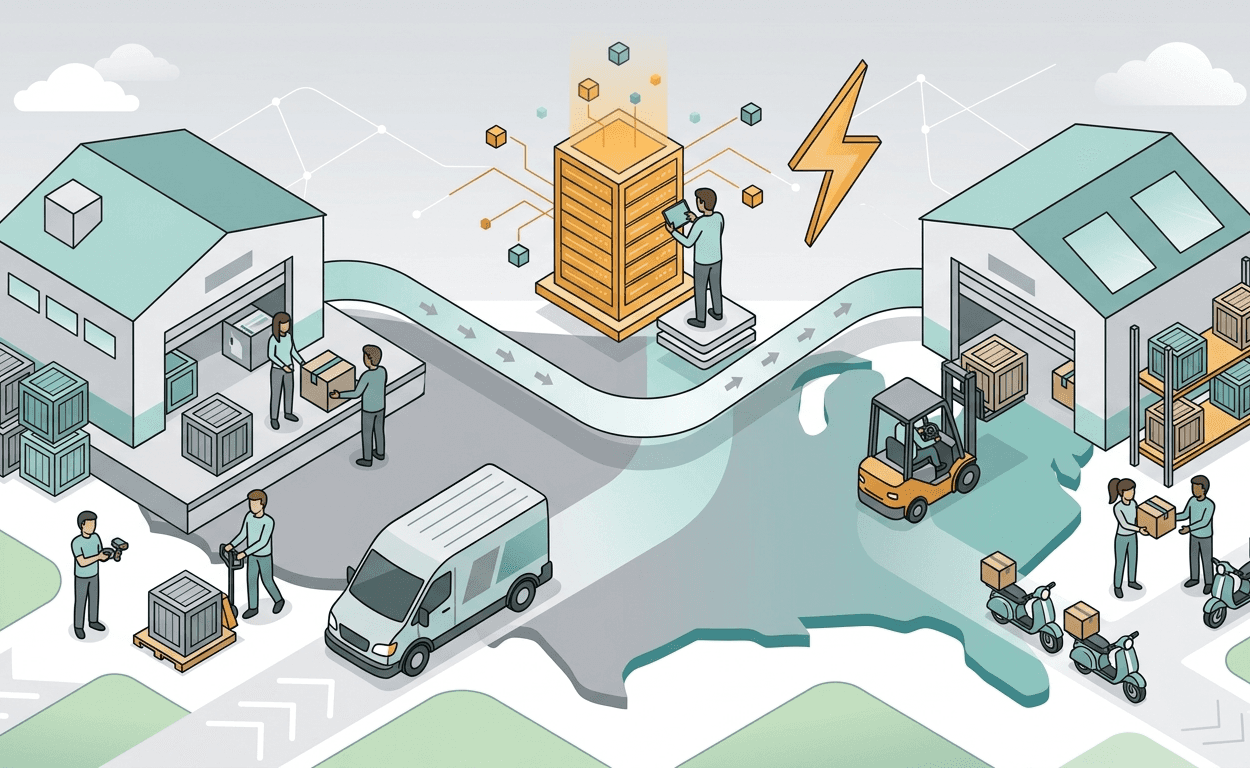
The concept is straightforward: split your inventory across fulfillment centers on the East Coast and West Coast, then route each order to the closest facility. The execution, however, requires the right infrastructure and the right partner.
Here is what changes when you operate fulfillment centers east and west coast:
Shipping costs drop significantly. When every order ships from the nearest warehouse, you dramatically reduce the average shipping zone. Instead of Zone 6 and 7 dominating your carrier invoices, you shift the majority of shipments to Zone 2 through 4. For brands shipping thousands of packages daily, this reduction in per-package cost adds up fast.
Delivery speeds improve across the board. Ground shipping from a New Jersey warehouse reaches 90% of the East Coast population in 1 to 2 business days. Ground shipping from a Las Vegas warehouse covers the entire Western US in a similar timeframe. Together, you can reach nearly every US address in 1 to 3 business days via ground, without paying for expedited shipping.
Customer satisfaction and repeat purchase rates climb. Faster delivery creates a better unboxing experience. Fewer days in transit means fewer damaged packages, fewer "where is my order" tickets, and higher post-purchase satisfaction scores. For CPG brands where repeat purchases drive lifetime value, this matters enormously.
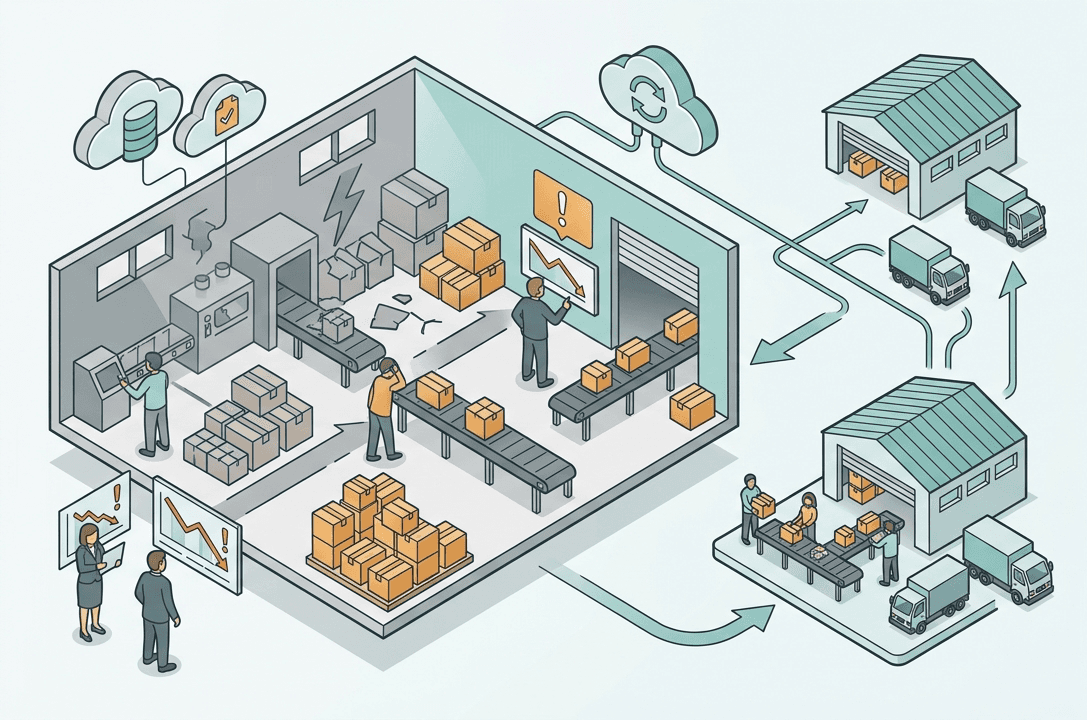
You build operational resilience. A single warehouse is a single point of failure. Weather events, carrier disruptions, labor shortages, or facility issues can halt your entire operation. With two locations, you have a built-in contingency. If one facility faces disruption, the other can absorb overflow.
The Real Numbers: What Dual-Coast Saves 8-Figure Brands
Let's talk specifics without getting into exact rate cards (those vary by brand, product, and volume).
A CPG brand doing $15M in D2C revenue might ship 300,000 packages per year. If the average shipping zone drops from Zone 5.5 to Zone 3 by adding a second fulfillment center, the per-package savings typically range from $1.50 to $4.00 depending on package weight and carrier rates.
At the conservative end, that is $450,000 in annual shipping savings. At the higher end, you are looking at over $1 million. Those savings often more than offset the incremental costs of splitting inventory across two locations.
Beyond direct shipping savings, 8-figure brands logistics teams also see reductions in customer service costs (fewer WISMO inquiries), lower return rates (fewer transit-damaged goods), and improved conversion rates from displaying faster estimated delivery times on product pages.
What to Look for in a Dual-Coast 3PL
Not every 3PL can execute dual-coast fulfillment well. Many will claim they have "nationwide coverage" because they partner with a network of loosely connected warehouses. That is not the same thing as an integrated operation.
Here is what actually matters when evaluating a D2C fulfillment partner for dual-coast operations:
Owned or directly operated facilities on both coasts. You want a 3PL that controls its own warehouse operations, not one that brokers space in someone else's facility. This ensures consistent quality, processes, and accountability across locations. ShipDudes, for example, operates four facilities: two in Northern New Jersey and two in Las Vegas. Both locations are managed by the same in-house team with the same SOPs and quality standards.
Intelligent order routing. Your 3PL's technology should automatically route each order to the nearest fulfillment center based on the destination zip code. This should happen seamlessly, without manual intervention. Bonus points if the system can also factor in inventory availability, so if one location is out of stock on a SKU, the order routes to the other facility automatically.
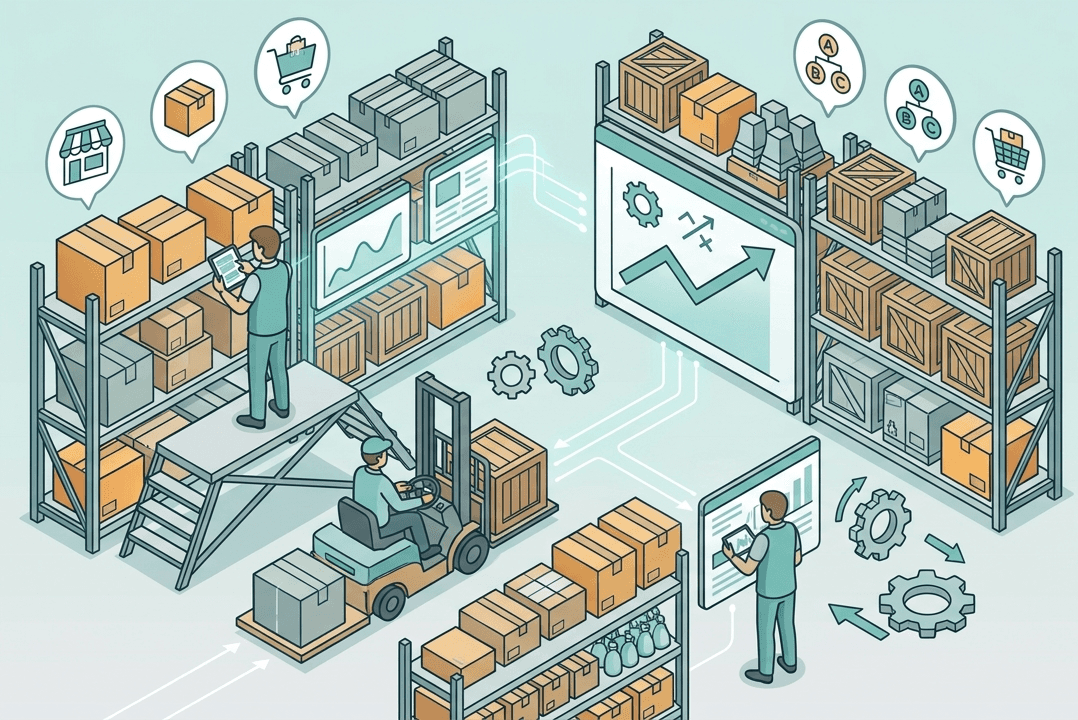
Unified inventory management. You need real-time visibility into inventory levels across both locations from a single dashboard. Managing two separate inventory pools with two separate logins and two separate reports is a nightmare. The right 3PL provides one source of truth.
Deep platform integrations. At 8-figure scale, you are likely selling across multiple channels: your Shopify store, Amazon, TikTok Shop, Faire for wholesale, maybe WooCommerce or another platform. Your 3PL needs to pull orders from all of these channels and route them through the same dual-coast logic. ShipDudes integrates with 75+ platforms to make this seamless for omnichannel brands.
US-based support that understands your business. When something goes wrong (and at scale, something always goes wrong), you need to reach a human who understands your account, your products, and your priorities. Overseas call centers reading from scripts will not cut it for brands at this level.
The Omnichannel Angle: It Is Not Just About D2C
Most 8-figure CPG brands are not purely D2C anymore. You are probably selling on Amazon, fulfilling wholesale orders to retailers, maybe running a subscription program, and testing emerging channels like TikTok Shop.
Dual-coast warehousing amplifies the benefits across every channel. Your Amazon FBA replenishment shipments cost less when they originate closer to Amazon's fulfillment centers. Your retail distribution orders (think Target, Walmart, or specialty retailers) ship faster and arrive within compliance windows more reliably. Your subscription boxes get to customers on time regardless of where they live.
This is what true omnichannel fulfillment looks like. It is not just about having a warehouse that can ship a Shopify order. It is about a partner that can handle D2C fulfillment, B2B distribution, Amazon FBA prep, kitting, subscription boxes, and returns processing, all from strategically located facilities.
ShipDudes was built specifically for this. Founded by eCommerce entrepreneurs who experienced the pain of working with 3PLs that could not keep up, the company has grown to become the 39th fastest-growing company in America (Inc. 5000) by solving exactly these problems for CPG brands.
When Is the Right Time to Go Dual-Coast?
Not every brand needs two fulfillment centers on day one. But there are clear signals that it is time to make the move:
- Your monthly shipping spend exceeds $50,000 and a meaningful percentage goes to Zone 5+ shipments.
- You are getting negative reviews or customer complaints about slow delivery times.
- Your customer base is geographically distributed across the US rather than concentrated in one region.
- You are expanding into retail or wholesale channels that require faster, more reliable delivery to distribution centers nationwide.
- You are approaching or have crossed the $10M annual revenue mark and need to reduce shipping times nationwide to stay competitive.
If two or more of these apply to you, the ROI on dual-coast fulfillment is almost certainly positive.
How ShipDudes Makes Dual-Coast Simple
ShipDudes operates fulfillment centers in Northern New Jersey and Las Vegas, giving brands true coast-to-coast coverage. With 7-day processing for pick and pack, 75+ platform integrations, and an entirely US-based team, the company was built to help scaling CPG brands reduce shipping times nationwide without adding operational complexity.
Whether you sell beauty products, supplements, pet products, beverages, shelf-stable food, small electronics, or general CPG goods, the dual-coast model works the same: inventory is strategically split, orders are intelligently routed, and your customers get their products faster while you spend less on shipping.
That is not theory. That is what over 150 brands are experiencing right now.
FAQ: Dual-Coast D2C Fulfillment
How does splitting inventory across two warehouses affect my inventory management?
With the right 3PL, it actually simplifies things. A unified inventory management system gives you real-time visibility across both locations from a single dashboard. Your 3PL should recommend inventory allocation ratios based on your order data and automatically rebalance as demand patterns shift.
Will I need to send separate shipments to each warehouse?
Yes, you will send inbound inventory to both locations. However, your 3PL should provide clear guidance on how to split shipments based on historical demand by region. Some brands send 60/40 East/West, others split 50/50. The right ratio depends on where your customers are.
What happens if one warehouse runs out of a SKU?
A well-built order routing system will automatically redirect orders to the facility that has the product in stock. You will pay slightly more in shipping for those orders, but the customer still receives their package without any delay or manual intervention.
How long does it take to transition from single-warehouse to dual-coast fulfillment?
With an experienced 3PL like ShipDudes, the transition typically takes 2 to 4 weeks. This includes onboarding, inventory receiving at both locations, integration setup, and testing before going live.
Is dual-coast fulfillment only for D2C brands?
No. Dual-coast warehousing benefits any brand selling across multiple channels, including Amazon, retail and wholesale distribution, and subscription programs. The shipping cost and speed advantages apply regardless of the sales channel.
Ready to Reduce Shipping Times and Costs Nationwide?
If you are an 8-figure brand still operating from a single fulfillment center, you are likely leaving money on the table every single day. Dual-coast D2C fulfillment is not about complexity. It is about making the smart infrastructure decision that matches where your business is today.
ShipDudes helps scaling CPG brands make this transition smoothly, with dual-coast facilities in New Jersey and Las Vegas, 75+ integrations, and a team that has been in your shoes.
Book a call with the ShipDudes team to see how dual-coast fulfillment would work for your brand: [shipdudes.com/book-a-call](https://shipdudes.com/book-a-call)
Ready to Simplify Your Fulfillment?
Let's build a custom pricing model for your brand. No contracts required to start the conversation.