DDP Fulfillment Solutions: Beyond Amazon FBA for International Brands

Michael DeSarno
8 min read
Industry Guides
Share
KEY TAKEAWAYS
• DDP fulfillment with a US-based 3PL gives international brands 2-5 day domestic shipping, full brand control, and omnichannel support that Amazon FBA cannot match.
• Ship bulk DDP to US warehouses, then fulfill DTC, Amazon FBM, TikTok Shop, and retail from one inventory pool.
• FBA limits international brands with unpredictable storage fees, no custom packaging, and zero customer data ownership.
• ShipDudes receives DDP freight at dual-coast warehouses (NJ and Las Vegas) with 75+ platform integrations and 7-day processing.
Last Updated:
If you are an international brand selling into the US market, you have probably started with Amazon FBA. It makes sense. FBA gives you access to Prime buyers, handles storage and shipping, and removes a lot of the complexity around last-mile delivery in a country you might not have a physical presence in.
But at some point, FBA becomes the bottleneck. You are paying steep storage fees, losing control of your customer data, dealing with surprise inventory limits, and watching your margins shrink with every long-term storage surcharge. Worse, FBA does not solve the full picture of cross-border fulfillment. It does not handle your DTC orders, your retail distribution, your TikTok Shop sales, or your wholesale accounts.
This post is for international CPG brands that have outgrown FBA (or want to avoid its traps altogether) and are looking at DDP fulfillment solutions that actually support multi-channel growth in the US market.
What Is DDP Fulfillment and Why Does It Matter?
DDP stands for Delivered Duty Paid. In simple terms, it means the seller (that is you, the international brand) handles all import duties, taxes, and customs clearance before goods arrive at the US warehouse. Your American customers never see a surprise customs charge at their door. The product shows up like any domestic order.
This matters because customer experience in the US market is ruthlessly competitive. If a buyer orders your supplement or beauty product and gets hit with a customs fee at delivery, you are losing that customer permanently. DDP fulfillment removes that friction entirely.
The real question is not whether to use DDP shipping solutions. It is who handles your inventory once it clears customs and lands on US soil. That is where the fulfillment partner decision becomes critical.
Why Amazon FBA Falls Short for International Brands
Let us be direct about the limitations. FBA is a marketplace fulfillment service, not a full-spectrum logistics partner. Here is where it breaks down for international brands:
No true omnichannel support. FBA fulfills Amazon orders well. But if you are also selling on Shopify, TikTok Shop, Faire, or doing B2B distribution to retailers, FBA either cannot handle it or charges Multi-Channel Fulfillment (MCF) fees that eat into your margins. International brands expanding into the US need [omnichannel fulfillment](https://shipdudes.com/blog/omnichannel-fulfillment) from day one.
Inventory control is Amazon's, not yours. FBA decides how much inventory you can send in. During peak season, they may slash your limits right when you need capacity most. For a brand shipping containers across an ocean, that unpredictability is a serious problem.
Zero brand experience. No custom packaging. No inserts. No branded unboxing. Your product arrives in an Amazon brown box. If you are building a premium CPG brand, that is a non-starter.
Customer data stays with Amazon. You do not own the customer relationship. You cannot retarget, you cannot build email flows, and you cannot create the retention engine that makes DTC profitable.
For a deeper comparison, check out our breakdown of [Amazon FBA alternatives](https://shipdudes.com/blog/amazon-fba-alternative) and why growing brands are moving beyond the Amazon ecosystem.
DDP Fulfillment Alternatives: Comparing Your Options
Here is a straightforward comparison of the most common fulfillment approaches for international brands selling into the US:
| Feature | Amazon FBA | Overseas 3PL (shipping from origin) | US-Based 3PL with DDP Receiving |
|---|---|---|---|
| Customs/Duty Handling | Seller arranges before FBA inbound | Seller arranges per shipment | Seller arranges, 3PL receives cleared goods |
| Delivery Speed to US Customers | 1-2 days (Prime) | 7-21 days | 2-5 days (ground) |
| Multi-Channel Support | Limited (MCF fees) | Depends on provider | Full (Shopify, Amazon, TikTok, B2B, etc.) |
| Brand Customization | None | Varies | Full custom packaging, kitting, inserts |
| Customer Data Ownership | Amazon owns it | You own it | You own it |
| B2B/Retail Distribution | Not supported | Rarely supported | EDI-compliant, retailer-ready |
| Storage Cost Predictability | Volatile (age-based surcharges) | Low cost but slow transit | Predictable monthly rates |
| Inventory Visibility | Amazon's dashboard only | Varies widely | Real-time across all channels |
| Returns Processing | Amazon handles (restocking fees) | Complex/expensive | Customizable returns workflows |
The middle column (shipping direct from your home country) might work if you are only doing a handful of orders per week. But the moment you are doing real volume in the US, transit times of two to three weeks are not competitive. US consumers expect fast shipping, and cross-border fulfillment from origin simply cannot deliver that.
The right column, a US-based 3PL that receives your DDP shipments and handles fulfillment domestically, is the model that scales.
How DDP Fulfillment Works with a US-Based 3PL
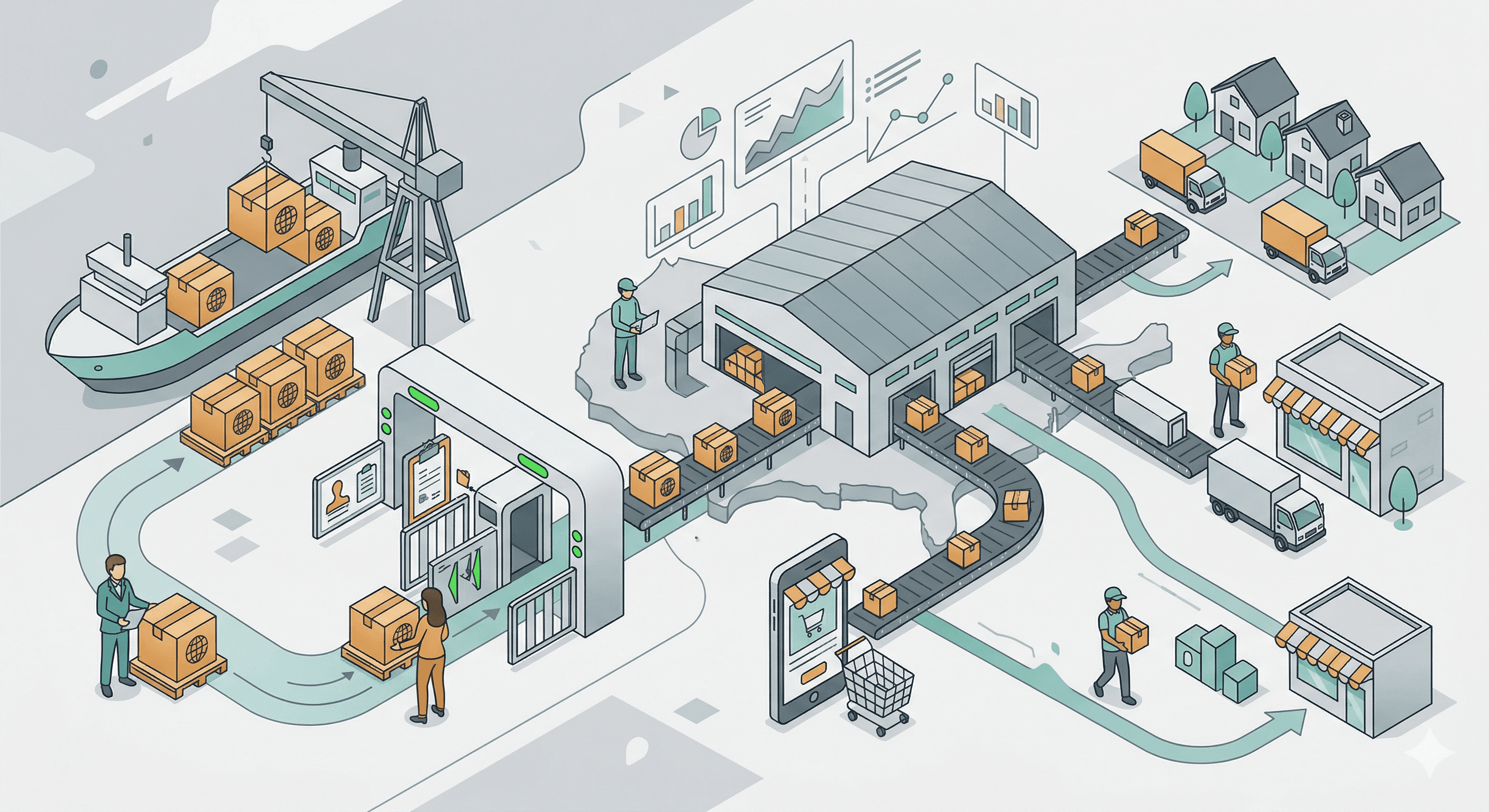
Here is the operational flow, step by step:
1. You manufacture and export from your home country. You work with your freight forwarder or customs broker to ship goods DDP to your 3PL's US warehouse. All duties, taxes, and customs clearance are handled before the shipment arrives.
2. Your 3PL receives and stores inventory. The [warehouse receiving process](https://shipdudes.com/blog/warehouse-receiving-process) includes counting, quality checks, SKU verification, and slotting into storage. For brands shipping supplements, beverages, or beauty products, this may also include lot tracking and expiration management.
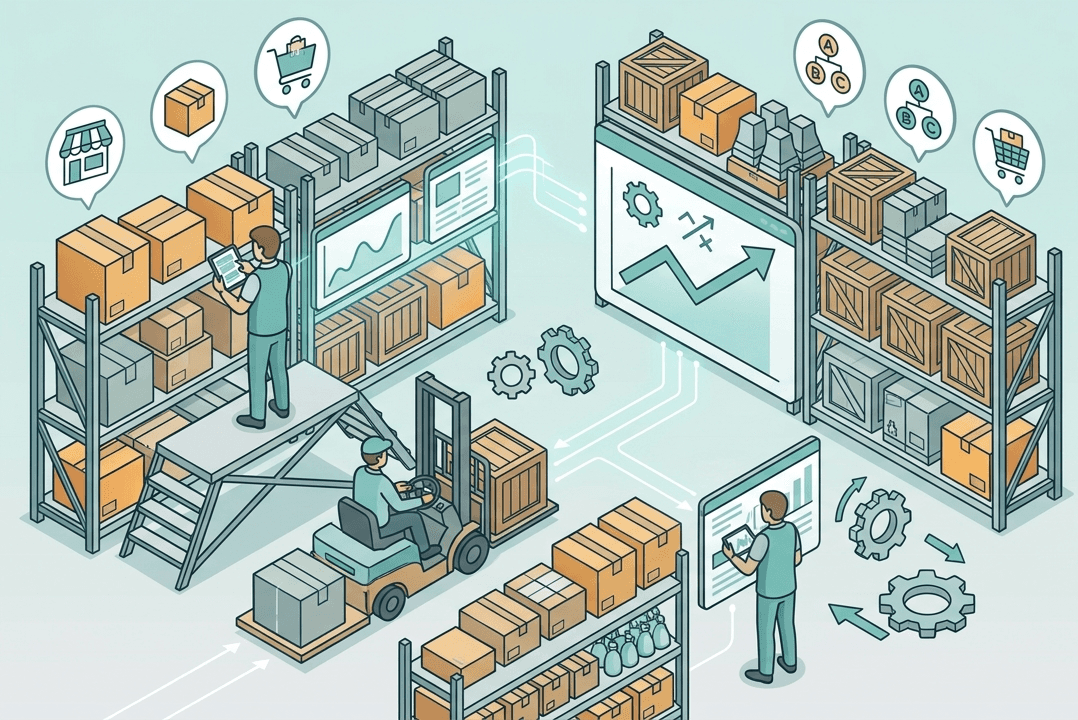
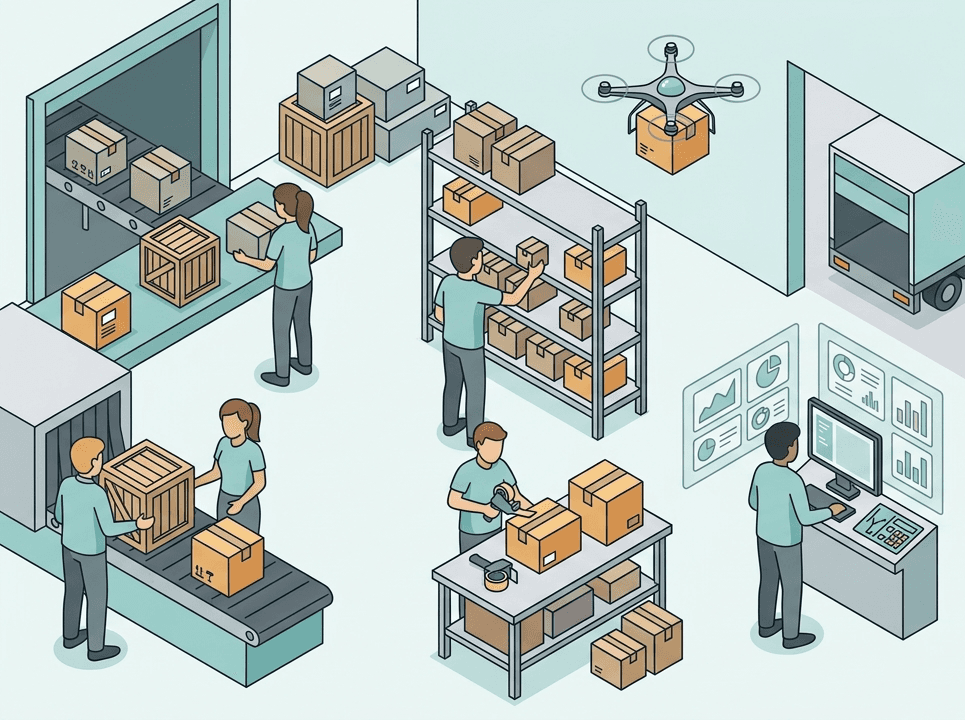
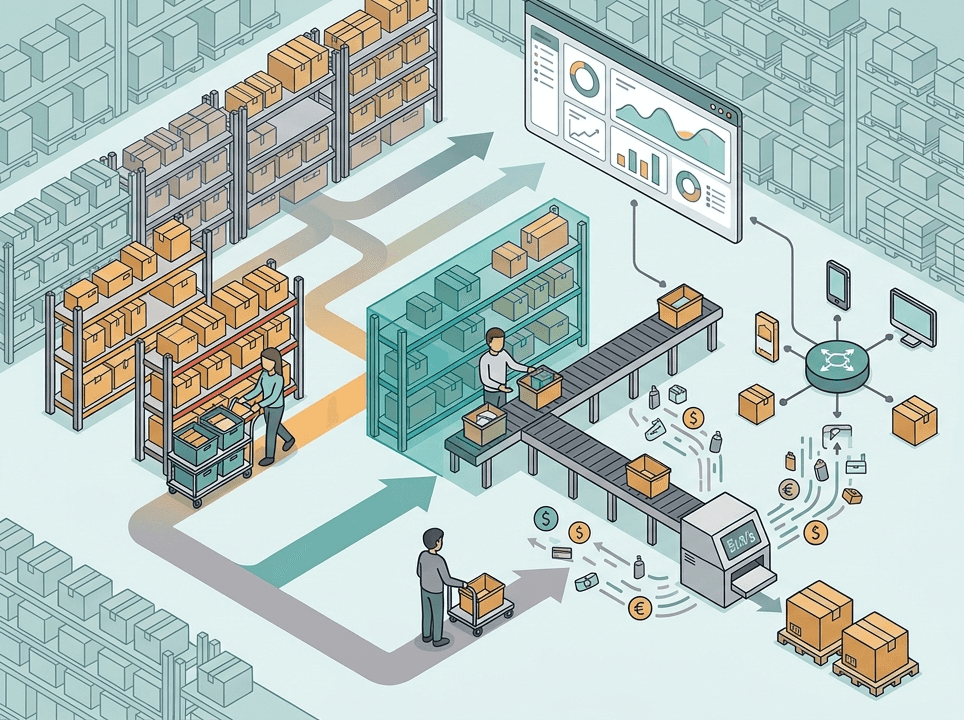
3. Orders flow in from all your sales channels. Whether it is a Shopify DTC order, an Amazon FBM order, a TikTok Shop purchase, or a B2B PO from a retailer, your 3PL picks, packs, and ships from the same inventory pool.
4. Domestic shipping handles last-mile delivery. Because your inventory is already in the US, your customers get fast ground shipping (typically 2-5 days depending on warehouse proximity). No customs surprises. No international tracking confusion.
This is the model ShipDudes uses with international brands across beauty, supplements, beverages, and general CPG. With [dual-coast warehouses](https://shipdudes.com/blog/fulfillment-centers-east-and-west-coast) in Northern New Jersey and Las Vegas, international brands can split inventory to cover the entire US with fast ground shipping.
What to Look for in a DDP Fulfillment Partner
Not every 3PL is set up to work with international brands. Here is what actually matters when you are evaluating partners:
Experience receiving international freight. Your 3PL needs to handle palletized ocean freight, LCL and FCL shipments, and coordinate with your customs broker on delivery appointments. This is not the same as receiving a few boxes from a domestic supplier.
Platform integrations that match your channels. If you are selling on Shopify, Amazon, TikTok Shop, Faire, and WooCommerce simultaneously, your 3PL needs native integrations with all of them. ShipDudes supports 75+ platform integrations, which means international brands do not have to cobble together workarounds.
US-based support team. When you are operating across time zones, the last thing you need is a support team that adds another layer of communication delay. A [US-based fulfillment team](https://shipdudes.com/blog/the-real-cost-of-3pl-overseas-support-why-us-based-teams-matter-for-your-brand) means faster issue resolution and clearer communication, especially when dealing with the nuances of international shipments.
Amazon FBA Prep capability. Many international brands still want to sell on Amazon alongside their DTC and retail channels. A good 3PL can receive your bulk DDP shipment and then prep a portion for [Amazon FBA](https://shipdudes.com/blog/amazon-fba-prep) while fulfilling other channels directly. One inbound shipment, multiple distribution paths.
B2B and retail distribution. If you are placing products into US retailers, you need a 3PL that understands [EDI compliance and retail distribution](https://shipdudes.com/blog/b2b-order-fulfillment-edi-integration-and-retail-distribution-essentials). Chargebacks from big-box retailers are expensive lessons.
Kitting and assembly. International brands often need to create US-specific bundles, add English-language inserts, or build variety packs. [Kitting and assembly services](https://shipdudes.com/blog/kitting-and-assembly-services) should be part of the offering.
The Cost Advantage of US-Based DDP Fulfillment
International brands sometimes hesitate at the idea of US warehousing costs. But when you run the real numbers, the math almost always favors a US-based 3PL over FBA or direct international shipping.
Consider the hidden costs of FBA: long-term storage fees, aged inventory surcharges, removal order fees, and the inability to control your own inventory levels. Then add the cost of lost sales when FBA limits your inbound shipments during your highest-demand periods.
With a dedicated 3PL, your storage costs are predictable. Your [shipping costs can be optimized](https://shipdudes.com/blog/shipping-cost-optimization) through carrier rate shopping and dual-coast positioning. And you are not paying marketplace commissions on your DTC orders.
For brands doing both DTC and wholesale, having one US inventory pool that serves all channels eliminates the need to split shipments between FBA, a separate DTC warehouse, and a retail distribution center. That consolidation alone can save significant money on international freight.
When It Is Time to Make the Switch
If you are an international brand experiencing any of these signals, it is time to explore DDP fulfillment alternatives beyond FBA:
- You are losing money on FBA storage fees because you cannot control inventory timing from overseas
- You want to launch DTC in the US but FBA does not support branded fulfillment
- US retailers are asking for EDI-compliant distribution and FBA cannot deliver that
- Your customer service is suffering because you have no control over the post-purchase experience
- You are selling on multiple platforms but managing separate fulfillment for each one
The transition does not have to be disruptive. Many ShipDudes customers run a hybrid model during the switch: keeping some inventory in FBA for Prime eligibility while routing DTC, [FBM](https://shipdudes.com/blog/amazon-fbm), and wholesale through ShipDudes. Over time, most shift more volume to the 3PL as they see the margin and experience improvements.
If you are not sure whether it is time to make the move, our guide on [when to switch to a 3PL](https://shipdudes.com/blog/when-to-switch-to-3pl) covers the key decision points.
FAQ: DDP Fulfillment and Amazon FBA Alternatives
What does DDP mean in fulfillment?
DDP (Delivered Duty Paid) means the seller pays all import duties, taxes, and customs clearance costs before goods arrive at the destination warehouse. In the context of US fulfillment, it means your international shipment arrives at your 3PL's warehouse fully cleared, ready to be stored and shipped to US customers without any additional customs charges.
Can I use a US 3PL and still sell on Amazon?
Yes. A 3PL like ShipDudes can receive your DDP shipments and split inventory between Amazon FBA Prep (for products you want in the FBA program) and direct fulfillment for DTC, FBM, and wholesale orders. This gives you the best of both worlds: Prime eligibility on Amazon and full brand control on every other channel.
How does DDP fulfillment compare to Amazon FBA for international brands?
Amazon FBA offers fast Prime delivery but limits your brand experience, charges unpredictable storage fees, and does not support multi-channel fulfillment. A US-based 3PL with DDP receiving gives you fast domestic shipping, full brand customization, omnichannel support, customer data ownership, and predictable costs. Most international brands scaling in the US find that a 3PL provides better margins and more flexibility than FBA alone.
What types of products work best with DDP fulfillment?
Any consumer product being sold into the US market benefits from DDP fulfillment. Beauty products, supplements, beverages, pet products, shelf-stable food, small electronics, and general CPG all work well. The key requirement is that your products can be legally imported and stored in US warehouses.
How long does it take to start shipping from a US warehouse after onboarding?
With ShipDudes, [fast onboarding](https://shipdudes.com/blog/fast-onboarding-fulfillment) means you can be shipping orders within days of your first inventory arriving at the warehouse. The timeline depends on how quickly your international freight clears customs and reaches the facility.
Ready to Build Your US Fulfillment Operation?
If you are an international brand selling (or planning to sell) into the US market, the right fulfillment partner changes everything. ShipDudes works with CPG brands across beauty, supplements, beverages, and more, providing DDP-ready receiving at dual-coast facilities in New Jersey and Las Vegas, 75+ platform integrations, and a fully US-based team that understands the nuances of cross-border fulfillment.
Stop letting FBA limitations dictate your US growth strategy. [Book a call with ShipDudes](https://shipdudes.com/book-a-call) to discuss how DDP fulfillment solutions can give your brand the speed, flexibility, and margin structure you need to compete in the US market.
Ready to Simplify Your Fulfillment?
Let's build a custom pricing model for your brand. No contracts required to start the conversation.