East Coast vs West Coast Fulfillment: Strategic Warehouse Placement for D2C Brands

Michael DeSarno
8 min read
Locations
Share
KEY TAKEAWAYS
• Bi-coastal fulfillment (East Coast + West Coast warehouses) can reduce per-package carrier costs by 15% to 30% through zone reduction.
• Brands shipping 100+ orders/day with geographically split customers see the strongest ROI from a dual-coast setup.
• Intelligent order routing automatically sends each order to the closest warehouse, optimizing for speed and cost in real time.
• ShipDudes operates 2 NJ + 2 Las Vegas facilities with 75+ integrations and 7-day processing to make bi-coastal fulfillment operationally simple.
Last Updated:
If you are shipping from a single warehouse and wondering why your delivery times are inconsistent, your shipping costs keep climbing, or your customers in certain regions are unhappy, the answer probably is not your carrier. It is your warehouse placement.
For D2C brands scaling beyond their first few hundred orders a day, the question of where inventory lives becomes just as important as what you sell. Operating fulfillment centers on the east and west coast is not a luxury reserved for enterprise brands. It is a strategic move that directly impacts your margins, your customer experience, and your ability to compete with the biggest players in eCommerce.
Let's break down exactly how bi-coastal fulfillment works, when it makes sense, and how to think about it as a growth lever rather than just a logistics line item.
Why Warehouse Location Matters More Than You Think
Most D2C founders start with a single fulfillment center. Maybe it is close to their manufacturer, close to their apartment, or wherever their first 3PL happened to be located. That works fine when you are doing 50 orders a day and most of your customers are regional.
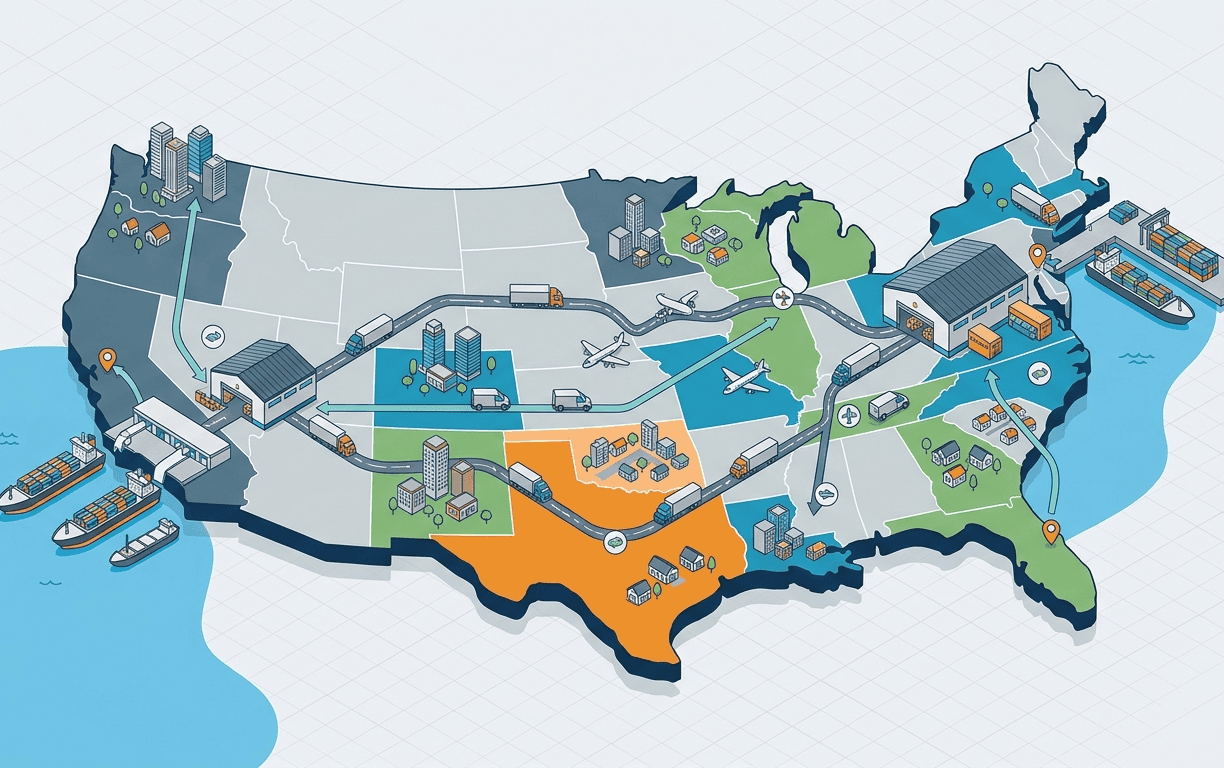
But here is what happens as you scale nationally: if your single warehouse is in Los Angeles and 40% of your orders ship to the Northeast, those packages are traveling 2,500+ miles. That means higher shipping zones, longer transit times, and a worse customer experience for a huge chunk of your buyer base.
The math is simple. Shipping carriers price by zone. The farther a package travels, the more it costs. A package shipping from New Jersey to New York City is Zone 1 or 2. The same package shipping from Las Vegas to New York City is Zone 7 or 8. The cost difference per package can be several dollars, and when you multiply that across thousands of orders per month, it adds up fast.
This is why fulfillment centers on the east and west coast are not just an operational consideration. They are a financial strategy.
The Case for East Coast Fulfillment
The eastern seaboard is the most densely populated region in the United States. Roughly 40% of the US population lives within a day's ground shipping reach of a warehouse in the New Jersey or Mid-Atlantic corridor.
For D2C fulfillment specifically, an East Coast location gives you several advantages:
Population density. The Northeast megalopolis (Boston to Washington, D.C.) contains over 50 million people. Ground shipping from New Jersey reaches most of these consumers in one to two business days.
Port proximity. If you are importing goods from Europe or certain parts of Asia that route through the Suez Canal, East Coast ports like Newark or Norfolk can significantly reduce your inbound logistics costs and transit times.
B2B and retail distribution. Many major retail headquarters and distribution centers are concentrated in the eastern half of the country. If you are doing wholesale alongside your D2C channel, East Coast placement is often essential for meeting retailer routing guides and EDI compliance requirements.
ShipDudes operates two warehouse facilities in Northern New Jersey for exactly these reasons. The location provides fast, affordable access to the largest concentration of consumers in the country while also positioning brands well for retail distribution through major retailers.
The Case for West Coast Fulfillment
The western United States is not as densely packed into a single corridor, but California, the Pacific Northwest, and the Mountain West collectively represent a massive consumer base. And if your products are manufactured domestically or imported from Asia through Pacific ports, West Coast fulfillment is a natural starting point.
Here is what the West Coast gives you:
Port access for Asian imports. The majority of consumer goods imported from China, Vietnam, and other Asian manufacturing hubs come through the Ports of Los Angeles, Long Beach, or Oakland. Having a fulfillment center on the West Coast dramatically shortens the distance between your port of entry and your warehouse.
Coverage for the western US. California alone has nearly 40 million people. Add Arizona, Nevada, Oregon, Washington, Colorado, and Texas (which sits closer to western fulfillment centers for many carriers), and you are looking at a huge market that benefits from shorter shipping zones.
Growing Sun Belt demand. The population shift toward the Sun Belt states (Nevada, Arizona, Texas, Florida) means that a strategically placed western fulfillment center can serve a growing and increasingly important customer segment.
ShipDudes has two fulfillment facilities in Las Vegas, Nevada, which offers a unique advantage over traditional Los Angeles or California-based warehouses. Nevada has no state income tax, lower warehousing costs than coastal California, and is still within easy reach of West Coast ports and the entire western US consumer base.
When a Multi-Warehouse Inventory Strategy Makes Sense
Not every brand needs two warehouses on day one. But there are clear signals that tell you it is time to consider a multi-warehouse inventory strategy:
Your average shipping zone is above 4. If you are consistently shipping packages across five, six, or seven zones, you are overpaying on every single order. Splitting inventory across two locations can drop your average zone significantly.
You are doing 100+ orders per day. At this volume, the per-order savings from zone reduction start to meaningfully offset the added complexity of managing inventory in two locations.
Your customer base is geographically split. If your Shopify analytics or order data show a near-even split between eastern and western customers, a single warehouse is always suboptimal for half your orders.
Transit time complaints are increasing. Customers expect two to three day delivery as a baseline. If you are consistently delivering in five to seven days to certain regions, you are losing repeat purchases and damaging your brand.
You are selling on multiple channels. Omnichannel brands selling through Shopify, Amazon, TikTok Shop, Faire, and retail simultaneously need geographic flexibility. Different channels may have different delivery expectations, and a dual-coast setup lets you meet all of them.
The key is finding a 3PL partner that makes multi-warehouse fulfillment operationally simple. With the right technology, intelligent order routing sends each order to whichever warehouse is closest to the customer automatically. You should not need to manually manage this.
How Intelligent Order Routing Works
The technology behind multi-warehouse fulfillment has matured significantly. Here is how it works in practice:
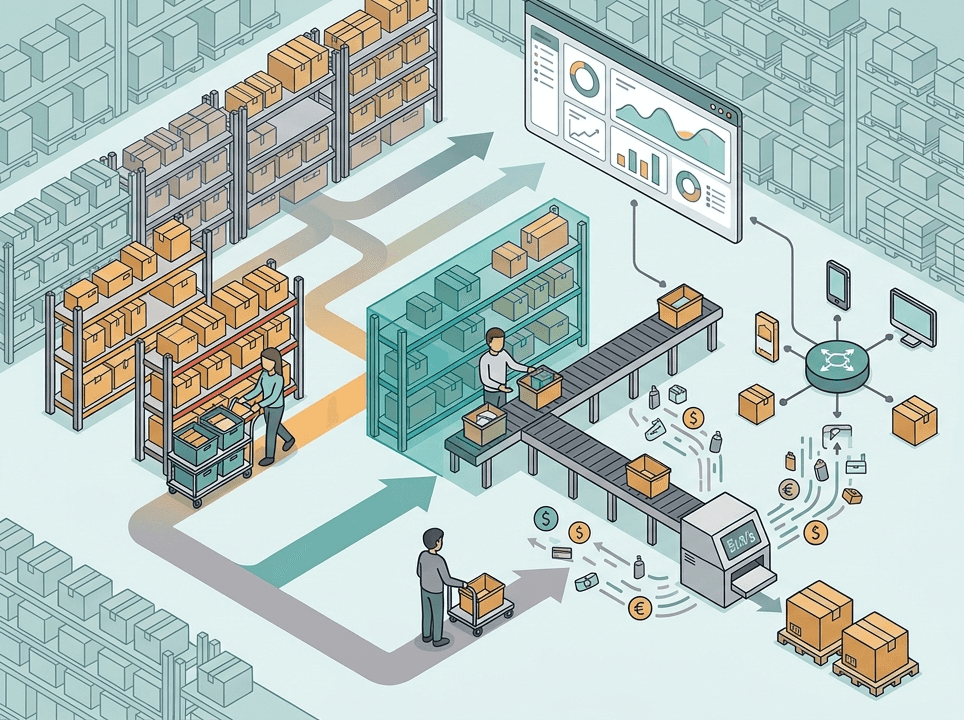
When an order comes in through any of your sales channels (Shopify, Amazon, WooCommerce, TikTok Shop, or any of the 75+ platforms that ShipDudes integrates with), the system evaluates the customer's shipping address. It then routes the order to the fulfillment center that offers the lowest zone, fastest transit, and available inventory.
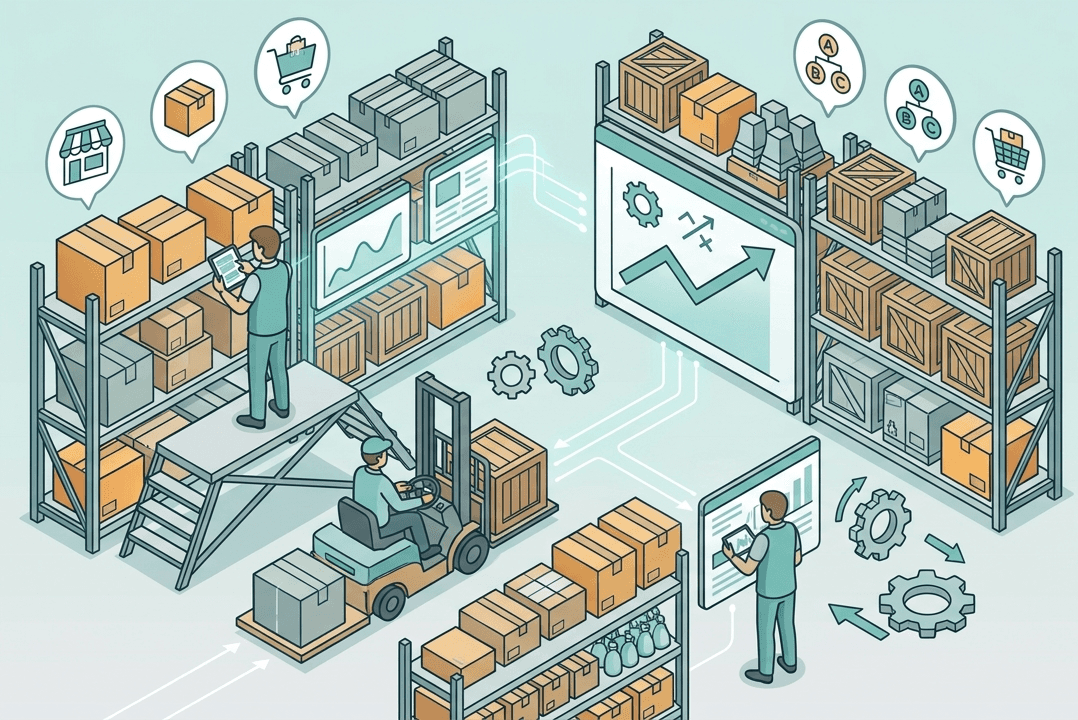
If inventory is only available at one location, the order goes there regardless of zone. This is why smart inventory allocation matters. You need to work with your 3PL to forecast demand by region and distribute inventory accordingly.
The best setups make this invisible to you as the brand owner. You should not be logging into two different systems or managing two separate operations. It should feel like one fulfillment network with two nodes.
ShipDudes handles this through a unified platform that gives brands a single dashboard view across both their New Jersey and Las Vegas facilities, with automated routing logic that optimizes for speed and cost on every order.
The Real Cost Savings of Bi-Coastal Fulfillment
Let's talk numbers without getting into specific pricing. Here is the framework for understanding your potential savings:
Zone reduction savings. Dropping your average shipping zone by two to three zones can reduce your per-package carrier cost by 15% to 30%, depending on package weight and carrier contract. For a brand shipping 5,000 orders per month, this can translate to tens of thousands of dollars in annual savings.
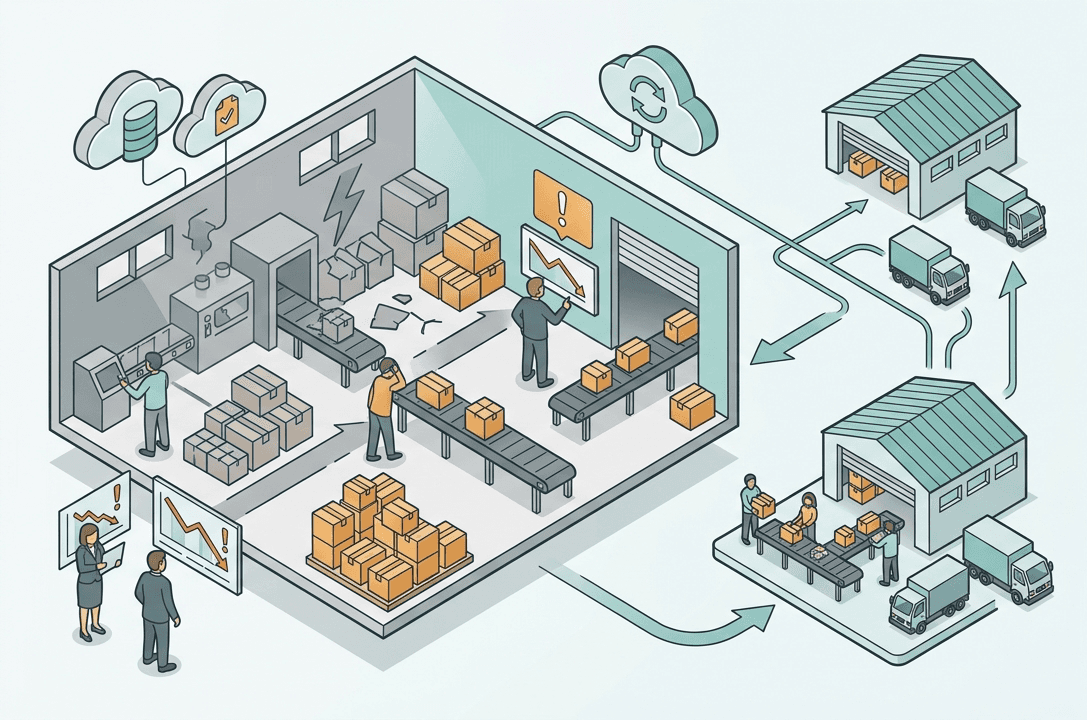
Reduced damage and returns. Shorter transit distances mean less time in carrier networks, fewer handoffs, and lower damage rates. This is especially important for CPG brands shipping beverages, beauty products, or supplements that can be sensitive to temperature or handling.
Improved conversion rates. Faster estimated delivery times at checkout increase conversion rates. Multiple studies show that showing "2-day delivery" versus "5-7 day delivery" can improve checkout conversion by 20% or more.
Lower customer acquisition costs. Happy customers who receive orders quickly are more likely to repurchase and refer. This compounds over time, reducing your effective CAC and improving lifetime value.
Common Mistakes Brands Make with Multi-Warehouse Fulfillment
Adding a second warehouse is not automatically a win. Here are the pitfalls to avoid:
Splitting inventory without data. Do not just put 50% of your inventory in each location. Analyze your order data by region and allocate accordingly. If 60% of your orders go to the East Coast, your New Jersey facility should hold more stock.
Choosing locations too close together. Two warehouses in California and Oregon do not help you reach East Coast customers. The goal is geographic coverage, not regional redundancy.
Working with two different 3PLs. Managing two separate 3PL relationships for two warehouses creates chaos. Different systems, different SLAs, different communication channels. Choose a single 3PL partner with facilities in both regions.
Ignoring inventory sync. Real-time inventory visibility across both locations is non-negotiable. Overselling because your systems do not talk to each other will cost you more than you save on shipping.
How ShipDudes Approaches Bi-Coastal Fulfillment
ShipDudes was built by eCommerce operators who experienced these exact problems firsthand. The dual-coast warehouse network (Northern New Jersey and Las Vegas) was designed specifically to give D2C and omnichannel brands the ability to reduce shipping times nationwide without the operational headaches that typically come with multi-location fulfillment.
With an entirely US-based, in-house team (no overseas call centers), 7-day processing for pick and pack, and 75+ platform integrations, ShipDudes handles the complexity so you can focus on growing your brand. Whether you are shipping beauty products, pet supplies, supplements, beverages, or general CPG, the infrastructure is built to scale with you.
ShipDudes was recognized on the Inc. 5000 list as the 39th fastest-growing company in America, a reflection of how many brands are choosing this approach to fulfillment.
FAQ: Fulfillment Centers East and West Coast
How do I know if I need fulfillment centers on both coasts?
Look at your order data. If your customers are spread across the country and your average shipping zone is above 4, you are likely overpaying on shipping and underdelivering on transit times. A bi-coastal setup can solve both problems.
Will splitting inventory increase my storage costs?
You will have inventory in two locations, which can slightly increase total storage. However, the savings on shipping costs and the revenue gains from faster delivery and better conversion rates typically far outweigh the incremental storage expense.
How does order routing work with two warehouses?
Intelligent order routing automatically sends each order to the closest fulfillment center based on the customer's shipping address and available inventory. This happens in real time, and you manage everything from a single dashboard.
What is the minimum order volume for multi-warehouse fulfillment?
There is no hard rule, but most brands see meaningful ROI from a dual-coast strategy once they are consistently processing 100 or more orders per day with a geographically diverse customer base.
Can I use two different 3PLs for east and west coast fulfillment?
You can, but it is not recommended. Managing two separate 3PL relationships creates operational complexity, inventory sync issues, and communication challenges. A single 3PL with facilities on both coasts, like ShipDudes, provides a unified experience.
Ready to Reduce Shipping Times and Costs Nationwide?
If you are a D2C or omnichannel brand shipping nationally and you want to explore how bi-coastal fulfillment could improve your margins and customer experience, the ShipDudes team can walk you through the strategy based on your specific order data and growth goals.
Book a call at [shipdudes.com/book-a-call](https://shipdudes.com/book-a-call) and let's look at the numbers together.
Ready to Simplify Your Fulfillment?
Let's build a custom pricing model for your brand. No contracts required to start the conversation.