
Inventory Forecasting for Multi-Channel Brands: Preventing Stockouts Across All Sales Channels

Michael DeSarno
8 min read
Inventory Management
Share
KEY TAKEAWAYS
• Multi-channel brands need channel-specific safety stock and allocation rules, not aggregate forecasting, to prevent stockouts.
• A single SKU stockout across channels can cost 3x to 5x lost revenue when factoring in rank recovery, ad spend, and churn.
• Reforecast monthly at minimum; biweekly during growth phases or heavy promo calendars.
• Your 3PL's real-time inventory visibility and inbound receiving speed directly determine forecast accuracy.
Last Updated:
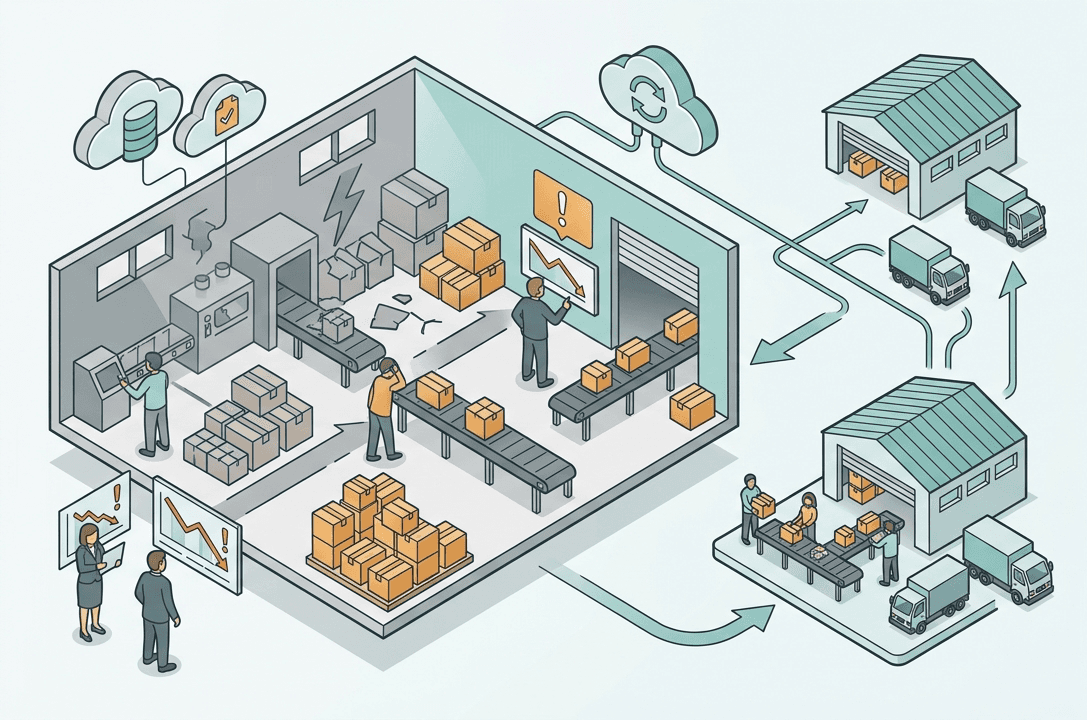
You finally got the Faire wholesale account live. TikTok Shop is driving traffic you never expected. Shopify DTC is humming. Then your best-selling SKU goes out of stock on Amazon, and before you can blink, you've lost the Buy Box, your organic rank tanks, and that $12,000 in monthly revenue evaporates.
This is the reality for multi-channel CPG brands that outgrow their inventory planning. When you sell on one platform, a spreadsheet might cut it. When you sell on five or more, stockout prevention becomes a discipline, not a guess. And your 3PL partner plays a bigger role in that discipline than most founders realize.
This guide breaks down practical inventory forecasting strategies for brands selling across multiple channels. No theoretical supply chain textbook material. Just the stuff that actually keeps product on shelves and in warehouses when customers are ready to buy.
Why Multi-Channel Brands Face a Unique Forecasting Problem
Single-channel brands have it comparatively easy. One demand signal, one fulfillment path, one set of safety stock calculations. Multi-channel brands deal with a fundamentally different problem: competing demand pools drawing from the same inventory.
Here is what makes multi-channel inventory planning so tricky:
- Different velocity patterns per channel. Your Shopify store might have steady daily orders, while Amazon spikes on Prime Day and your wholesale accounts order in large, irregular batches.
- Different lead time requirements. Amazon FBA replenishment needs to be planned weeks in advance. DTC orders ship the same week. Retail distribution orders follow EDI timelines with strict compliance windows.
- Different penalty structures. A stockout on your own site means lost revenue. A stockout on Amazon means lost rank. A stockout on a retail PO means chargebacks and potentially losing the account.
- Promotional overlap. Running a TikTok ad campaign while simultaneously filling a Target PO can drain your inventory in ways that simple linear forecasting never accounts for.
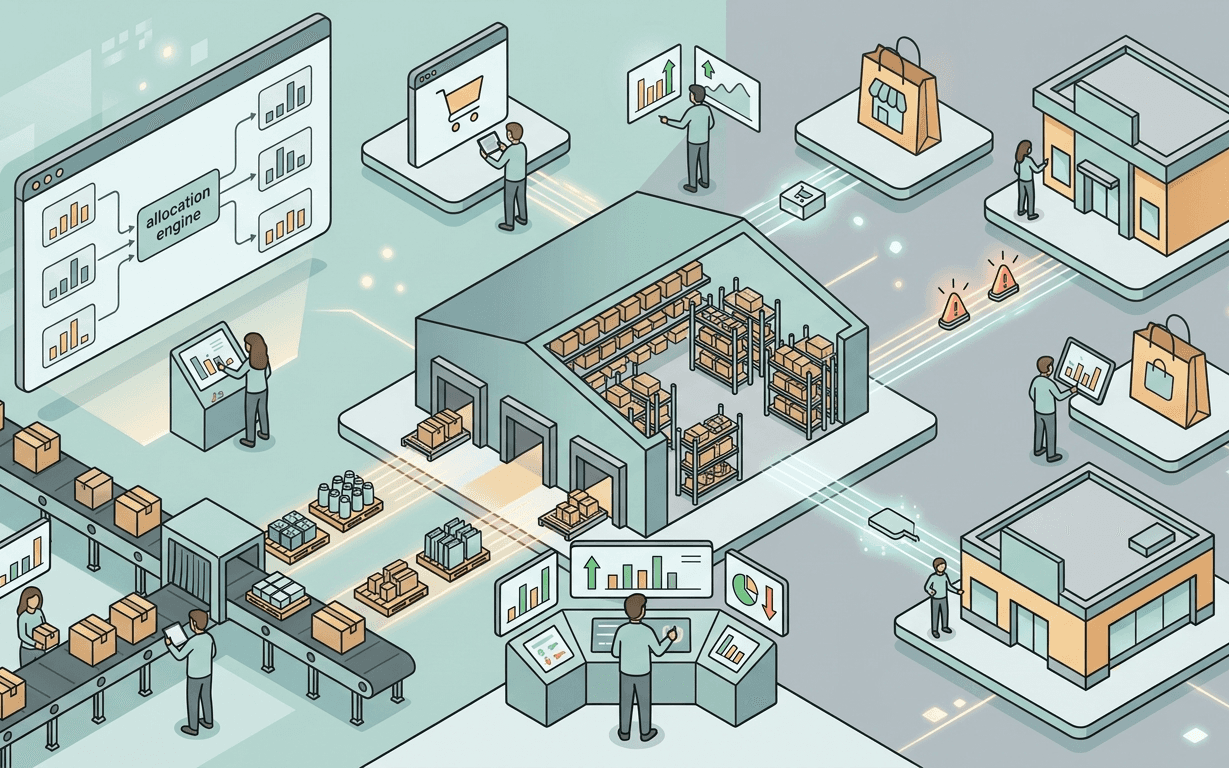
The core challenge is this: you have one pool of inventory serving multiple channels with different demand patterns, different replenishment cycles, and different consequences for failure. Without a structured approach to demand forecasting fulfillment, something always breaks.
The Real Cost of Stockouts (Beyond Lost Sales)
Most brands calculate the cost of a stockout as the revenue they missed. That is a fraction of the actual damage.
For Amazon sellers, a stockout can crater your Best Seller Rank. Rebuilding that rank after even a one-week gap can take months. If you are running Seller Fulfilled Prime or FBM alongside FBA, you need to understand how inventory allocation directly impacts your listing performance. (We covered the FBM side of this in our guide on [Amazon FBM fulfillment](https://shipdudes.com/blog/amazon-fbm).)
For brands selling through retail and wholesale via [B2B order fulfillment](https://shipdudes.com/blog/b2b-order-fulfillment-edi-integration-and-retail-distribution-essentials), stockouts trigger chargebacks, compliance penalties, and in some cases, termination of the vendor relationship. Retailers do not care about your supply chain problems. They care about fill rates.
For DTC brands, the damage is subtler but still real. A customer who hits an out-of-stock page does not come back in two weeks. They buy from a competitor, and your customer acquisition cost for that buyer is now wasted.
Add it all up, and a single SKU stockout across multiple channels can cost a brand 3x to 5x the lost revenue when you factor in rank recovery, ad spend reset, and customer churn.
Building a Multi-Channel Forecasting Framework
You do not need enterprise-level demand planning software to forecast effectively. You need a framework that accounts for channel-specific behavior and a 3PL partner with the [inventory management systems](https://shipdudes.com/blog/3pl-inventory-management-systems-real-time-visibility-and-control) to give you real-time visibility into what is actually happening in the warehouse.
Here is a practical approach:
1. Segment Your Demand by Channel
Stop looking at aggregate sales numbers. Break your demand data down by channel: Shopify, Amazon, wholesale, marketplace, subscription. Each channel has its own seasonality, its own promotional calendar, and its own baseline velocity.
At ShipDudes, we work with brands selling across 75+ platform integrations, from Shopify and Amazon to TikTok Shop and Faire. That integration depth matters because it allows brands to see channel-level inventory movement in real time rather than reconciling data from five different dashboards at the end of the week.
2. Calculate Channel-Specific Safety Stock
Safety stock is not one number. It is a number per channel per SKU. Your Amazon safety stock needs to account for FBA replenishment lead times (which can be 2 to 4 weeks). Your DTC safety stock needs to cover demand variability during promotional periods. Your wholesale safety stock needs to cover the largest expected PO plus a buffer.
The formula does not need to be complex. For each channel, take your average daily sales velocity, multiply by your replenishment lead time in days, and add a buffer based on your demand variability. If a SKU sells 50 units per day on Amazon and your FBA replenishment cycle is 14 days, your minimum Amazon allocation is 700 units plus a variability buffer.
3. Set Inventory Allocation Rules
This is where most brands fail. Without clear allocation rules, channels compete for the same inventory on a first-come, first-served basis. That means a surprise wholesale PO can drain the stock you needed for your DTC flash sale.
Set hard allocation floors for each channel. If you have 5,000 units of a SKU, decide in advance that 2,000 are allocated to Amazon FBA, 1,500 to DTC, 1,000 to wholesale, and 500 to marketplace. Only release inventory from one channel's allocation to another based on predefined rules.
A good [3PL inventory management](https://shipdudes.com/blog/inventory-management-for-dtc-brands) system makes this possible by giving you real-time visibility into available inventory by location and channel.
4. Layer In Seasonality and Promotions
Baseline forecasting gets you 80% of the way there. The other 20% comes from layering in known events: product launches, seasonal spikes, promotional campaigns, and retail buying cycles.
If you have been through one peak season, you have data. Use it. If you have not, build conservative estimates and plan to have extra safety stock on hand. We wrote an in-depth piece on [peak season fulfillment strategy](https://shipdudes.com/blog/peak-season-fulfillment-strategy) that covers how to prepare your inventory and your 3PL relationship for high-volume periods.
5. Reforecast Monthly (At Minimum)
A forecast is not a set-it-and-forget-it document. Multi-channel brands should reforecast at least monthly, comparing actual sell-through against projected sell-through and adjusting inventory purchase orders accordingly. Brands running heavy promotional calendars or experiencing rapid growth should reforecast biweekly.
How Your 3PL Fits Into the Forecasting Equation
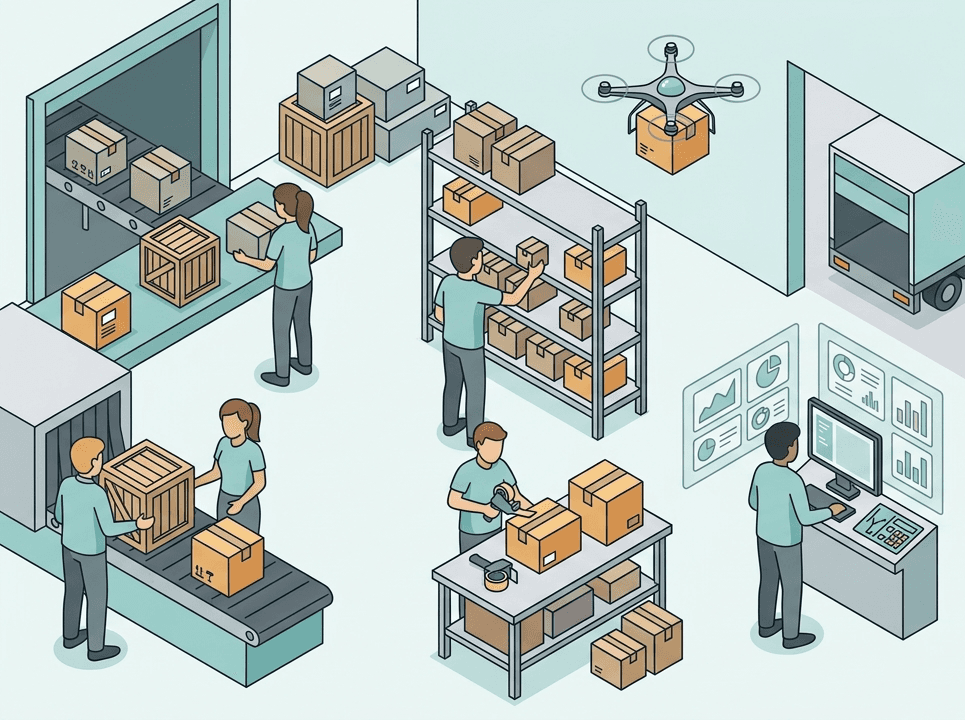
Your 3PL is not just the company that ships your boxes. A good inventory forecasting 3PL partner is a critical node in your demand planning infrastructure. Here is why.
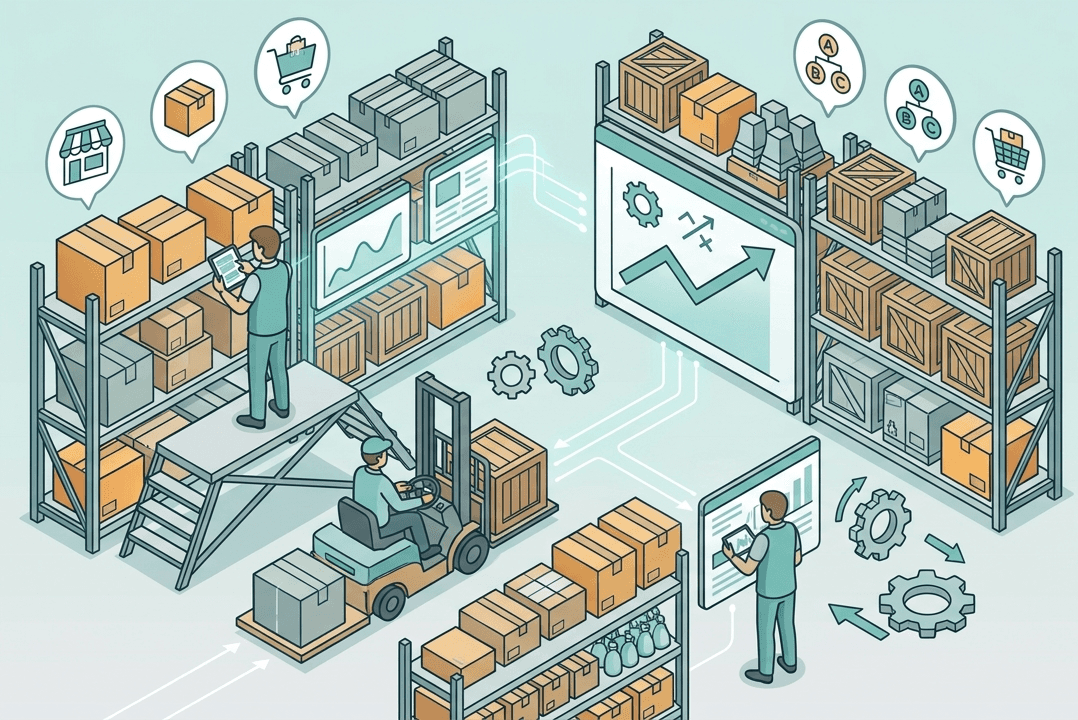
First, your 3PL has the real-time inventory data. They know exactly how many units of each SKU are on the shelf, how many are allocated to open orders, and how fast inventory is moving. Without that data flowing back to you in real time, your forecasts are based on stale information.
Second, your 3PL handles inbound receiving. The speed and accuracy of the [warehouse receiving process](https://shipdudes.com/blog/warehouse-receiving-process) directly impacts your replenishment cycle time. If your 3PL takes a week to receive and put away a container, that is a week of added lead time your forecast needs to account for.
Third, your 3PL manages the physical allocation of inventory across fulfillment paths. If you sell on Amazon FBA and DTC simultaneously, your 3PL needs to handle [Amazon FBA prep](https://shipdudes.com/blog/amazon-fba-prep) shipments while also fulfilling DTC orders from the same warehouse. That coordination requires clear communication and strong systems.
At ShipDudes, our dual-coast warehouse network (Northern New Jersey and Las Vegas) allows brands to position inventory closer to customers on both coasts while maintaining a single view of inventory across all channels. This setup, which we detail in our post on [nationwide 3PL fulfillment](https://shipdudes.com/blog/nationwide-3pl-fulfillment-why-a-two-coast-setup-beats-a-single-warehouse), reduces transit times and gives brands more flexibility in how they allocate inventory by region.
Common Forecasting Mistakes That Lead to Stockouts
After working with 150+ brands across beauty, supplements, food, beverages, pet products, and general CPG, we see the same forecasting mistakes repeatedly:
Treating all channels as one demand pool. We covered this above, but it bears repeating. Aggregate forecasting hides channel-specific problems until it is too late.
Ignoring lead time variability. Your supplier says 6 weeks, but sometimes it is 8. Your freight forwarder quotes 3 weeks, but port congestion adds 2. Build lead time buffers into your forecast or you will always be scrambling.
Not communicating promotional plans to your 3PL. If you are running a major campaign, your 3PL needs to know in advance so they can staff appropriately and ensure inventory is received and ready. This is especially important for brands relying on [7-day processing fulfillment](https://shipdudes.com/blog/why-7-day-processing-fulfillment-beats-same-day-promises) windows.
Over-relying on historical data during growth phases. If you are doubling year over year, last year's data is a floor, not a ceiling. Growth-stage brands need to forecast based on trajectory, not just history.
Neglecting returns in the forecast. For categories with higher return rates, returned inventory that can be restocked represents a meaningful supply source. Your [returns management](https://shipdudes.com/blog/returns-management-3pl) process should feed data back into your inventory planning.
Tools and Tactics for Better Demand Forecasting Fulfillment
You do not need a six-figure demand planning tool. Here is what actually works for brands doing $2M to $30M in annual revenue:
- Your 3PL's inventory dashboard. This is your source of truth for real-time inventory levels and velocity data.
- A simple spreadsheet model. Channel-level demand, lead times, safety stock calculations, and reorder points. Update it monthly.
- Supplier communication cadence. Talk to your suppliers monthly about lead times, minimum order quantities, and capacity constraints. Surprises kill forecasts.
- Channel-specific alerts. Set low-stock alerts per channel, not just per SKU. Know when your Amazon allocation hits the reorder point even if your total inventory looks fine.
For brands selling [subscription boxes](https://shipdudes.com/blog/subscription-box-fulfillment-complete-guide-for-recurring-revenue-brands), forecasting is somewhat easier because you have committed demand. But you still need to account for subscriber growth, churn, and the inventory requirements for [kitting and assembly](https://shipdudes.com/blog/kitting-and-assembly-services) of multi-SKU boxes.
Choosing a 3PL That Supports Your Forecasting Needs
Not every 3PL is built to support multi-channel forecasting. When evaluating partners, ask these questions:
- Do they provide real-time inventory visibility across all channels?
- Can they handle [omnichannel fulfillment](https://shipdudes.com/blog/omnichannel-fulfillment) from a single inventory pool with channel-level allocation?
- Do they integrate with all your sales platforms natively?
- Can they support both DTC and B2B/retail distribution from the same warehouse?
- Do they have a [US-based team](https://shipdudes.com/blog/the-real-cost-of-3pl-overseas-support-why-us-based-teams-matter-for-your-brand) you can actually call when something goes wrong?
ShipDudes was built by eCommerce operators who have lived through every stockout nightmare in the book. Our all in-house, US-based team works directly with brands on inventory planning, inbound coordination, and channel-level allocation. If you are not sure [how to choose a 3PL](https://shipdudes.com/blog/how-to-choose-a-3pl) that fits your growth stage, that guide is a good starting point.
FAQ: Inventory Forecasting for Multi-Channel Brands
What is inventory forecasting in a 3PL context?
Inventory forecasting in a 3PL context means using real-time warehouse data, historical sales velocity, and channel-specific demand signals to predict how much inventory you need on hand at your fulfillment center. A strong inventory forecasting 3PL partner provides the data infrastructure and visibility brands need to make accurate replenishment decisions.
How do I prevent stockouts when selling on multiple channels?
Prevent stockouts by segmenting your demand forecast by channel, setting channel-specific safety stock levels, establishing hard inventory allocation rules, and reforecasting at least monthly. Real-time inventory visibility from your 3PL is essential for monitoring sell-through rates across all channels simultaneously.
How does a 3PL help with demand forecasting fulfillment?
A 3PL contributes to demand forecasting by providing real-time inventory levels, SKU velocity data, and fulfillment performance metrics. They also impact your forecast accuracy through inbound receiving speed, inventory accuracy rates, and the ability to manage channel-level inventory allocation from a single warehouse.
Should I keep separate inventory for each sales channel?
Most brands are better served by a single inventory pool with channel-level allocation rules rather than physically separate inventory. This approach maximizes flexibility while still protecting each channel's stock. Your 3PL's inventory management system should support virtual allocation without requiring physical separation.
How often should I update my inventory forecast?
Multi-channel brands should reforecast monthly at minimum. Brands in rapid growth phases, those with heavy promotional calendars, or those approaching peak season should reforecast every two weeks. Always reforecast after any major event that impacts demand, such as a viral social media post or a new retail launch.
Stop Guessing, Start Planning
Stockouts are not bad luck. They are the predictable result of insufficient forecasting discipline. As your brand grows across more channels, the complexity compounds, and the cost of getting it wrong multiplies.
The good news is that better forecasting does not require massive investment. It requires the right framework, the right data, and a 3PL partner who actually understands multi-channel operations.
ShipDudes works with growing CPG brands across beauty, supplements, beverages, food, pet products, and more, helping them build the inventory infrastructure that supports growth instead of limiting it. With dual-coast warehouses, 75+ platform integrations, and a team that has been in your shoes, we are built to be the fulfillment partner that grows with you.
Ready to get your inventory forecasting and multi-channel fulfillment dialed in? [Book a call with ShipDudes](https://shipdudes.com/book-a-call) and let's build a plan that keeps your best sellers in stock across every channel.
Ready to Simplify Your Fulfillment?
Let's build a custom pricing model for your brand. No contracts required to start the conversation.