
Inventory Management for DTC Brands: How to Stop Stockouts and Stop Overpaying for Storage

Michael DeSarno
8 min read
Inventory Management
Share
KEY TAKEAWAYS
• DTC inventory management requires setting calculated reorder points, safety stock, and SKU-level turnover tracking before outsourcing to a 3PL.
• Reorder point formula: (Average Daily Sales x Lead Time) + Safety Stock, using actual supplier lead times, not quoted ones.
• Inventory turnover below 4x annually for CPG brands means product sits 90+ days, driving up 3PL storage costs.
• Share a 30/60/90-day rolling forecast by SKU with your 3PL monthly to prevent stockouts during promotions and launches.
Last Updated:
Why Inventory Management Breaks Down When DTC Brands Start Scaling
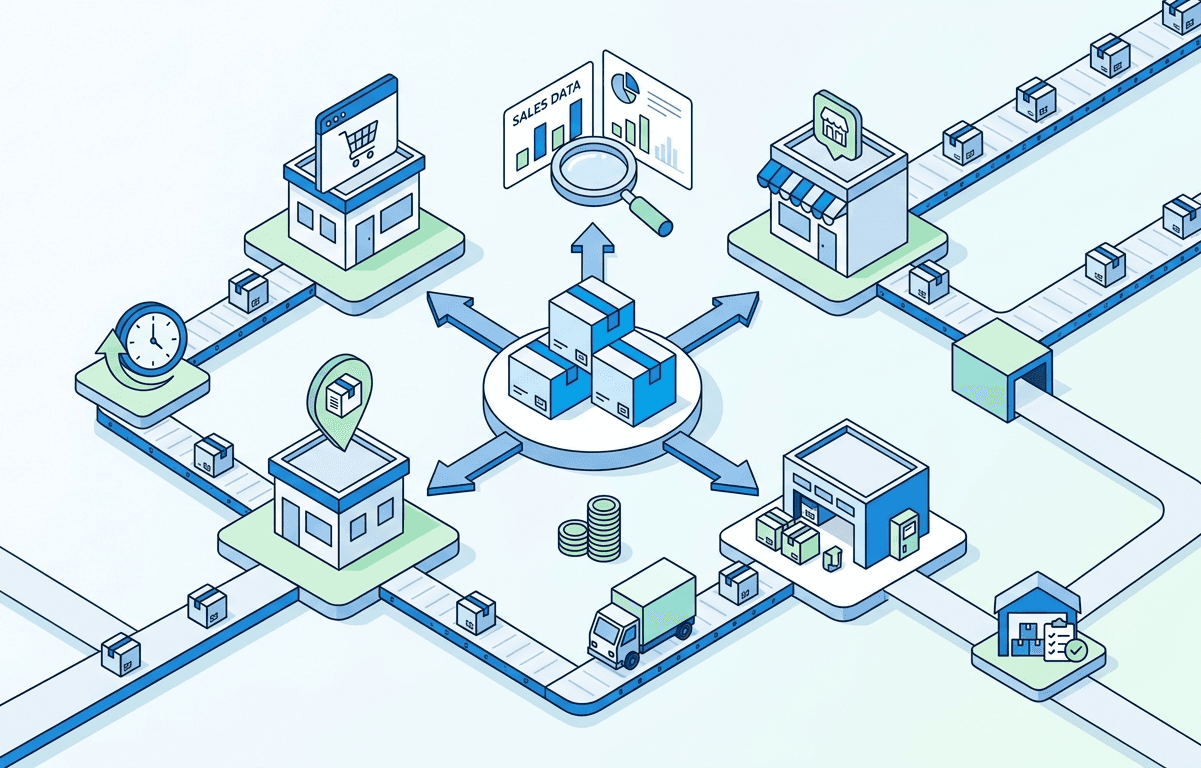
There's a specific inflection point where gut-feel inventory management stops working. It usually hits when your SKU count grows past a handful, your sales channels multiply beyond a single Shopify store, or your order volume becomes unpredictable enough that "I think we need more" isn't a reliable replenishment strategy anymore.
The two failure modes that cost brands the most money are stockouts and overstock. Stockouts kill momentum during your best weeks: a product goes viral, a promotion lands, or a retail order comes in, and you can't fulfill it. Overstock is the quieter problem. Excess inventory sits in a fulfillment center generating monthly storage fees with no return, tying up working capital that could be spent on marketing or product development.
These problems don't magically improve when you move to a 3PL. If your inventory logic isn't tight before outsourcing, the 3PL just executes the chaos faster. They'll ship what you tell them to ship, store what you send them, and alert you when stock runs low. But reorder timing, safety stock levels, and demand forecasting are still your responsibility. This post covers the four concepts that matter most for getting that right.
Reorder Points: The Simplest System Most DTC Brands Don't Use Correctly
A reorder point (ROP) is the inventory level that triggers a new purchase order. It's calculated to fire before you run out, not after. The formula is straightforward: ROP = (Average Daily Sales x Lead Time in Days) + Safety Stock.
Here's what that looks like in practice. Say you're a skincare brand selling 50 units per day of your hero product, and your supplier takes 14 days from PO to delivery at the warehouse. Your base reorder point is 50 x 14 = 700 units. Add your safety stock buffer (we'll cover how to calculate that next), and you get the inventory level where a new PO should go out.
The most common mistake is setting reorder points based on historical averages without accounting for lead time variability or seasonal demand spikes. If your supplier sometimes takes 14 days and sometimes takes 21 days, your ROP needs to reflect the longer end of that range, not the average. Similarly, if Q4 sales run 40% above your annual average, a static ROP based on year-round data will leave you short during the months that matter most.
A 3PL with real-time inventory visibility can automate ROP alerts, notifying you when a SKU drops below a threshold you set. If your 3PL doesn't offer that, you need to be checking inventory levels manually on a regular cadence (weekly at minimum, daily during peak periods). But the alert is only as good as the threshold you set, which means the formula work is still yours to do.
One more note: ROP only works if your supplier lead times are reliable and documented. If you don't know how long your manufacturer actually takes from PO to delivery (not their quoted lead time, their actual lead time), audit that first. Pull the last 10 POs and calculate the real average and range. That's your starting point.
Safety Stock: Your Buffer Against Demand Spikes and Supplier Delays
Safety stock is a calculated buffer, not a rough guess or "a few extra cases just in case." It exists to absorb variance in both demand (your daily sales fluctuate) and supply (your manufacturer doesn't always deliver on time). Without it, any deviation from your forecast creates a stockout. With too much of it, you're paying for storage you don't need.
The textbook formula uses a Z-score multiplied by the standard deviation of lead time demand. For operators who aren't running statistical models, a practical shortcut works well for early-stage brands: set safety stock at 20 to 30% of your average lead time demand. Using the skincare example above, if your base lead time demand is 700 units (50/day x 14 days), safety stock of 140 to 210 units gives you a reasonable buffer.
The two inputs that change your safety stock calculation are demand variability and supply variability. If your daily sales are steady and predictable (subscription-heavy brands, for example), you can run leaner safety stock. If your sales swing wildly based on ad spend or PR hits, you need more buffer. Same logic applies on the supply side: a manufacturer with consistent 14-day delivery needs less buffer than one who ranges from 10 to 25 days.
The trade-off is real. Carrying too much safety stock ties up working capital and increases storage costs at your 3PL. Carrying too little means one bad week (a supplier delay during a product launch, for example) wipes you out during the period that matters most. DTC brands in high-velocity categories like supplements, beauty, and CPG should review and recalibrate safety stock levels every 60 to 90 days at minimum.
Inventory Turnover Rate: The Metric That Tells You If Your Cash Is Working
Inventory turnover rate measures how many times you sell through your entire inventory in a given period. The formula is: Turnover = Cost of Goods Sold / Average Inventory Value. A higher number means your cash is cycling faster. A lower number means you're sitting on product.
What counts as "healthy" varies by category, but for DTC brands selling products with a 60 to 90 day shelf cycle (which covers most CPG), a turnover below 4x annually is a warning sign. It means, on average, product is sitting in your warehouse for more than 90 days before it sells. For perishable or expiration-dated products, that timeline matters even more.
Turnover connects directly to 3PL storage costs. Slow-moving SKUs sitting in a fulfillment center generate storage fees every month with no offsetting revenue. Low turnover is the root cause of the "my storage bill keeps going up" problem that brands complain about. The fix isn't to negotiate lower storage rates (though you should). The fix is to move product faster or remove it.
Dead stock, meaning SKUs that haven't moved in 90+ days, should be flagged for a decision: discount them, bundle them with faster-moving products, or remove them from active 3PL inventory entirely. Every month a dead SKU occupies a pallet position, it's costing you money and taking up space that could hold inventory that actually sells.
One critical nuance: calculate turnover at the SKU level, not just in aggregate. A strong overall turnover rate can hide one or two SKUs that are quietly bleeding money. Your best-selling product might turn 8x per year while a slow variant turns 1.5x. The aggregate looks fine, but the slow SKU is costing you disproportionately in storage and tied-up capital.
Demand Forecasting: How to Make Smarter Bets on Future Inventory Needs
Demand forecasting is hard for DTC brands. Full stop. If you run frequent promotions, launch new SKUs regularly, or operate in seasonal categories, your historical data only tells part of the story. But a rough forecast is dramatically better than no forecast, and even simple models improve inventory decisions significantly.
The three inputs that matter most for a practical DTC forecast are: trailing 90-day sales velocity by SKU (your baseline), your upcoming marketing calendar (launches, planned ad spend increases, influencer campaigns, email promotions), and seasonal patterns from prior years. If you have 12+ months of sales data, you can identify seasonal lift percentages that make your forecast meaningfully more accurate.
You also need to layer in external signals that historical data won't capture: a new retail partnership going live, a PR feature scheduled to publish, or a subscription box collaboration that will spike demand on specific SKUs. These events create demand that doesn't show up in trailing averages, and failing to account for them is how brands stock out during their biggest opportunities.
Most WMS platforms at 3PLs are built to show you what happened, not what's coming. They're excellent at tracking current inventory and past shipment data, but they don't forecast demand for you. The brand has to own the forecasting logic and communicate it proactively to the fulfillment partner. If your 3PL doesn't know a promotion is coming, they can't pre-position inventory, schedule extra labor, or adjust slotting to handle the spike.
A simple rule of thumb for growing brands: build a 30/60/90-day rolling forecast by SKU and share it with your 3PL at least monthly. This doesn't need to be a sophisticated model. A spreadsheet that shows expected daily units by SKU for the next three months, adjusted for known events, enables better slotting, labor planning, and purchase order timing on both sides.
How Working With a 3PL Changes Your Inventory Management Responsibilities
Moving to a 3PL shifts the physical execution of fulfillment off your plate, but it doesn't shift inventory strategy. Reorder points, safety stock levels, forecasting, and replenishment timing are still your job. The 3PL stores it, picks it, packs it, and ships it. You decide how much to buy, when to buy it, and how to allocate it.
What you should expect from a quality 3PL: real-time on-hand counts by SKU, units received vs. units shipped, SKU-level velocity reports, inbound shipment tracking, and configurable low-stock alerts. This data is the foundation of your inventory management process. If your 3PL can't provide it in real time through a portal or dashboard, you're flying blind.
Common gaps brands discover after onboarding include no automated low-stock alerts (or alerts that fire too late to be useful), delayed inventory syncs between the WMS and sales channels, and no visibility into inbound PO status. Address these gaps during the SLA conversation before you sign, not after your first stockout.
The inventory handoff process matters more than most brands realize. Your 3PL needs to know when new POs are arriving (via ASN), when promotions or demand spikes are coming (via your forecast), and how to handle discrepancies in received inventory counts (via a documented variance process). Brands that communicate proactively with their 3PL run tighter inventory. Brands that treat their 3PL like a black box tend to be the ones that stock out during their best week of the year.
Great inventory management with a 3PL is 50% systems and 50% communication. The systems give you data. The communication turns that data into coordinated action. Get both right, and you stop running out of product during launches and stop overpaying for storage during slow months.
Ready to Simplify Your Fulfillment?
Let's build a custom pricing model for your brand. No contracts required to start the conversation.