Lot Code Tracking Requirements: FDA Recall Preparedness for CPG Brands

Michael DeSarno
8 min read
Industry Guides
Share
KEY TAKEAWAYS
Last Updated:
Here is the nightmare scenario: you get a call from your co-manufacturer telling you a batch of product may be contaminated. The FDA wants answers. Your retail partners want answers. Your customers want answers. And the first question everyone asks is the same: "Which units were affected, and where did they go?"
If you cannot answer that question in hours (not days, not weeks), your brand is in serious trouble. Fines, lawsuits, destroyed retailer relationships, and permanent consumer trust damage are all on the table.
Lot code tracking requirements exist precisely for moments like these. But most CPG brands treat traceability as an afterthought until it becomes an emergency. This guide breaks down what lot code tracking actually requires, how the FDA evaluates your preparedness, and what your fulfillment operation needs to have in place before a recall scenario ever happens.
What Lot Code Tracking Actually Means for CPG Brands
A lot code (sometimes called a batch code or lot number) is a unique identifier assigned to a specific production run of a product. It ties back to a defined set of raw materials, production conditions, and dates. When tracked properly through every stage of your supply chain, it creates a complete chain of custody from manufacturing floor to consumer doorstep.
Lot code tracking requirements under FDA regulations demand that brands maintain records connecting each lot to its ingredients, production date, distribution path, and final destination. This is codified in 21 CFR Part 117 for food products, 21 CFR Part 111 for dietary supplements, and 21 CFR Parts 210 and 211 for OTC products. The FDA's Food Safety Modernization Act (FSMA) further tightened these requirements with Section 204, which requires additional traceability records for certain high-risk foods.
The point of all this paperwork is simple: if something goes wrong, you need to trace the problem to its source and identify every unit that may be affected. Fast.
The FDA's Expectations for Recall Preparedness
FDA recall preparedness is not optional. The FDA classifies recalls into three tiers: Class I (reasonable probability of serious health consequences or death), Class II (may cause temporary or medically reversible health problems), and Class III (unlikely to cause adverse health consequences). Regardless of classification, the FDA expects brands to:
1. Identify the affected lot codes within 24 hours of discovering the issue
2. Determine distribution scope (which warehouses, retailers, and consumers received affected units)
3. Initiate a communication plan to notify all parties in the distribution chain
4. Execute a retrieval or destruction plan for affected inventory
5. Provide documentation proving the recall was effective
Brands that cannot provide this information quickly face FDA warning letters, consent decrees, or worse. In 2023 alone, the FDA issued hundreds of warning letters related to inadequate traceability and recordkeeping.
If your fulfillment partner cannot pull lot-level data on demand, you are flying blind during the most critical moment your brand will ever face.
The Core Components of Batch Tracking Compliance
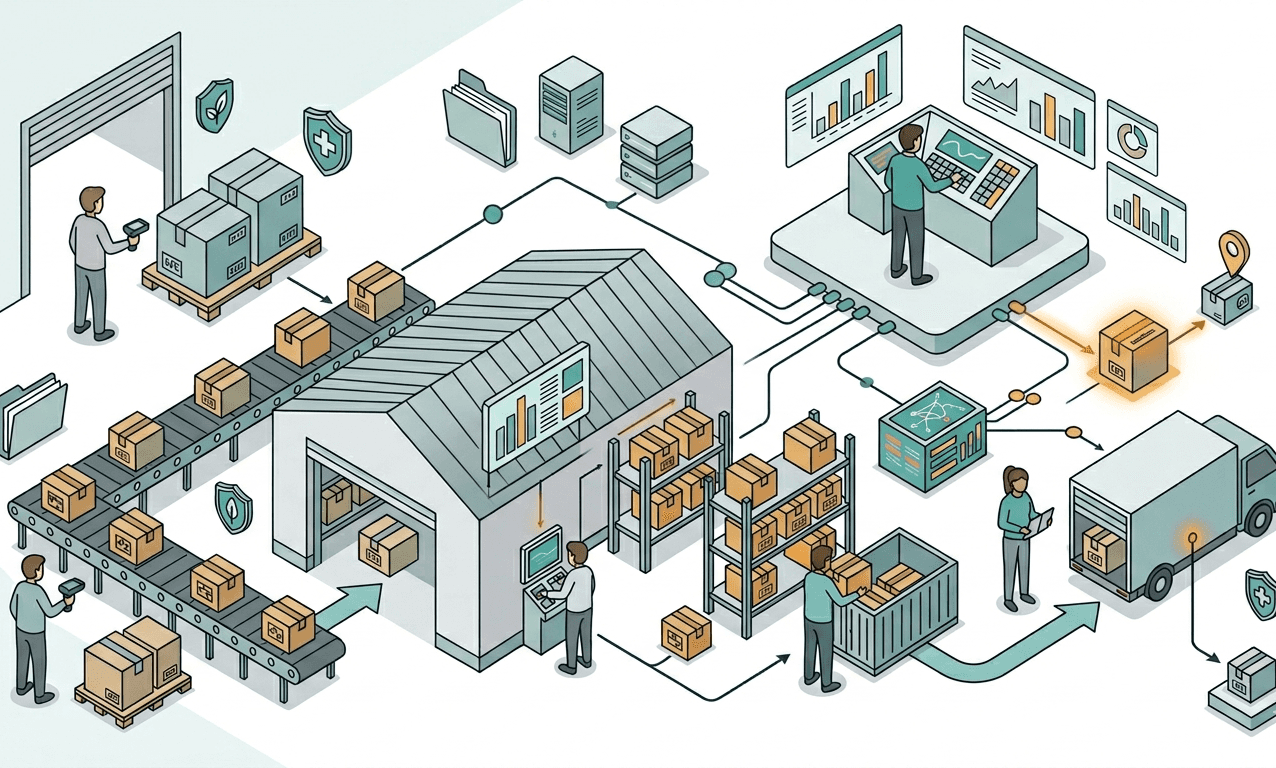
Batch tracking compliance involves more than slapping a lot code on a label. It requires end-to-end documentation across every touchpoint. Here is what a compliant system looks like:
Inbound receiving: Every shipment arriving at your warehouse must be logged with lot codes, expiration dates, quantities, and supplier information. This is where many brands already fail. If your 3PL just counts boxes and throws them on a shelf, you have a traceability gap from day one. A proper [warehouse receiving process](https://shipdudes.com/blog/warehouse-receiving-process) captures all of this data at intake.
Storage and inventory management: Lot codes must be tied to specific storage locations in your warehouse management system (WMS). FIFO (first in, first out) or FEFO (first expired, first out) protocols ensure that older inventory ships before newer inventory, reducing expiration risk. Your [3PL inventory management system](https://shipdudes.com/blog/3pl-inventory-management-systems-real-time-visibility-and-control) should make lot-level visibility available to you in real time.
Pick and pack: When orders are fulfilled, the WMS must record which lot code was picked for each order. This is the critical link between a lot code and a specific customer. Without this data, a recall becomes a guessing game. Effective [pick and pack fulfillment](https://shipdudes.com/blog/pick-and-pack-fulfillment) operations capture this at the unit level.
Outbound shipping: The lot code, order number, shipping destination, and carrier tracking number must all be connected in your records. This allows you to trace a specific lot code to a specific delivery address.
Returns processing: When products come back, lot codes must be captured during inspection. Returned products from affected lots must be quarantined and dispositioned according to your recall plan. This is an often-overlooked part of [returns processing automation](https://shipdudes.com/blog/returns-processing-automation-how-smart-3pls-turn-returns-into-revenue-recovery).
Product Traceability Across Omnichannel Distribution
Product traceability gets significantly more complicated when you are selling across multiple channels. A brand selling through Shopify DTC, Amazon FBA, TikTok Shop, Faire wholesale, and brick-and-mortar retail has inventory flowing in multiple directions simultaneously.
Each channel has different documentation requirements. Retail partners require EDI-compliant advance ship notices (ASNs) with lot-level detail. Amazon FBA requires FNSKU labeling but does not always return lot-level data to you. DTC orders need lot codes tied to individual customer records.
This is where [omnichannel fulfillment](https://shipdudes.com/blog/omnichannel-fulfillment) gets real. Your WMS needs to maintain lot code assignments regardless of which channel the order originates from. If you are splitting inventory across channels without maintaining unified lot-level records, your product traceability has holes that the FDA will find.
For brands distributing to retailers, [B2B order fulfillment](https://shipdudes.com/blog/b2b-order-fulfillment-edi-integration-and-retail-distribution-essentials) adds another layer. Retailers like Walmart, Target, and Whole Foods have their own traceability requirements on top of FDA mandates. Missing lot code data on a retail shipment can result in chargebacks, deductions, and lost shelf space.
CPG Regulatory Compliance by Product Category
CPG regulatory compliance requirements vary by what you are selling. Here is a quick breakdown:
Food and beverages: Subject to FSMA Section 204 (if on the Food Traceability List), 21 CFR Part 117, and state-level regulations. Lot tracking, allergen documentation, and temperature monitoring are all required. Brands in this space should already understand [food fulfillment center requirements](https://shipdudes.com/blog/food-fulfillment-center-requirements-fda-compliance-and-safe-storage) and the unique challenges of [beverage fulfillment](https://shipdudes.com/blog/beverage-fulfillment-challenges-glass-liquid-restrictions-and-shipping-solutions).
Dietary supplements: Subject to 21 CFR Part 111 cGMP requirements, which mandate lot-level tracking from raw material receipt through finished product distribution. [Supplement fulfillment requirements](https://shipdudes.com/blog/supplement-fulfillment-done-right-fda-compliance-cold-chain-and-scale) include expiration date management, quarantine protocols for suspect lots, and temperature control for sensitive ingredients.
Beauty and cosmetics: While the FDA does not require pre-market approval for most cosmetics, the Modernization of Cosmetics Regulation Act (MoCRA) of 2022 introduced new requirements for adverse event reporting, facility registration, and product listing. Lot tracking is now essential for [beauty product fulfillment](https://shipdudes.com/blog/beauty-product-fulfillment) to support any adverse event investigation.
OTC health and wellness: Subject to full cGMP requirements under 21 CFR Parts 210 and 211. These are the most stringent lot tracking requirements in the CPG space.
What to Demand From Your 3PL Partner
Your 3PL is not just a warehouse. For regulated CPG products, your 3PL is a critical link in your compliance chain. If they cannot support lot code tracking requirements, they are a liability.
Here is the checklist of capabilities your fulfillment partner must have:
Lot-level WMS functionality: The WMS must capture, store, and report lot codes at the SKU level. Not just at the pallet level, not just at the shipment level. At the individual unit level.
FIFO/FEFO enforcement: The system must automatically prioritize older inventory or nearest-expiration inventory during picking. Manual processes break down at scale.
Real-time lot visibility: You should be able to log into a dashboard and see exactly how many units of each lot code are in stock, where they are located, and how many have shipped. This ties into [3PL technology integration](https://shipdudes.com/blog/3pl-technology-integration-apis-webhooks-and-real-time-data-sync) capabilities.
Recall simulation capability: Your 3PL should be able to run a mock recall exercise, pulling all orders associated with a specific lot code within hours. If they cannot do this during a drill, they definitely cannot do it during a real emergency.
Quarantine protocols: When a lot is flagged, the 3PL must immediately halt shipment of affected units and physically isolate them. This requires both system controls and trained warehouse staff.
Documentation and audit trails: Every action taken on a lot (receiving, moving, picking, shipping, quarantining, destroying) must be logged with timestamps and user IDs. This is what the FDA auditor will ask for.
At ShipDudes, we built our operations around brands in regulated categories: supplements, beauty, food, beverages, and general CPG. Our facilities in Northern New Jersey and Las Vegas maintain lot-level tracking through our WMS, with real-time visibility for every client. We handle [kitting and assembly](https://shipdudes.com/blog/kitting-and-assembly-fulfillment) with lot code carrythrough, meaning multi-component kits retain traceability for each individual component.
Building Your Recall Preparedness Plan
Do not wait for a recall to build your recall plan. Every CPG brand should have a documented Standard Operating Procedure (SOP) for recall scenarios. This should include:
A recall team: Identify who in your organization handles communication, logistics, regulatory reporting, and customer service during a recall.
A communication template: Pre-draft recall notification emails for retailers, consumers, and your 3PL. When the clock is ticking, you do not want to be wordsmithing.
A 3PL SLA for recall response: Your fulfillment partner should have a defined response time for recall actions. This should be written into your agreement. If you need guidance on what to include, our post on [3PL SLA enforcement](https://shipdudes.com/blog/3pl-sla-enforcement-how-to-hold-fulfillment-partner-accountable-templates) covers the framework.
Annual mock recalls: Run a practice recall at least once a year. Pick a random lot code and see how quickly your team and your 3PL can identify every order it touched. Document the results and close any gaps.
Insurance review: Make sure your cargo and product liability coverage accounts for recall scenarios. [3PL insurance requirements](https://shipdudes.com/blog/3pl-insurance-requirements-cargo-coverage-liability-and-what-brands-actually-need) should include provisions for recall-related losses.
The Cost of Getting This Wrong
The average food recall costs a company between $10 million and $30 million when you factor in product retrieval, destruction, legal fees, regulatory penalties, and brand damage. For smaller CPG brands, even a minor recall without proper traceability can be existential.
But the cost of prevention is relatively low. Choosing a fulfillment partner with lot-level WMS capabilities, running annual mock recalls, and maintaining clean documentation adds minimal operational cost compared to the alternative.
The brands that survive recalls are the ones that respond fast, communicate transparently, and demonstrate to the FDA that they had systems in place from the start.
Get Your Fulfillment Operation Recall-Ready
If you are a CPG brand selling regulated products (food, supplements, beverages, beauty, OTC), lot code tracking requirements are not a nice-to-have. They are the foundation of your FDA recall preparedness, your retailer compliance, and your consumer trust.
ShipDudes works with CPG brands across all of these categories, providing lot-level tracking, FEFO inventory management, and the operational infrastructure to support a real recall response. Our US-based team manages it all in-house from dual-coast facilities, with the [quality control systems](https://shipdudes.com/blog/3pl-quality-control-systems-how-to-prevent-order-errors-before-they-reach-customers) and [inventory accuracy protocols](https://shipdudes.com/blog/fulfillment-center-cycle-counting-how-to-maintain-inventory-accuracy-at-scale) that regulated brands require.
If your current 3PL cannot answer the question "which customers received lot number X?" within a few hours, it is time to talk.
[Book a call with ShipDudes](https://shipdudes.com/book-a-call) to see how we handle lot code tracking and recall preparedness for growing CPG brands.
Ready to Simplify Your Fulfillment?
Let's build a custom pricing model for your brand. No contracts required to start the conversation.