
Multi-Channel Inventory Sync: How to Prevent Overselling Across Shopify, Amazon, and TikTok Shop

Michael DeSarno
8 min read
Channels & Integration
Share
KEY TAKEAWAYS
• Overselling happens because multiple channels maintain disconnected inventory pools with 5 to 30 minute sync latency.
• A 3PL's WMS as the single source of truth eliminates channel-to-channel sync dependencies and reduces overselling risk.
• Safety stock buffers of 2 to 10% per channel absorb latency gaps during high-velocity selling periods.
• Component-level SKU tracking is essential for brands selling bundles alongside individual products across channels.
Last Updated:
You just sold out of your best-selling SKU on TikTok Shop. Awesome. Except your Shopify store still shows 47 units in stock, and Amazon has another 23 listed. Orders keep rolling in across all three channels, and now you're staring at 70 orders you can't fulfill.
This is what happens when multi-channel inventory sync breaks down. And it's not a rare edge case. For CPG brands selling across Shopify, Amazon, TikTok Shop, Faire, and other platforms, overselling is one of the most common (and most expensive) operational failures you'll face.
Let's break down why inventory synchronization is so hard, what it actually costs you when it fails, and how to build a system that keeps every channel accurate in near real time.
Why Overselling Happens (and Why It's Getting Worse)
Overselling isn't a new problem, but it's accelerating. Here's why.
Five years ago, most DTC brands sold on one, maybe two channels. Shopify was the hub, Amazon was the secondary play. Keeping inventory in sync between two platforms was manageable, even with manual processes.
Today, the average growing CPG brand sells on five or more channels: Shopify, Amazon (FBA and FBM), TikTok Shop, Faire for wholesale, maybe Walmart Marketplace, and their own B2B portal. Each platform has its own inventory pool, its own API quirks, and its own sync frequency.
The core problem is latency. When a customer buys your last 10 units on TikTok Shop, it can take anywhere from 5 to 30 minutes for that inventory change to propagate to Shopify and Amazon. During a flash sale or viral moment, you can sell the same units three times over before the sync catches up.
Add in complications like [kitting and assembly](https://shipdudes.com/blog/kitting-and-assembly-fulfillment), where a single parent SKU is made up of multiple component SKUs, and the math gets even messier. If your bundle includes a moisturizer that also sells individually on another channel, one sale can impact inventory counts across multiple listings on multiple platforms.
The Real Cost of Overselling (It's Not Just Refunds)
Most operators think of overselling as a customer service headache. It's actually a multi-layered financial hit.
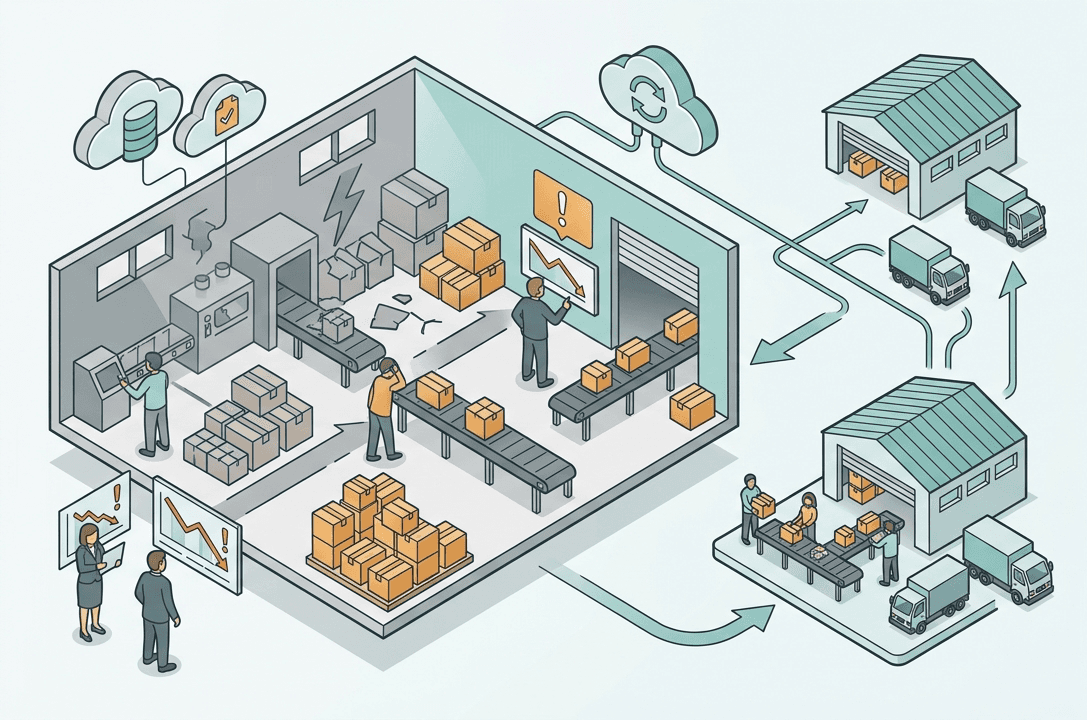
First, there are the direct costs: refunds, reships, and the labor to handle cancellation tickets. Each oversold order typically costs $15 to $25 in operational overhead before you even factor in the product itself.
But the indirect costs are worse. Amazon penalizes sellers who cancel orders with defect rate increases that can tank your Buy Box eligibility. TikTok Shop has its own seller health metrics that take a hit every time you cancel. On Faire, cancelled wholesale orders can damage your relationship with retailers who were counting on that inventory for their shelves.
Then there's the brand damage. A customer who gets a cancellation email after they've already told their friends about their purchase isn't coming back. They're leaving a one-star review.
For brands doing $2M or more in annual revenue across multiple channels, overselling can quietly drain $50K to $100K per year in combined direct and indirect costs. That's real margin walking out the door.
The Three Approaches to Multi-Channel Inventory Sync
There are essentially three ways to handle channel inventory management. Each comes with trade-offs.
1. Platform-Native Sync
This is the DIY approach. You connect Shopify to Amazon using a native integration or a basic app, and you manually manage TikTok Shop and other channels. Inventory updates happen on a schedule (usually every 15 to 60 minutes), and you're responsible for monitoring discrepancies.
This works when you're selling on two channels with low velocity. It breaks the moment you add a third channel, run promotions, or start moving more than 50 orders per day. The sync gaps are simply too wide.
2. Middleware Inventory Management Software
Tools like Sellbrite, Linnworks, ChannelAdvisor, or Cin7 sit between your sales channels and attempt to keep inventory counts unified. They pull orders from all channels into a single dashboard and push inventory updates back out.
This is a significant step up from native sync. The sync frequency is tighter (some tools update every 5 minutes), and you get a centralized view of your inventory. The limitation is that these tools only know what your channels tell them. They don't have eyes on your actual warehouse. If there's a discrepancy between what the software thinks you have and what's physically on the shelf, you're still exposed.
3. 3PL-Driven Inventory Synchronization
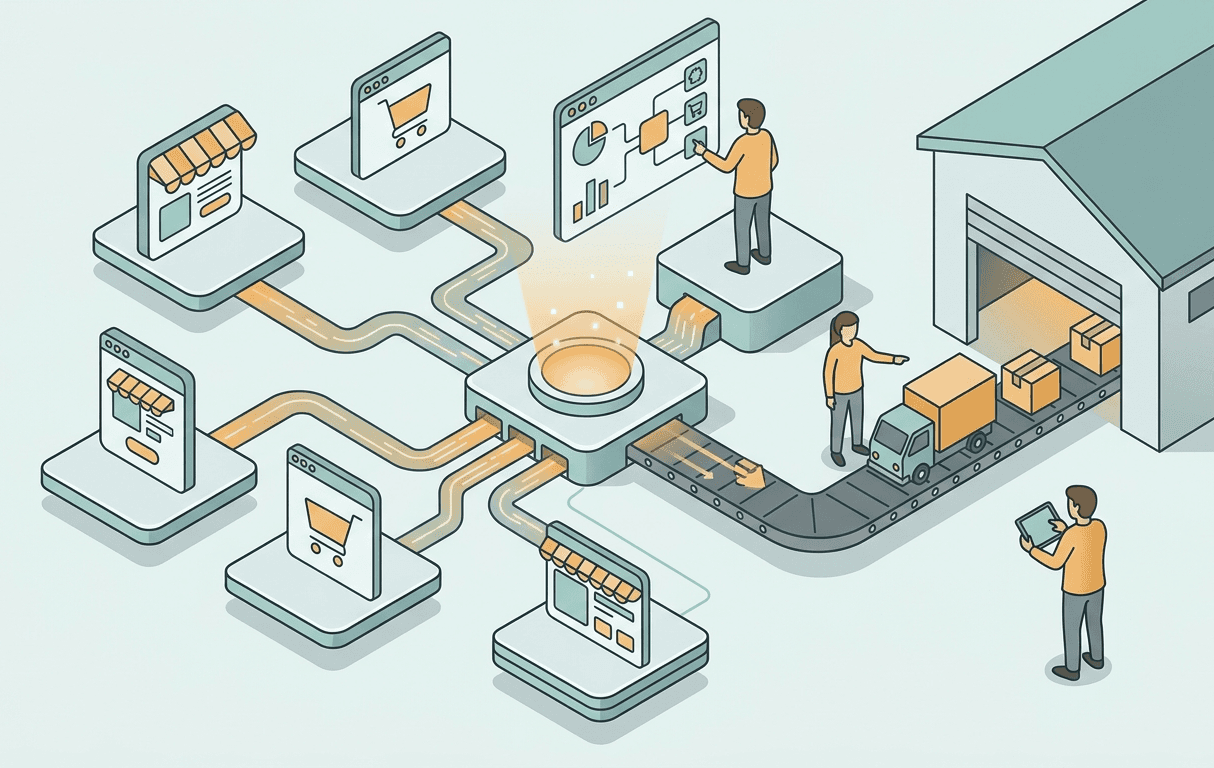
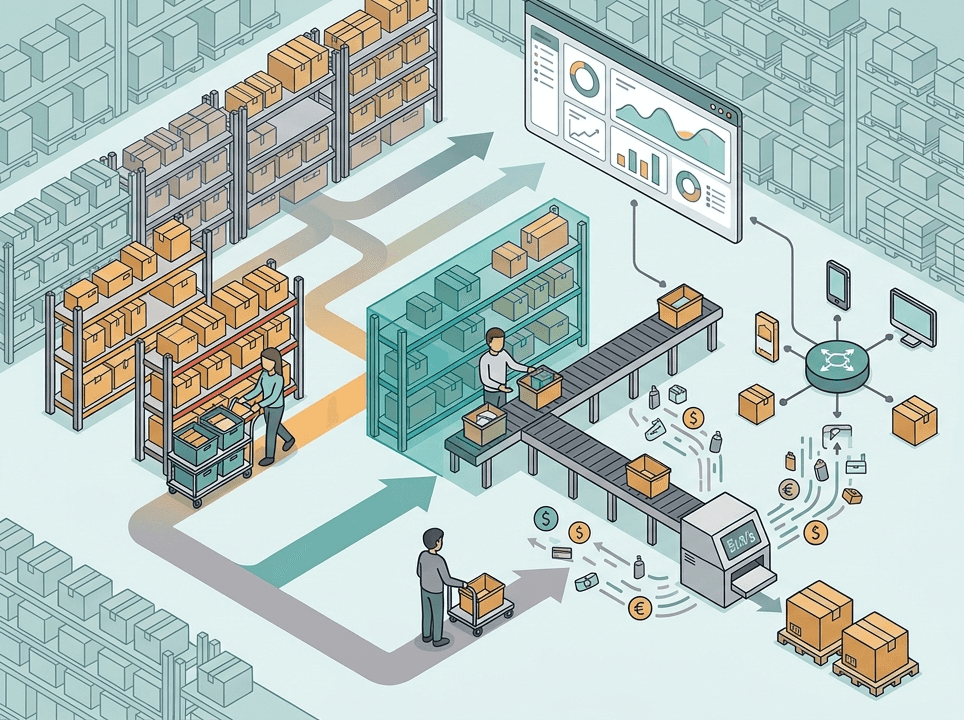
This is where the warehouse management system (WMS) becomes your single source of truth. Instead of syncing channel to channel, every platform pulls its available inventory from one central system that reflects actual, physical stock counts.
At ShipDudes, this is how we handle [omnichannel fulfillment](https://shipdudes.com/blog/omnichannel-fulfillment) for brands selling across 75+ integrated platforms. When a pick and pack operation pulls units from the shelf, inventory counts update in real time across Shopify, Amazon, TikTok Shop, and every other connected channel simultaneously. There's no 15-minute lag. There's no channel-to-channel sync dependency. The warehouse is the truth, and every channel reads from it.
This approach works because it eliminates the root cause of overselling: multiple disconnected inventory pools pretending to be one.
Safety Stock Buffers: The Insurance Policy Most Brands Skip
Even with tight inventory synchronization, smart operators build in safety stock buffers per channel. Here's how it works.
Let's say you have 500 units of a SKU physically in your warehouse. Instead of listing 500 across every channel, you allocate inventory with a buffer:
- Shopify: 200 units available
- Amazon: 200 units available
- TikTok Shop: 80 units available
- Reserve/buffer: 20 units
That 20-unit reserve absorbs the latency gap during high-velocity selling periods. When one channel sells through its allocation, the buffer prevents the last few phantom units from being promised to customers.
The buffer percentage depends on your velocity and sync frequency. Brands with tight, real-time sync (like those using a 3PL with direct WMS integrations) can keep buffers as low as 2 to 3%. Brands relying on middleware with 15-minute sync cycles should hold 5 to 10%.
Yes, this means you're technically leaving some sales on the table. But the math overwhelmingly favors a small buffer over the cost of overselling. This is especially critical during [peak season](https://shipdudes.com/blog/peak-season-fulfillment-strategy) when order velocity can spike 3 to 5x overnight.
How to Handle Inventory for Bundles, Kits, and Subscription Boxes
Multi-channel inventory sync gets exponentially harder when you sell bundles or kits alongside individual components.
Here's a common scenario: you sell a skincare set on Shopify that includes a cleanser, a serum, and a moisturizer. You also sell each product individually on Amazon. When someone buys the bundle on Shopify, your system needs to decrement inventory for all three component SKUs across every channel, not just the bundle SKU.
If your sync system doesn't understand component-level inventory relationships, you'll oversell individual products every time a bundle ships.
This is where [kitting and assembly services](https://shipdudes.com/blog/kitting-and-assembly-services) at the 3PL level become essential. When the 3PL's WMS manages both the bundle and the components as linked SKUs, a single sale triggers accurate inventory adjustments everywhere. ShipDudes handles this for brands across [beauty](https://shipdudes.com/blog/beauty-product-fulfillment), [supplements](https://shipdudes.com/blog/supplement-fulfillment-fda-compliance-lot-tracking-and-expiration-management), and general CPG, where kitting is a core part of their channel strategy.
The same logic applies to [subscription box fulfillment](https://shipdudes.com/blog/subscription-box-fulfillment-complete-guide-for-recurring-revenue-brands). If your subscription uses shared inventory with your DTC or marketplace channels, your sync system needs to reserve subscription allocations before they become available to other channels.
The Role of Your 3PL in Preventing Overselling
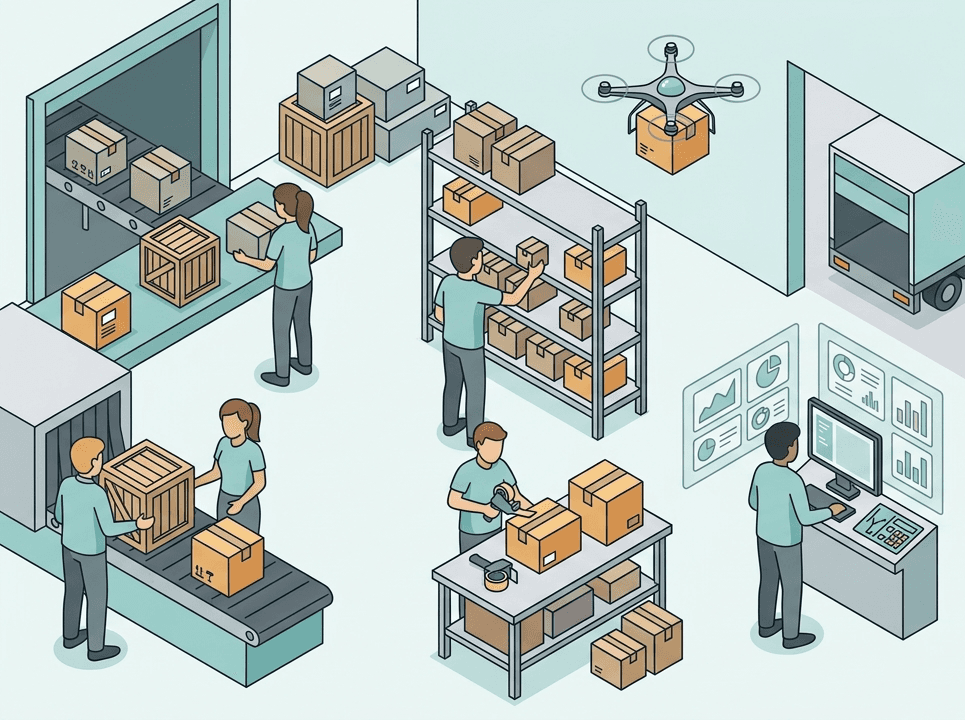
Your 3PL isn't just a warehouse. If you're selling on multiple channels, your fulfillment partner is the backbone of your inventory accuracy.
Here's what to look for in a 3PL that can actually support multi-channel inventory sync:
Deep platform integrations. Not just Shopify and Amazon, but TikTok Shop, Faire, WooCommerce, BigCommerce, and any channel you're on today or plan to be on next quarter. ShipDudes integrates with 75+ platforms, which means brands don't have to bolt on middleware to get their channels connected.
Real-time WMS updates. The WMS should update available inventory the moment a pick is completed, not on a batch schedule. This is the difference between a 30-second sync gap and a 30-minute one.
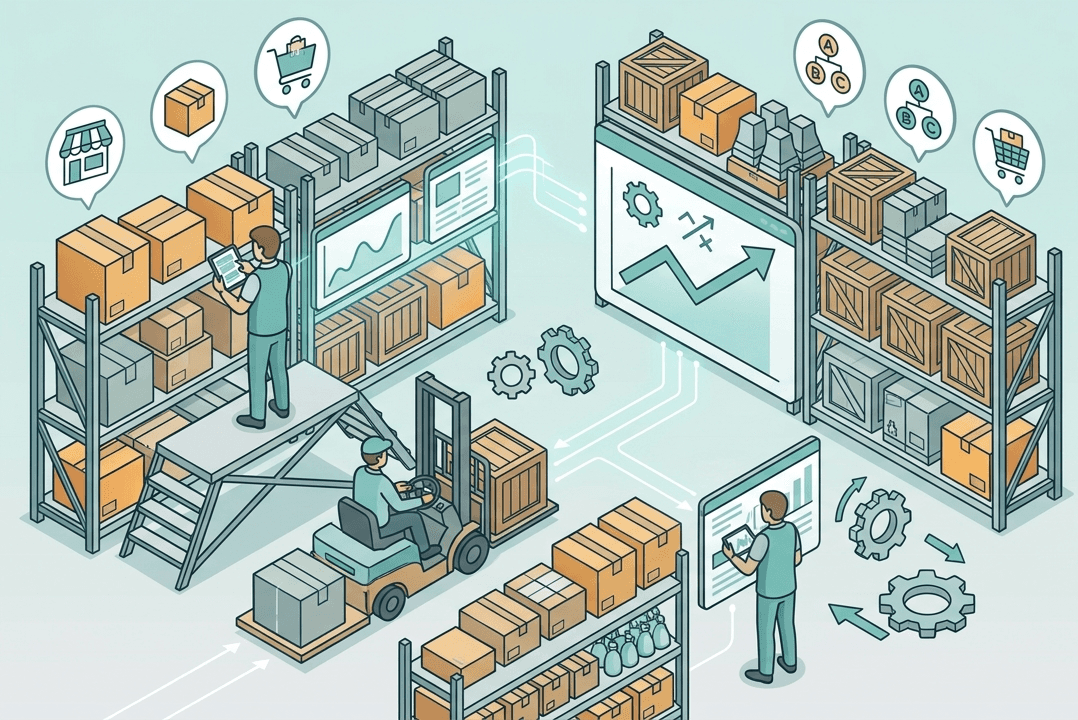
Component-level SKU management. If you sell bundles or kits, the WMS needs to track inventory at the component level, not just the finished-good level.
[B2B and retail distribution](https://shipdudes.com/blog/b2b-order-fulfillment-edi-integration-and-retail-distribution-essentials) support. If you're fulfilling wholesale orders alongside DTC, your 3PL needs to manage both inventory pools without letting one cannibalize the other.
Proactive low-stock alerts. You shouldn't find out you're running low because a channel sold out. A solid [3PL inventory management system](https://shipdudes.com/blog/3pl-inventory-management-systems-real-time-visibility-and-control) sends alerts before you hit zero so you can adjust allocations or trigger a replenishment PO.
Building Your Multi-Channel Sync Stack
Here's a practical framework for brands that are ready to tighten up their inventory synchronization:
Step 1: Audit your current sync gaps. Pull cancellation and oversell data from the last 90 days. Which channels are overselling? Which SKUs? What time of day does it happen most? This tells you where the latency is worst.
Step 2: Establish a single source of truth. Stop treating any sales channel as your inventory master. Your WMS (whether it's your 3PL's system or your own) should be the only system that defines available inventory. Every channel reads from it.
Step 3: Set channel-level allocations and buffers. Based on your velocity per channel, allocate inventory intentionally. Don't just blast 100% availability everywhere.
Step 4: Automate low-stock responses. When a SKU hits your buffer threshold, automatically delist or reduce the listing quantity on lower-priority channels. This is better than overselling and canceling.
Step 5: Review weekly. Multi-channel inventory sync isn't set-and-forget. Review your allocation strategy weekly, especially as you ramp into [peak season](https://shipdudes.com/blog/the-real-cost-of-peak-season-how-high-growth-brands-survive-holiday-chaos) or launch new products.
If you're still managing this in spreadsheets or relying on one app to duct-tape your channels together, it's probably time to evaluate whether a fulfillment partner with native integrations would remove the bottleneck. Our post on [when to switch to a 3PL](https://shipdudes.com/blog/when-to-switch-to-3pl) covers the decision framework in detail.
FAQ: Multi-Channel Inventory Sync
What is multi-channel inventory sync?
Multi-channel inventory sync is the process of keeping product availability accurate and consistent across all sales channels (Shopify, Amazon, TikTok Shop, Faire, etc.) in real time. It ensures that when inventory changes on one channel, every other channel reflects that change immediately to prevent overselling.
How do I prevent overselling on Shopify and Amazon at the same time?
The most reliable method is using a centralized inventory source, typically a warehouse management system from your 3PL, that pushes real-time updates to both Shopify and Amazon simultaneously. Adding safety stock buffers of 2 to 10% per channel provides additional protection during high-velocity periods.
Does TikTok Shop sync with Shopify inventory?
TikTok Shop does not natively sync inventory with Shopify in real time. You need either a middleware tool or a 3PL with direct integrations to both platforms. ShipDudes, for example, integrates with both TikTok Shop and Shopify to maintain a unified inventory pool across channels.
What causes inventory sync delays between channels?
Sync delays are caused by API polling intervals (how frequently platforms check for updates), batch processing schedules in middleware tools, and the time it takes for warehouse operations to confirm picks and update the WMS. The fastest setups use event-driven APIs that push updates instantly rather than polling on a schedule.
Can a 3PL help with multi-channel inventory management?
Yes. A 3PL with robust platform integrations and a real-time WMS serves as the single source of truth for inventory across all channels. This eliminates the need for channel-to-channel syncing and dramatically reduces overselling risk. Look for a partner with 50+ integrations and component-level SKU tracking for bundles and kits.
Stop Overselling. Start Syncing From One Source of Truth.
If you're selling on three or more channels and still dealing with overselling, the problem isn't your sales velocity. It's your inventory infrastructure.
ShipDudes gives growing CPG brands a single source of inventory truth across 75+ platform integrations, with real-time WMS updates, component-level SKU management, and dual-coast warehouses in [New Jersey](https://shipdudes.com/blog/new-jersey-3pl-fulfillment-why-nj-is-the-strategic-hub-for-east-coast-dtc-brands) and [Las Vegas](https://shipdudes.com/blog/las-vegas-3pl-fulfillment-the-west-coast-hub-smart-dtc-brands-are-choosing). Our all US-based team handles the complexity so you can focus on selling, not firefighting inventory discrepancies.
[Book a call with ShipDudes](https://shipdudes.com/book-a-call) and let's map out a multi-channel sync strategy that actually works for your brand.
Ready to Simplify Your Fulfillment?
Let's build a custom pricing model for your brand. No contracts required to start the conversation.