Outsourced Warehousing 101: What DTC Brands Actually Get When They Partner With a 3PL

Michael DeSarno
8 min read
Fulfillment Operations
Share
KEY TAKEAWAYS
• Outsourced warehousing is a full operational handoff (receiving, storage, pick/pack, shipping), not just rented storage space.
• 3PL costs convert fixed overhead into variable per-order fees that scale with volume.
• Outsourced fulfillment often beats in-house costs at volumes as low as 200 to 300 orders per month.
• Expect 99.5%+ order accuracy, real-time inventory visibility, and pre-negotiated carrier rates from a reputable 3PL.
Last Updated:
Outsourced Warehousing Isn't Just "Someone Else's Storage Unit"
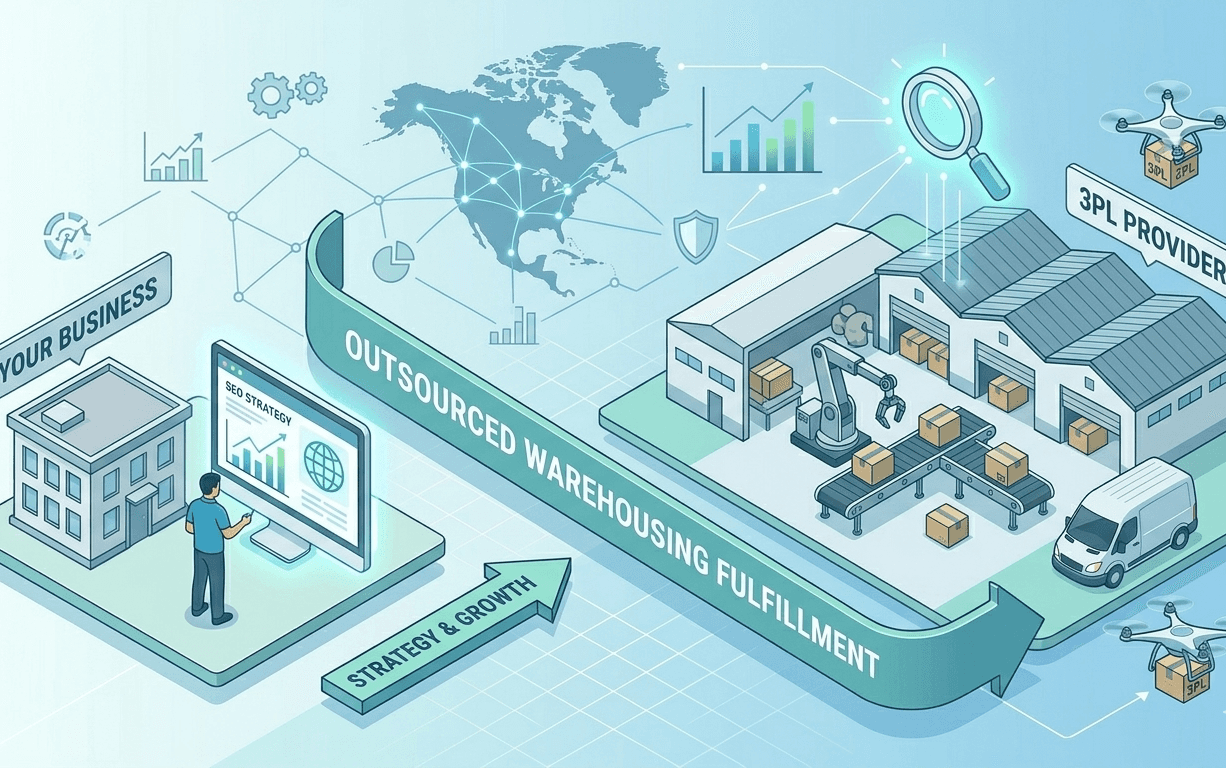
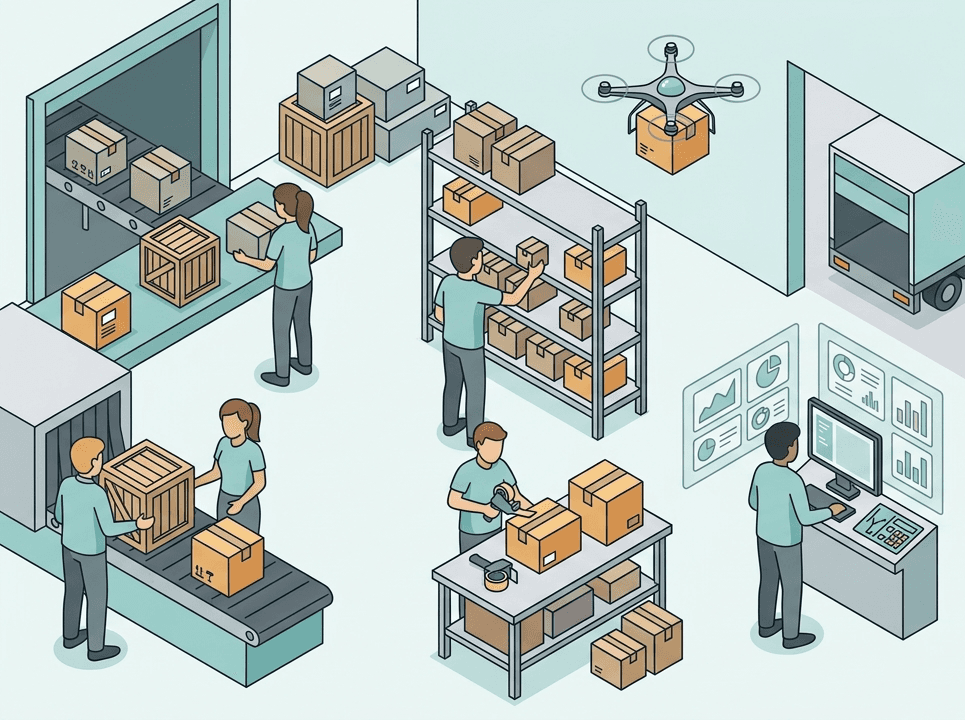
Outsourced warehousing means a 3PL takes physical custody of your inventory and manages the full downstream fulfillment operation on your behalf: receiving, storage, pick and pack, and shipping. It's not simply cheaper storage. It's an operational handoff that includes labor, systems, physical space, and carrier relationships.
When you move from in-house to outsourced warehousing, you're no longer managing a lease, hiring and supervising warehouse staff, buying packing supplies, maintaining equipment, or negotiating carrier contracts. Those costs and operational headaches transfer to the 3PL. In exchange, you pay per-order and per-storage fees that convert what used to be fixed overhead into variable costs that scale with your actual volume.
This post walks through exactly what happens to your inventory from the moment it leaves your supplier to the moment it lands on a customer's doorstep. If you've been running fulfillment out of a garage, a spare bedroom, or a self-storage unit and you're evaluating the next step, this is what that next step actually looks like.
Step One: How a 3PL Receives Your Inventory
The process starts before your freight arrives. You send the 3PL an Advance Shipping Notice (ASN) that details what's coming: SKU list, quantities per SKU, number of cartons or pallets, and the expected delivery date. The ASN lets the warehouse schedule dock time, allocate labor, and prepare bin locations so receiving doesn't bottleneck.
When freight arrives at the dock, warehouse staff unloads the shipment, counts units against the ASN, inspects for damage, and logs everything into the Warehouse Management System (WMS). If there's a discrepancy (a short shipment, damaged cases, mislabeled cartons), a good 3PL documents it immediately with photos and a receiving report that goes to the brand the same day. You shouldn't have to ask what arrived. You should be told.
Brands are responsible for proper labeling (UPC barcodes, FNSKU labels if applicable), accurate carton counts, legible packing lists, and realistic lead times for inbound freight. The most common receiving failure point is inventory arriving without an ASN or with inconsistent labeling. This slows down the entire check-in process and often results in extra labor charges that could have been avoided with basic preparation.
Receiving fees are standard across the industry. Most 3PLs charge per pallet or per unit for inbound processing. This fee should be spelled out in your contract upfront so there are no surprises on your first invoice.
How Your Inventory Is Stored, and Why Location Strategy Matters
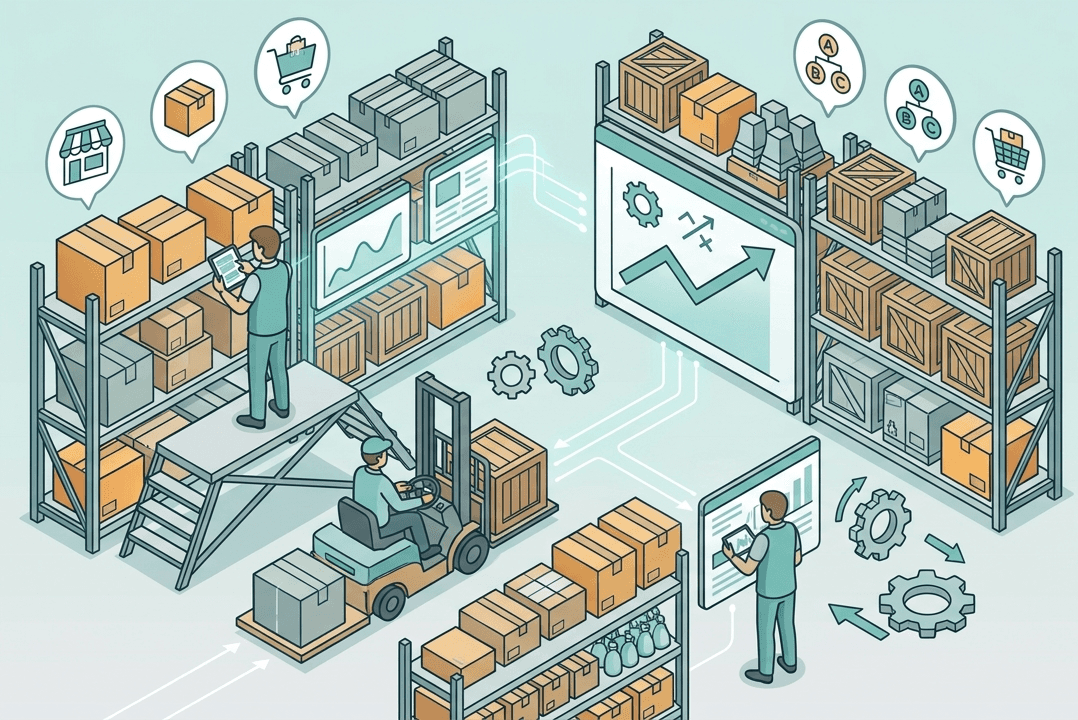
Once inventory is received, it needs to be stored in a way that makes fulfillment fast and accurate. There are three common storage models: pallet storage (for bulk inventory and case quantities), bin or shelf storage (for individual units and smaller items), and bulk floor storage (for oversized or non-stackable goods). The right model depends on your product size, sales velocity, and SKU count.
The WMS assigns each product to specific bin locations in the warehouse. Smart slotting means placing your fastest-moving SKUs closest to the packing stations to minimize picker travel time. This sounds like a small detail, but at 500+ orders per day it's the difference between efficient fulfillment and a labor cost problem. Experienced 3PLs review slotting regularly and adjust as your product mix changes.
Inventory visibility is non-negotiable. Most modern 3PLs provide a client portal or direct WMS login where you can see real-time stock levels by SKU and location. You should be able to check what's on hand, what's committed to open orders, and what's inbound at any time, without sending an email or waiting for a report.
Storage billing varies by provider. Most 3PLs bill monthly based on pallets used, cubic footage occupied, or bin slots assigned. Brands should understand exactly what they're paying for and look for ways to optimize: consolidating slow-moving SKUs, running promotions to clear dead inventory, and timing inbound shipments to avoid paying for space you don't need during slow months.
Not every 3PL can handle every product type. If your products require temperature-controlled storage, fragile handling, or hazmat compliance, verify that the warehouse is equipped before you sign. Product fit is one of the most overlooked factors in choosing a 3PL, and discovering a mismatch after you've shipped inventory is expensive to fix.
Pick, Pack, and Ship: What Actually Happens When an Order Comes In
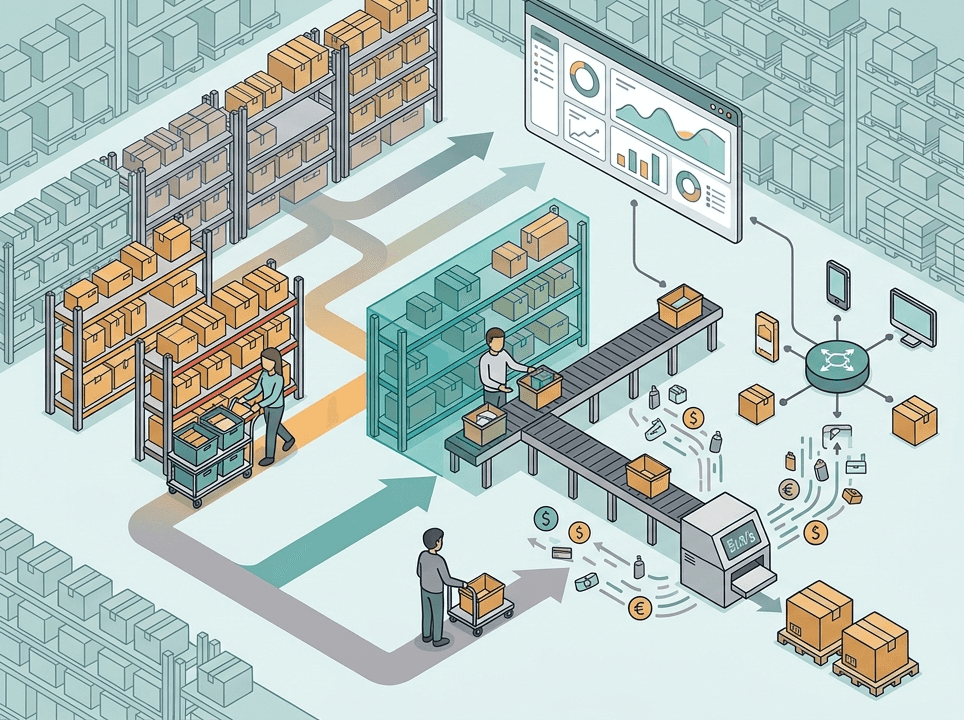
The moment a customer places an order on your Shopify store, Amazon listing, or any connected sales channel, the order syncs automatically to the 3PL's WMS through a direct integration. The WMS generates a pick list, a warehouse associate locates the items in their assigned bins, and the order moves to a packing station where it's assembled, sealed, labeled, and handed off to the carrier. The entire process, from order receipt to carrier scan, typically happens within hours.
"Pick and pack" includes more than most founders realize. It means pulling the right SKUs in the right quantities, selecting the right-sized box or poly mailer, adding void fill to protect the product, inserting any branded materials (packing slips, thank-you cards, promotional inserts), applying the shipping label, and staging the package for carrier pickup. Each of these steps has an error potential, which is why reputable 3PLs use barcode scanning at pick and again at pack to verify accuracy.
Accuracy expectations should be set during the evaluation process. The industry standard is 99.5%+ order accuracy. Ask for this metric, and ask how it's measured. A 3PL that can't tell you their accuracy rate either doesn't track it or doesn't want to share it. Neither answer is acceptable.
Carrier selection is one of the biggest financial advantages of outsourced warehousing. 3PLs pre-negotiate rates with USPS, UPS, FedEx, and regional carriers based on their aggregate shipping volume across all clients. They use rate-shopping tools to select the lowest-cost option for each shipment based on weight, dimensions, destination, and delivery speed. Brands benefit from volume pricing they could never access on their own.
Most 3PLs operate with daily order cutoff times. Orders placed before the cutoff (commonly 12 PM to 3 PM local warehouse time) ship same day. Orders after cutoff ship next business day. Understanding your 3PL's cutoff time is critical for managing customer delivery expectations and setting accurate shipping promises on your product pages.
Inventory Tracking, Reporting, and What Good Visibility Looks Like
Outsourced warehousing isn't a "set it and forget it" arrangement. Ongoing inventory management includes regular cycle counts, low-stock alerts, lot and expiry tracking (essential for food, beauty, and health brands), and returns processing. These operational rhythms are what keep your inventory data accurate and your storefront from overselling.
Good 3PLs conduct regular cycle counts and provide brands with reconciliation reports. Shrinkage and discrepancies should be documented transparently, not silently absorbed or ignored. If your 3PL can't produce a cycle count report on request, that's a warning sign about the accuracy of their inventory data.
Returns (reverse logistics) are part of the outsourced warehousing service. When a customer returns a product, the 3PL receives the package, inspects the contents based on your instructions, and either restocks the item into sellable inventory, quarantines it for review, or disposes of it. Your returns policy should be documented in writing with the 3PL so there's no ambiguity about how each scenario is handled.
A good reporting dashboard shows units on hand, units committed to open orders, units received, shipments completed, and returns processed, all accessible in real time. If your 3PL is emailing you weekly spreadsheets instead of giving you portal access, that's a signal their systems haven't kept pace with modern DTC operations.
What Outsourced Warehousing Actually Costs, and How to Think About It
Outsourced warehousing costs break down into a few predictable categories: receiving fees (per pallet or per unit on inbound), storage fees (monthly, based on space used), pick and pack fees (per order plus per item), and outbound shipping (at the 3PL's negotiated carrier rates). Some providers also charge account management fees and technology access fees, though not all do.
The right way to evaluate cost isn't to compare the 3PL's fees against your current rent. It's to compare the 3PL's total landed cost per order against your fully-loaded in-house cost per order, which includes rent, labor, supplies, technology, carrier rates, error costs, and the opportunity cost of your time. When you run the math honestly, outsourced warehousing is often cheaper than in-house at volumes as low as 200 to 300 orders per month.
The real value isn't just cost savings. It's converting fixed overhead into variable costs that flex with your business. You pay for what you use. Slow month? Lower bill. Big product launch? The 3PL scales with you without requiring you to hire temporary staff, expand your lease, or scramble for carrier capacity.
Outsourced Warehousing Isn't Just "Someone Else's Storage Unit"
Outsourced warehousing means a 3PL takes physical custody of your inventory and manages the full downstream fulfillment operation on your behalf: receiving, storage, pick and pack, and shipping. It's not simply cheaper storage. It's an operational handoff that includes labor, systems, physical space, and carrier relationships.
When you move from in-house to outsourced warehousing, you're no longer managing a lease, hiring and supervising warehouse staff, buying packing supplies, maintaining equipment, or negotiating carrier contracts. Those costs and operational headaches transfer to the 3PL. In exchange, you pay per-order and per-storage fees that convert what used to be fixed overhead into variable costs that scale with your actual volume.
This post walks through exactly what happens to your inventory from the moment it leaves your supplier to the moment it lands on a customer's doorstep. If you've been running fulfillment out of a garage, a spare bedroom, or a self-storage unit and you're evaluating the next step, this is what that next step actually looks like.
Step One: How a 3PL Receives Your Inventory
The process starts before your freight arrives. You send the 3PL an Advance Shipping Notice (ASN) that details what's coming: SKU list, quantities per SKU, number of cartons or pallets, and the expected delivery date. The ASN lets the warehouse schedule dock time, allocate labor, and prepare bin locations so receiving doesn't bottleneck.
When freight arrives at the dock, warehouse staff unloads the shipment, counts units against the ASN, inspects for damage, and logs everything into the Warehouse Management System (WMS). If there's a discrepancy (a short shipment, damaged cases, mislabeled cartons), a good 3PL documents it immediately with photos and a receiving report that goes to the brand the same day. You shouldn't have to ask what arrived. You should be told.
Brands are responsible for proper labeling (UPC barcodes, FNSKU labels if applicable), accurate carton counts, legible packing lists, and realistic lead times for inbound freight. The most common receiving failure point is inventory arriving without an ASN or with inconsistent labeling. This slows down the entire check-in process and often results in extra labor charges that could have been avoided with basic preparation.
Receiving fees are standard across the industry. Most 3PLs charge per pallet or per unit for inbound processing. This fee should be spelled out in your contract upfront so there are no surprises on your first invoice.
How Your Inventory Is Stored, and Why Location Strategy Matters
Once inventory is received, it needs to be stored in a way that makes fulfillment fast and accurate. There are three common storage models: pallet storage (for bulk inventory and case quantities), bin or shelf storage (for individual units and smaller items), and bulk floor storage (for oversized or non-stackable goods). The right model depends on your product size, sales velocity, and SKU count.
The WMS assigns each product to specific bin locations in the warehouse. Smart slotting means placing your fastest-moving SKUs closest to the packing stations to minimize picker travel time. This sounds like a small detail, but at 500+ orders per day it's the difference between efficient fulfillment and a labor cost problem. Experienced 3PLs review slotting regularly and adjust as your product mix changes.
Inventory visibility is non-negotiable. Most modern 3PLs provide a client portal or direct WMS login where you can see real-time stock levels by SKU and location. You should be able to check what's on hand, what's committed to open orders, and what's inbound at any time, without sending an email or waiting for a report.
Storage billing varies by provider. Most 3PLs bill monthly based on pallets used, cubic footage occupied, or bin slots assigned. Brands should understand exactly what they're paying for and look for ways to optimize: consolidating slow-moving SKUs, running promotions to clear dead inventory, and timing inbound shipments to avoid paying for space you don't need during slow months.
Not every 3PL can handle every product type. If your products require temperature-controlled storage, fragile handling, or hazmat compliance, verify that the warehouse is equipped before you sign. Product fit is one of the most overlooked factors in choosing a 3PL, and discovering a mismatch after you've shipped inventory is expensive to fix.
Pick, Pack, and Ship: What Actually Happens When an Order Comes In
The moment a customer places an order on your Shopify store, Amazon listing, or any connected sales channel, the order syncs automatically to the 3PL's WMS through a direct integration. The WMS generates a pick list, a warehouse associate locates the items in their assigned bins, and the order moves to a packing station where it's assembled, sealed, labeled, and handed off to the carrier. The entire process, from order receipt to carrier scan, typically happens within hours.
"Pick and pack" includes more than most founders realize. It means pulling the right SKUs in the right quantities, selecting the right-sized box or poly mailer, adding void fill to protect the product, inserting any branded materials (packing slips, thank-you cards, promotional inserts), applying the shipping label, and staging the package for carrier pickup. Each of these steps has an error potential, which is why reputable 3PLs use barcode scanning at pick and again at pack to verify accuracy.
Accuracy expectations should be set during the evaluation process. The industry standard is 99.5%+ order accuracy. Ask for this metric, and ask how it's measured. A 3PL that can't tell you their accuracy rate either doesn't track it or doesn't want to share it. Neither answer is acceptable.
Carrier selection is one of the biggest financial advantages of outsourced warehousing. 3PLs pre-negotiate rates with USPS, UPS, FedEx, and regional carriers based on their aggregate shipping volume across all clients. They use rate-shopping tools to select the lowest-cost option for each shipment based on weight, dimensions, destination, and delivery speed. Brands benefit from volume pricing they could never access on their own.
Most 3PLs operate with daily order cutoff times. Orders placed before the cutoff (commonly 12 PM to 3 PM local warehouse time) ship same day. Orders after cutoff ship next business day. Understanding your 3PL's cutoff time is critical for managing customer delivery expectations and setting accurate shipping promises on your product pages.
Inventory Tracking, Reporting, and What Good Visibility Looks Like
Outsourced warehousing isn't a "set it and forget it" arrangement. Ongoing inventory management includes regular cycle counts, low-stock alerts, lot and expiry tracking (essential for food, beauty, and health brands), and returns processing. These operational rhythms are what keep your inventory data accurate and your storefront from overselling.
Good 3PLs conduct regular cycle counts and provide brands with reconciliation reports. Shrinkage and discrepancies should be documented transparently, not silently absorbed or ignored. If your 3PL can't produce a cycle count report on request, that's a warning sign about the accuracy of their inventory data.
Returns (reverse logistics) are part of the outsourced warehousing service. When a customer returns a product, the 3PL receives the package, inspects the contents based on your instructions, and either restocks the item into sellable inventory, quarantines it for review, or disposes of it. Your returns policy should be documented in writing with the 3PL so there's no ambiguity about how each scenario is handled.
A good reporting dashboard shows units on hand, units committed to open orders, units received, shipments completed, and returns processed, all accessible in real time. If your 3PL is emailing you weekly spreadsheets instead of giving you portal access, that's a signal their systems haven't kept pace with modern DTC operations.
What Outsourced Warehousing Actually Costs, and How to Think About It
Outsourced warehousing costs break down into a few predictable categories: receiving fees (per pallet or per unit on inbound), storage fees (monthly, based on space used), pick and pack fees (per order plus per item), and outbound shipping (at the 3PL's negotiated carrier rates). Some providers also charge account management fees and technology access fees, though not all do.
The right way to evaluate cost isn't to compare the 3PL's fees against your current rent. It's to compare the 3PL's total landed cost per order against your fully-loaded in-house cost per order, which includes rent, labor, supplies, technology, carrier rates, error costs, and the opportunity cost of your time. When you run the math honestly, outsourced warehousing is often cheaper than in-house at volumes as low as 200 to 300 orders per month.
The real value isn't just cost savings. It's converting fixed overhead into variable costs that flex with your business. You pay for what you use. Slow month? Lower bill. Big product launch? The 3PL scales with you without requiring you to hire temporary staff, expand your lease, or scramble for carrier capacity.
Ready to Simplify Your Fulfillment?
Let's build a custom pricing model for your brand. No contracts required to start the conversation.