Pick and Pack Fulfillment: How It Works and Why Getting It Right Protects Your Brand

Michael DeSarno
8 min read
Fulfillment Operations
Share
KEY TAKEAWAYS
• Pick and pack fulfillment pulls individual SKUs and assembles them into shipment-ready packages per customer order.
• Best-in-class operations run 99.5 to 99.9% order accuracy; below 99% is a red flag at scale.
• Barcode scan verification at both pick and pack stages is the primary error-prevention mechanism.
• Dual-coast fulfillment (East and West) enables 2 to 5 day ground delivery across the continental US.
Last Updated:
What Is Pick and Pack Fulfillment? (And Why the Definition Matters)
Pick and pack fulfillment is the process of pulling specific SKUs from warehouse inventory (picking) and assembling them into a shipment-ready package (packing) based on individual customer orders. It's the operational backbone of DTC and ecommerce fulfillment, and it's fundamentally different from bulk or pallet shipping where entire cases move as a unit.
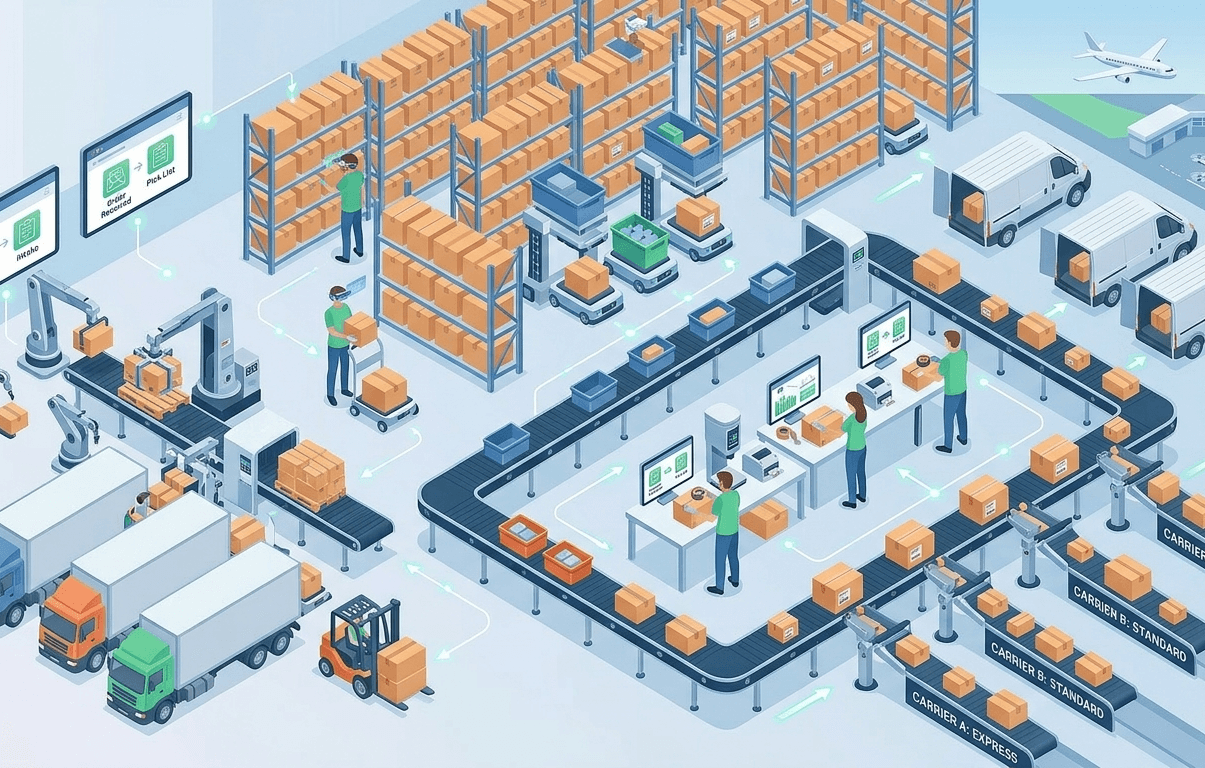
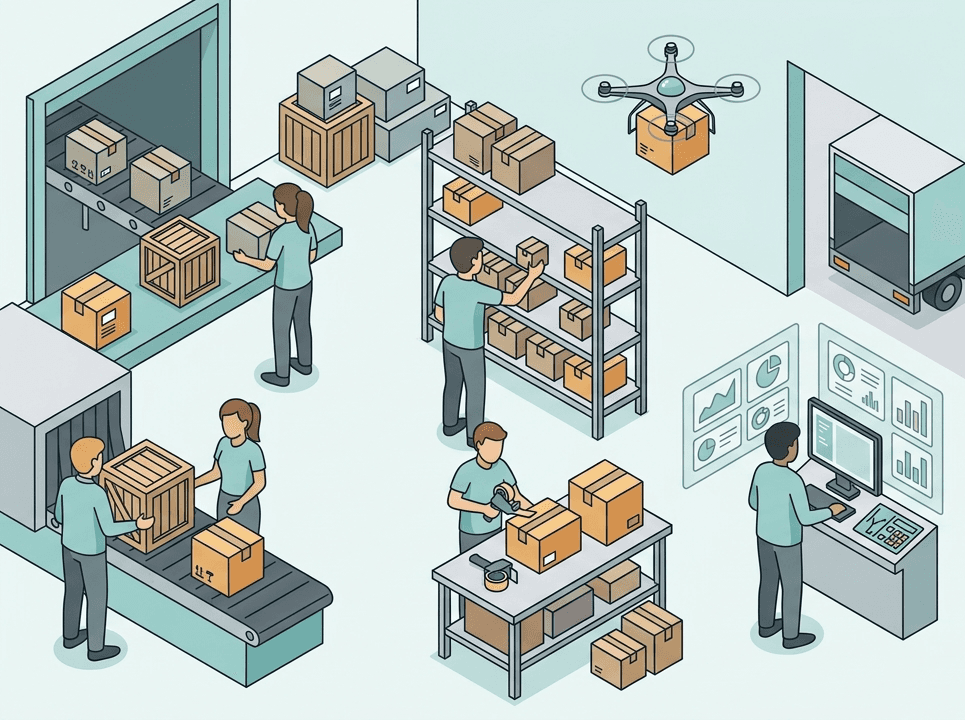
The workflow sequence is straightforward on paper: an order comes in, the warehouse management system (WMS) generates a pick list, a picker locates the correct SKU in the warehouse, the items move to a packing station where they're assembled into the right box or mailer, a shipping label is applied, and the package is handed off to a carrier. Simple enough for a single order. The complexity emerges at scale.
A brand with 20 SKUs and 500 daily orders is a fundamentally different operation than one with 5 SKUs and 50 orders. More SKUs means more pick locations, more chances for a wrong item pull, more packaging variations, and more opportunities for something to go wrong. The common misconception is that pick and pack is just "putting stuff in boxes." In reality, it's a precision operation where errors don't stay in the warehouse. They show up in customer inboxes, review sections, and chargeback reports.
The Step-by-Step Pick and Pack Process in a Modern Fulfillment Center
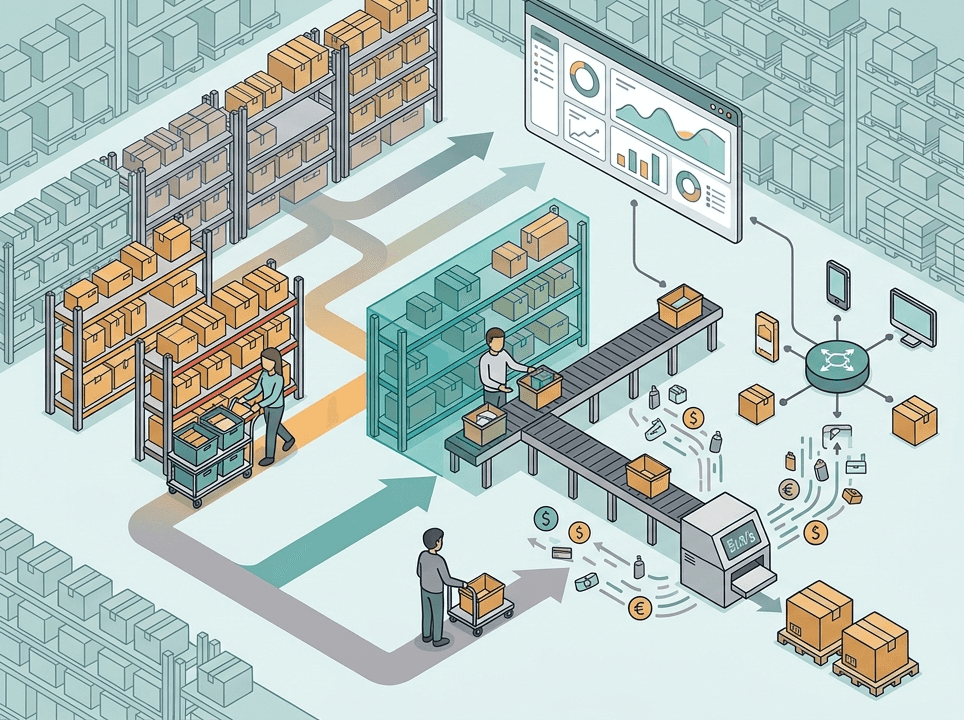
A modern pick and pack operation runs through a series of discrete stages: receiving and slotting inventory into optimized bin locations, batching incoming orders, routing pickers through efficient pick paths, moving items to packing stations, performing a quality check, labeling, and manifesting packages for carrier pickup. Each stage has its own error potential, and each one feeds directly into the next.
Pick methodology varies by volume and warehouse layout. Discrete picking (one order at a time) is simple but slow. Batch picking (pulling items for multiple orders simultaneously) is faster but requires careful sorting at the pack station. Zone picking (assigning pickers to specific warehouse zones) works well in larger facilities with high SKU counts. Most 3PLs use some combination of these based on daily volume and order complexity.
At the packing station, the associate selects the right-size carton or poly mailer, adds void fill to protect the product in transit, inserts the packing slip and any brand-specific materials (thank-you cards, promotional inserts, samples), seals the package, and applies the shipping label. This is where your brand presentation either comes together or falls apart.
Behind all of this, the WMS is deducting inventory in real time and updating order status across your connected sales channels. This sync is what prevents overselling on Shopify or Amazon when stock runs low. Barcode scanning at the pick stage is the primary error-prevention mechanism, not a nice-to-have. Any serious 3PL scans at pick and again at pack to verify the right items are going into the right box.
Pick and Pack Accuracy: What the Benchmarks Actually Mean for Your Brand
Best-in-class fulfillment operations run at 99.5 to 99.9% order accuracy. Anything below 99% is a red flag at scale. Those percentages sound abstract until you translate them into real numbers.
At 98% accuracy with 1,000 orders per month, that's 20 wrong orders. Twenty customer service tickets, twenty potential refunds, and a handful of social media complaints or negative reviews. At 2,000 orders per month, you're looking at 40 errors. The cost isn't just the reshipment; it's the lifetime value of customers who don't come back.
The most common error types are: wrong item picked (pulled the wrong SKU entirely), correct item but wrong variant (right product, wrong size or flavor), incorrect quantity (ordered two, received one), missing item (multi-item order shipped incomplete), and wrong order shipped to the wrong customer (a sorting error that creates two problems at once).
These errors compound in subscription box or bundled SKU operations. One wrong pick in a multi-item kit creates a cascading failure across the entire customer experience. The customer doesn't just get the wrong product; they get an experience that signals carelessness.
Before signing with any 3PL, ask two questions: "What is your documented order accuracy rate?" and "How do you handle error resolution, specifically who absorbs the cost of reshipping?" The answers tell you how seriously they take this part of the operation.
How Packaging Decisions Directly Impact Customer Perception and Repeat Purchase Rates
The box or mailer a customer receives is part of your brand. For many DTC customers, it's the first physical touchpoint with your product, and it signals quality before the item is even visible. A crushed box with loose packing peanuts creates a different impression than a clean, right-sized package with branded tissue and a handwritten-style insert.
The practical packaging variables you control include carton vs. poly mailer, branded vs. plain packaging, tissue paper and inserts, void fill type (paper, air pillows, or peanuts), and packing slip design. Each of these choices has both a cost implication and a brand perception implication, and the right balance depends on your product category and margin structure.
Packaging choices also directly affect return rates and damage claims. Undersized boxes with insufficient void fill create damage in transit. Damage creates refund requests and one-star reviews that compound over time. On the flip side, over-boxing your SKUs inflates dimensional weight charges from carriers. A 3PL that optimizes carton selection saves real money at volume. Dropping from a 12x10x8 box to a 10x8x6 box can meaningfully reduce DIM weight cost per shipment across thousands of orders.
The unboxing effect on repeat purchase is well documented. Premium unboxing experiences increase social sharing and repurchase intent. For DTC brands especially, packaging is a retention lever, not just a shipping vehicle. The brands that treat the box as a marketing channel, not an afterthought, consistently outperform on customer lifetime value.
Common Pick and Pack Failures (And What They Signal About a 3PL's Operations)
Most pick and pack errors trace back to a handful of operational root causes: poor bin labeling and slotting, lack of barcode scan verification, undertrained or high-turnover warehouse staff, and no quality control checkpoint before the package is sealed. When you see recurring errors from a fulfillment partner, it usually means one or more of these fundamentals is broken.
Kitting failures deserve special attention. For subscription brands, bundle SKUs, or promotional gift-with-purchase setups, kitting requires assembly instructions that are clear, current, and enforced. When a 3PL assembles a five-item subscription box and gets one item wrong, the entire box is a failure, not just one-fifth of it. If your product strategy relies on kitting, your 3PL's kitting process needs to be airtight.
Inventory shrinkage is another signal. Pick and pack operations with weak cycle count processes create phantom inventory: stock the WMS says exists but that isn't physically in the bin. This causes stockouts mid-fulfillment, overselling on your sales channels, and backorder situations that frustrate customers.
There's also a hidden cost most brands overlook: chargebacks from fulfillment errors. Beyond the refund itself, brands on Shopify Payments or Amazon face account health implications from elevated dispute rates. A pattern of wrong-item or missing-item chargebacks can trigger payment processor reviews or Amazon listing suppression.
What separates a professional 3PL from a garage operation comes down to documented SOPs, scan-verify technology at every stage, dedicated QC roles on the pack line, and a clear error accountability policy written into the master service agreement.
What to Look for in a Pick and Pack Fulfillment Partner
When evaluating a pick and pack fulfillment partner, focus on five things: an accuracy SLA written into the contract (not just a marketing claim), WMS integration capabilities with your actual sales channels, packaging customization options that match your brand standards, a clear error resolution policy that specifies who pays for mistakes, and real-time inventory visibility so you're never guessing what's in stock.
Location matters more than most founders realize. A single fulfillment center in the wrong geography adds transit days and shipping cost to every order. Ask any 3PL where the majority of their client orders ship to and whether their warehouse locations serve that geography well. For brands selling nationwide, dual-coast fulfillment (East Coast and West Coast) is the standard that enables 2 to 5 day ground delivery to most of the continental US.
Pricing transparency is equally important. Pick and pack fees are typically structured as a per-order base charge plus a per-item fee. But additional charges can apply for inserts, special packing instructions, fragile handling, or non-standard packaging. Understand exactly what triggers fees before you scale into a contract and discover surcharges you didn't budget for.
Finally, pay attention to the onboarding process. A 3PL that has a structured onboarding workflow, a clear SKU intake process, and a dedicated implementation contact is signaling operational maturity. A 3PL that tells you to "just send your inventory and we'll figure it out" is signaling the opposite.
Ready to Simplify Your Fulfillment?
Let's build a custom pricing model for your brand. No contracts required to start the conversation.