
SKU Proliferation Management: How 3PLs Handle Complex Product Catalogs

Michael DeSarno
8 min read
Inventory Management
Share
KEY TAKEAWAYS
• SKU proliferation breaks in-house fulfillment exponentially, not linearly, because mispick risk compounds with every similar variant added.
• Effective 3PL SKU management requires intelligent slotting, barcode-verified picking, real-time WMS integration, and rolling cycle counts.
• ShipDudes manages brands with 1,000+ active SKUs across 75+ integrations from dual-coast warehouses in NJ and Las Vegas.
• If 80% of revenue comes from 20% of SKUs, your 3PL should surface velocity data so you can rationalize the rest.
Last Updated:
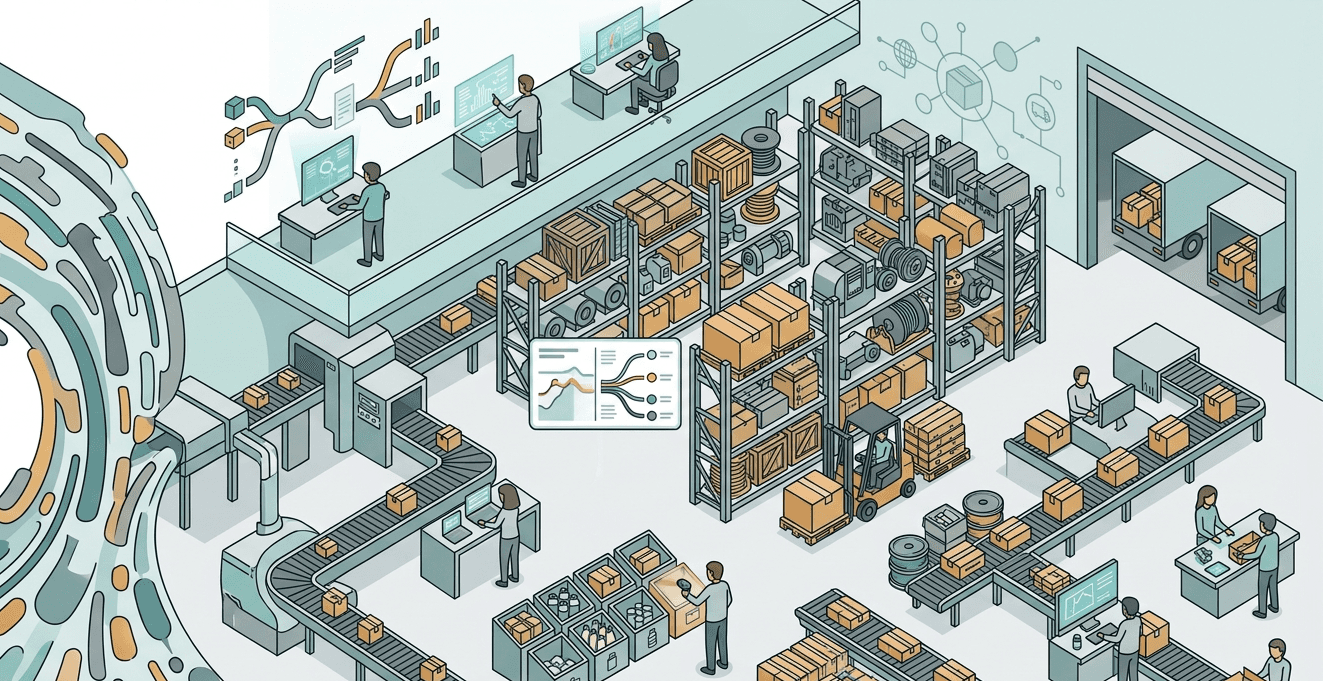
You launched with five SKUs. Maybe ten. Things were manageable. Your garage, your spare bedroom, or your small warehouse could handle the variety. Then you added new flavors. New sizes. Bundles. Limited editions. A retail line with different packaging than your DTC line. Suddenly you're sitting on 200, 500, or 1,000+ SKUs, and every new product launch feels like it's going to break your fulfillment operation.
This is SKU proliferation, and it's one of the most common (and most underestimated) challenges facing growing CPG brands. The products that drive revenue growth are the same products that create operational complexity. The question isn't whether to expand your product line. It's how to manage that expansion without letting fulfillment accuracy, shipping speed, and inventory visibility fall apart.
Let's talk about how the right 3PL partner handles SKU proliferation management so you can keep launching products without losing your mind.
What SKU Proliferation Actually Looks Like in the Warehouse
From a brand's perspective, adding a new SKU is a Shopify listing, some product photos, and maybe a new purchase order. From a fulfillment perspective, every single new SKU creates a cascade of operational decisions.
Each SKU needs a dedicated storage location. It needs to be mapped in the warehouse management system (WMS). It needs receiving protocols, pick paths, and potentially unique packaging requirements. If it's a variant (same product, different scent or color), the risk of mispicks skyrockets because the items look nearly identical.
Multiply that complexity across hundreds of SKUs, and you start to see why product catalog management is one of the hardest things a 3PL does. A beauty brand with 40 shades of foundation. A supplement company with 15 formulas, each in three sizes. A pet brand with separate lines for dogs and cats across multiple flavors. These aren't edge cases. This is standard for any CPG brand that's found product-market fit and is expanding.
The brands that handle this well don't just "deal with it." They have systems, and more importantly, they have a fulfillment partner with systems.
Why SKU Complexity Breaks In-House Fulfillment First
If you're still fulfilling in-house, SKU proliferation is probably the thing that will push you to a 3PL faster than volume alone. Here's why.
Volume scales somewhat linearly. More orders means more picking, more packing, more shipping. You hire more people, you buy more supplies. It's straightforward even if it's tiring.
SKU complexity scales exponentially. Going from 50 to 500 SKUs doesn't just mean 10x more shelf space. It means 10x more locations to manage, 10x more opportunities for mispicks, 10x more cycle counting, and 10x more inventory reconciliation. Your error rate doesn't just increase proportionally. It compounds, because the cognitive load on your pickers goes up with every similar-looking product you add.
This is the inflection point where many brands realize they need help. If that sounds familiar, our guide on [when to switch to a 3PL](https://shipdudes.com/blog/when-to-switch-to-3pl) breaks down the other signals worth watching.
How a 3PL Manages SKU Proliferation Without Chaos
Not every 3PL handles product catalog complexity well. Plenty of warehouses are set up for simple operations: low SKU counts, high volume, straightforward pick and pack. When you start throwing hundreds of SKUs at them, cracks appear fast.
Here's what good SKU proliferation management looks like at the 3PL level.
Intelligent Slotting and Warehouse Layout
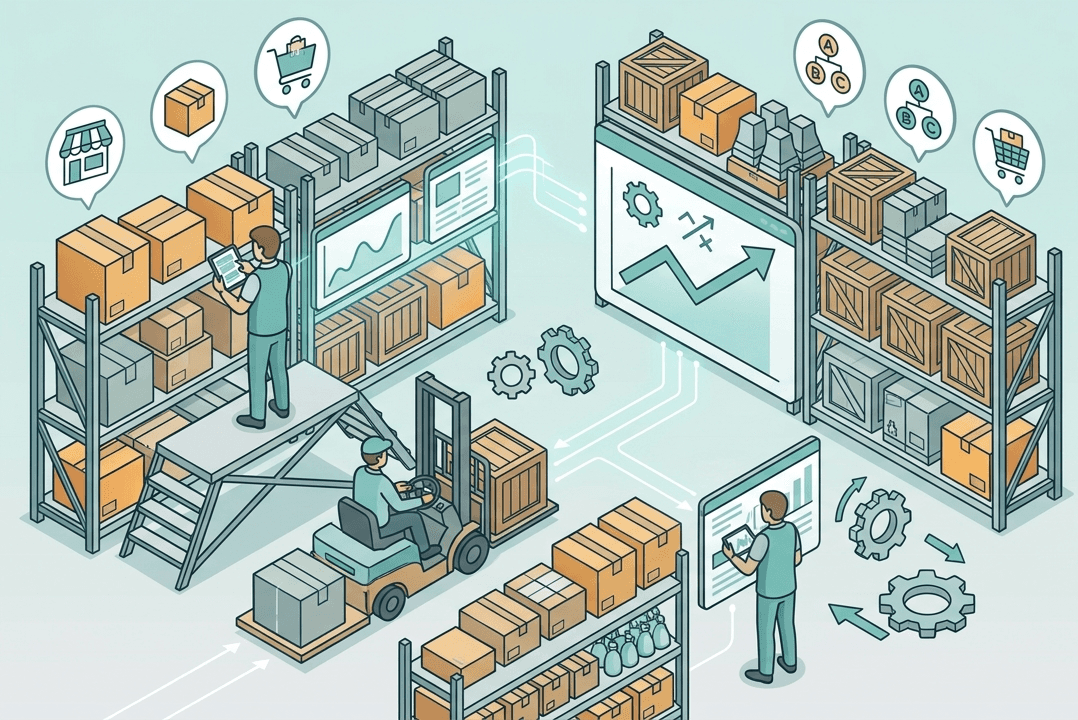
Slotting is the science of deciding where each SKU lives in the warehouse. It sounds mundane, but it's one of the biggest levers for accuracy and speed when you have a complex catalog.
Fast-moving SKUs go in the most accessible pick locations. Slow movers go higher up or further back. Similar-looking variants get physically separated to reduce mispick risk. Kitting components are stored near assembly stations. Seasonal or limited-edition SKUs get flexible locations that can be repurposed.
At ShipDudes, slotting isn't a one-time decision. As your catalog evolves and sales velocity shifts, the warehouse layout adapts. A SKU that was a top seller last quarter might be a slow mover this quarter, and its location should reflect that.
WMS Integration That Handles Variety
Your WMS is the brain of SKU proliferation management. It needs to track not just quantity on hand, but lot numbers, expiration dates, variant attributes, and channel-specific allocation. A supplement brand selling on Shopify, Amazon, and through retail distribution might have the same physical product allocated three different ways, and the WMS needs to manage all of that in real time.
This is where [technology integration](https://shipdudes.com/blog/3pl-technology-integration-apis-webhooks-and-real-time-data-sync) becomes critical. ShipDudes integrates with 75+ platforms, which means your inventory counts sync across every channel regardless of how many SKUs you're managing. When you add a new product to your Shopify store, it flows into the WMS, gets assigned a location, and is available for fulfillment without manual intervention. For a deeper look at keeping inventory in sync across channels, check out our guide on [multi-channel inventory sync](https://shipdudes.com/blog/multi-channel-inventory-sync-how-to-prevent-overselling-across-shopify-amazon-and-tiktok-shop).
Barcode-Driven Pick Accuracy
When you have 500 SKUs and 50 of them are minor variants of the same product, human memory isn't good enough. Every pick needs to be verified by scanning. No exceptions.
Barcode verification at the pick location and again at the pack station creates a double-check that catches errors before they ship. This is especially important for brands in industries like [beauty product fulfillment](https://shipdudes.com/blog/beauty-product-fulfillment) or [supplements](https://shipdudes.com/blog/supplement-fulfillment-fda-compliance-lot-tracking-and-expiration-management), where sending the wrong shade or formula doesn't just create a return. It damages trust.
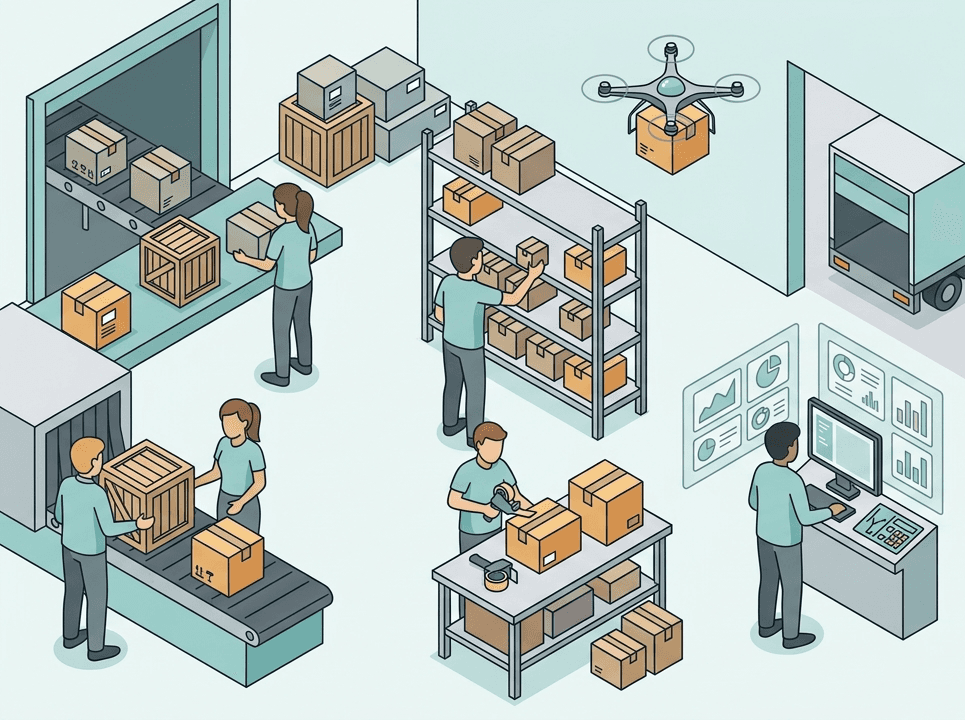
ShipDudes uses scan-based verification throughout the pick and pack process. For brands managing complex catalogs, this is non-negotiable. Learn more about how the [pick and pack fulfillment](https://shipdudes.com/blog/pick-and-pack-fulfillment) process works at scale.
Kitting and Bundle Management
SKU proliferation often isn't just about individual products. It's about combinations. Bundles, variety packs, gift sets, and subscription boxes all create "virtual SKUs" that exist in your store but are assembled from component SKUs in the warehouse.
A brand with 50 base SKUs might have 200 bundle combinations. Managing that without a system is a nightmare. A 3PL with strong [kitting and assembly services](https://shipdudes.com/blog/kitting-and-assembly-services) can handle this by building bundles on demand or pre-assembling popular combinations based on demand forecasting.
At ShipDudes, kitting and assembly is a core service. Whether you need subscription boxes built monthly or seasonal bundles assembled ahead of a promotion, the operation adapts to your catalog complexity.
The Inventory Visibility Challenge
More SKUs means more places for inventory to hide. Shrinkage, miscounts, and phantom inventory (the system says you have it, but nobody can find it) all get worse as your catalog grows.
This is why [cycle counting](https://shipdudes.com/blog/fulfillment-center-cycle-counting-how-to-maintain-inventory-accuracy-at-scale) matters so much for brands with large catalogs. Rather than doing a full physical inventory count once or twice a year (which disrupts operations), cycle counting audits a subset of SKUs on a rolling basis. High-velocity and high-value SKUs get counted more frequently. Slow movers get counted less often but still regularly enough to catch discrepancies.
The goal is maintaining inventory accuracy above 99.5% across your entire catalog, not just your top 20 sellers. For a real-time view of what you actually have, your 3PL's [inventory management system](https://shipdudes.com/blog/3pl-inventory-management-systems-real-time-visibility-and-control) should give you SKU-level visibility at all times.
Product Line Expansion Without Fulfillment Delays
One of the biggest fears brands have about SKU proliferation is that it will slow down their fulfillment. New products need receiving, quality checks, location assignment, and WMS setup. If your 3PL treats every new SKU like a major project, product launches become bottlenecks.
ShipDudes handles new SKU onboarding as a streamlined process. The [warehouse receiving process](https://shipdudes.com/blog/warehouse-receiving-process) is built to handle new products without disrupting existing operations. When a new PO arrives with a product that's never been in the warehouse before, it gets received, inspected, labeled if needed, assigned a slot, and made available for picking, often within the same day.
This matters especially for brands that use limited editions, seasonal products, or rapid product testing as growth strategies. If you're launching a new flavor every month, your 3PL can't take a week to set up each one.
Forecasting Gets Harder With More SKUs
Forecasting demand for five SKUs is manageable. Forecasting for 500 is a different discipline entirely. Each SKU has its own demand curve, seasonality, and channel mix. Getting it wrong means either stockouts (lost sales) or overstock (dead capital and storage costs).
Your 3PL should be a partner in [inventory forecasting](https://shipdudes.com/blog/inventory-forecasting-for-multi-channel-brands-preventing-stockouts-across-all-sales-channels), providing you with velocity data by SKU, alerting you when fast movers are running low, and flagging slow movers that are eating up warehouse space. This isn't just about having a dashboard. It's about having a team that proactively communicates.
ShipDudes provides inventory velocity reporting so brands can make smarter purchasing decisions. With a [US-based support team](https://shipdudes.com/blog/the-real-cost-of-3pl-overseas-support-why-us-based-teams-matter-for-your-brand), you're not waiting 12 hours for an email reply from overseas when you need answers about inventory levels before a big launch.
When SKU Rationalization Is the Right Move
Here's the operator-to-operator truth: not every SKU deserves to exist. SKU proliferation management isn't just about handling complexity. It's also about knowing when to simplify.
If 80% of your revenue comes from 20% of your SKUs (and it almost always does), the other 80% of your catalog needs to justify its existence. Every slow-moving SKU takes up warehouse space, ties up capital, increases pick path complexity, and adds receiving and counting overhead.
A good 3PL will surface this data for you. When your partner can show you that SKU #347 has shipped 12 units in six months and is costing you more in storage than it generates in margin, that's actionable intelligence. Use it.
The Multi-Location Advantage for Large Catalogs
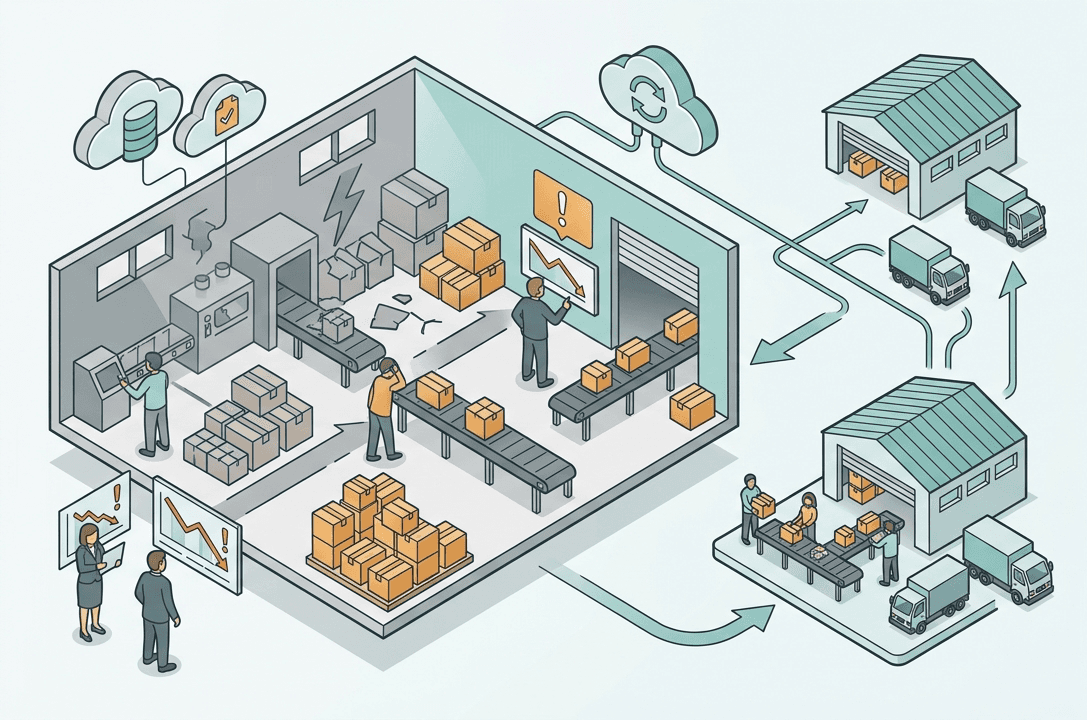
Brands with large catalogs sometimes benefit from splitting inventory strategically across locations. Your full catalog lives at one facility, while your top 50 fastest-moving SKUs are stocked at a second location closer to a major customer base.
ShipDudes operates from dual-coast warehouses in Northern New Jersey and Las Vegas, giving brands the ability to distribute inventory variety fulfillment across both coasts. For brands selling on multiple channels (DTC, Amazon, retail), this [nationwide fulfillment approach](https://shipdudes.com/blog/nationwide-3pl-fulfillment-why-a-two-coast-setup-beats-a-single-warehouse) reduces transit times while keeping catalog management centralized in one WMS.
FAQ: SKU Proliferation Management
How many SKUs can a typical 3PL handle?
It depends on the 3PL's warehouse management system and operational setup. Some 3PLs are built for low-SKU, high-volume operations and struggle past 100 SKUs. Others, like ShipDudes, are built for catalog complexity and regularly manage brands with hundreds or thousands of active SKUs across multiple channels.
Does adding more SKUs increase my fulfillment costs?
More SKUs can increase storage costs (more locations needed) and may slightly increase pick times if the warehouse isn't properly slotted. However, a 3PL with strong SKU proliferation management practices minimizes these impacts through intelligent slotting, barcode verification, and efficient pick path design.
How do 3PLs prevent mispicks with similar product variants?
The best 3PLs use barcode scanning at every step, physically separate similar-looking variants in the warehouse, and implement quality control checks at the pack station. At ShipDudes, scan-based verification is standard for every order, regardless of catalog complexity.
Should I reduce my number of SKUs to simplify fulfillment?
Not necessarily. SKU rationalization should be driven by profitability data, not fulfillment convenience. Your 3PL should be able to handle your full catalog. But if a SKU is losing money and barely selling, it's worth cutting for business reasons, not just operational ones.
How does SKU proliferation affect inventory accuracy?
More SKUs generally make inventory accuracy harder to maintain without proper systems. Regular cycle counting, barcode-driven processes, and real-time WMS tracking are essential. Without these, brands with large catalogs often see accuracy drop below acceptable levels.
Ready to Scale Your Product Line Without the Chaos?
If your product catalog is growing and your current setup (whether in-house or with an underperforming 3PL) is struggling to keep up, it's time to talk to a partner built for complexity. ShipDudes manages fulfillment for CPG brands across beauty, supplements, beverages, pet products, food, and electronics, with the warehouse systems and team to handle whatever your catalog throws at us.
Book a call at [shipdudes.com/book-a-call](https://shipdudes.com/book-a-call) and let's talk through your SKU count, your channel mix, and what it would take to make product expansion a growth lever instead of an operational headache.
Ready to Simplify Your Fulfillment?
Let's build a custom pricing model for your brand. No contracts required to start the conversation.