US-Based Fulfillment Team vs. Overseas Support: Hidden Costs Analysis

Michael DeSarno
8 min read
Locations
Share
KEY TAKEAWAYS
• Overseas 3PL support can cost mid-size brands roughly $40,000/year in hidden costs from errors, chargebacks, and lost founder time.
• 54% of shippers switch 3PLs due to poor communication, not pricing (Saddle Creek Logistics, 2023).
• US-based fulfillment teams deliver same-day response, direct warehouse access, and lower account turnover vs. 30-40% annual attrition offshore.
• ShipDudes operates 4 US warehouses (NJ + Las Vegas) with 7-day processing and 75+ integrations, all managed by US-based staff.
Last Updated:
You probably didn't start your brand so you could spend Tuesday mornings explaining basic shipping logic to a support agent 9,000 miles away. But that's exactly where a lot of CPG founders end up after signing with a 3PL that looked great on paper, only to learn the hard way that the "team" managing their fulfillment is actually a rotating cast of outsourced agents who have never touched a box of their product.
The decision between a US-based fulfillment team and one relying on overseas support isn't just a preference. It's a financial decision with ripple effects across your customer experience, your operations, and your ability to scale. Let's break down the real costs, the ones that don't show up on a rate card.
Why This Comparison Matters More Than Ever
E-commerce fulfillment services have exploded in the last five years, and with that growth has come a race to the bottom on pricing. Many 3PLs cut costs by offshoring their customer support, warehouse management communication layers, and even inventory reconciliation teams. The sticker price looks competitive, but the total cost of ownership tells a very different story.
According to a 2023 survey by Saddle Creek Logistics, 54% of shippers said they switched 3PL providers due to poor communication and service quality. Not pricing. Communication. When your fulfillment partner's support team operates in a different time zone, speaks a different first language, and lacks direct access to your warehouse floor, those communication breakdowns become systemic.
For brands selling across Shopify, Amazon, TikTok Shop, Faire, and retail channels simultaneously, the complexity multiplies. An omnichannel 3PL needs to handle EDI compliance, marketplace-specific labeling, subscription box logic, and real-time inventory sync. That requires a team that understands the nuances, not one reading from a script.
The Hidden Costs of Overseas Fulfillment Support
Let's get specific about where money leaks when your 3PL's team isn't based in the US.
1. Delayed Issue Resolution
When a customer receives the wrong product or a shipment is shorted, the clock starts ticking. Every hour of delay increases the chance of a negative review, a chargeback, or a lost customer. If your fulfillment partner's support team doesn't come online until 9 PM your time, you've already lost the day.
The average cost of resolving a fulfillment error increases by roughly 30% for every 24-hour delay in response, according to research from Convey (now project44). That's not a stat most 3PLs put on their sales deck.
2. Miscommunication on SKU and Kitting Changes
CPG brands update packaging, run seasonal bundles, and launch limited-edition kits constantly. Communicating these changes to an overseas team that lacks warehouse-floor context often leads to errors. One wrong label on an Amazon FBA prep shipment can trigger a PIMS violation or an entire shipment rejection, costing hundreds or thousands of dollars.
3. Inventory Reconciliation Gaps
Overseas support teams typically rely on WMS data without physical verification. If there's a discrepancy between system counts and actual shelf inventory, the gap can go unnoticed for weeks. For perishable or date-sensitive products (supplements, food, beverages), this creates both financial losses and compliance risks.
4. Lost Institutional Knowledge
Offshore support operations tend to have higher turnover rates. Research from the Everest Group shows that attrition in offshore BPO operations averages 30 to 40% annually. Every time a new agent takes over your account, they're starting from zero. You re-explain your brand, your workflows, your exceptions. That's your time being burned, and time is the one resource you can't scale.
5. Retail Compliance Failures
If you're shipping to retailers like Target, Walmart, or specialty chains, EDI compliance and routing guide adherence are non-negotiable. Chargebacks for non-compliant shipments typically range from $200 to $500 per violation. A support team that doesn't understand US retail logistics standards is a liability, not a partner.
Side-by-Side Comparison: US-Based vs. Overseas Support
| Factor | US-Based Fulfillment Team | Overseas Support Team |
|---|---|---|
| Response Time | Same business day, often within hours | 12 to 24 hour delay common |
| Time Zone Alignment | Full overlap with US business hours | Partial or no overlap |
| Warehouse Floor Access | Direct communication with warehouse staff | Relay through multiple layers |
| SKU/Kitting Change Accuracy | High, with real-time verification | Error-prone due to communication lag |
| Retail Compliance Knowledge | Deep understanding of EDI, routing guides | Often limited or script-based |
| Account Team Turnover | Low, consistent point of contact | High, 30 to 40% annual attrition |
| Escalation Speed | Immediate, same building or same team | Multiple handoffs required |
| Cultural/Brand Context | Native understanding of US consumer expectations | May lack market context |
| Hidden Cost Risk | Low | High (chargebacks, re-ships, lost customers) |
The Real Math: What Overseas Support Costs You
Let's run a conservative scenario for a mid-size DTC brand doing 5,000 orders per month.
Assume overseas support introduces just a 2% error rate increase compared to a US-based team. That's 100 additional problem orders per month. If each error costs an average of $15 to resolve (re-ship, customer service time, potential refund), you're looking at $1,500 per month in avoidable costs. That's $18,000 per year.
Now layer in two retail compliance chargebacks per quarter at $300 each. Add another $2,400. Factor in the founder or ops manager spending an extra 5 hours per week managing the communication gap. At a conservative $75/hour opportunity cost, that's $19,500 per year in lost productive time.
Total hidden cost: roughly $40,000 per year. For many brands, that wipes out whatever "savings" the cheaper 3PL offered.
What a US-Based Fulfillment Team Actually Looks Like
At ShipDudes, every team member who touches your account is based in the United States. That's not a footnote on our website. It's a foundational operating principle.
Here's what that means in practice:
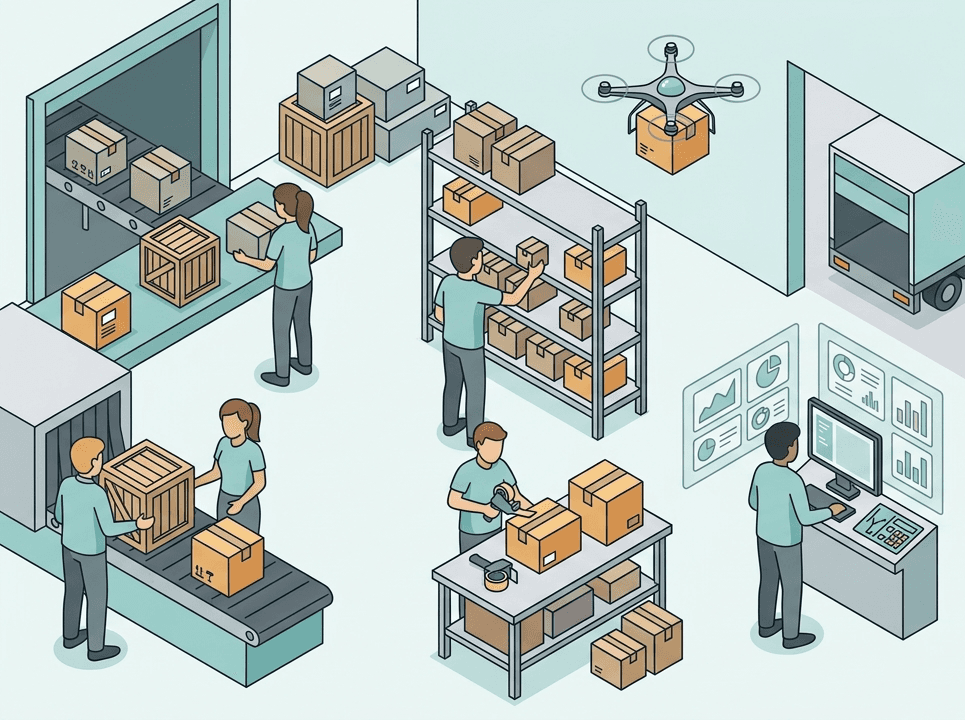
Direct warehouse communication. Our teams in Northern New Jersey and Las Vegas are in the same facilities handling your product. When you call about a SKU issue, the person on the phone can walk to the shelf.
Same-day responsiveness. Operating on US business hours means your questions get answered while they're still relevant, not 14 hours later when the damage is done.
Consistent account management. You work with the same people over time. They learn your brand, your seasonal patterns, your quirks. That institutional knowledge compounds and makes your fulfillment smoother every month.
Omnichannel expertise. With 75+ platform integrations spanning Shopify, Amazon, TikTok Shop, WooCommerce, Faire, and more, our team handles the complexity of multi-channel fulfillment without relying on outsourced layers. ShipDudes was built by eCommerce entrepreneurs who lived the pain of working with 3PLs that couldn't keep up. The no overseas support logistics approach isn't a marketing angle. It's a reaction to real operational failures we experienced firsthand.
When Overseas Support Can Work (And When It Can't)
To be fair, not every offshore operation is a disaster. Large enterprise shippers with dedicated offshore teams, robust training programs, and mature SLAs can make it work. But that model requires significant investment in management and oversight.
For brands doing $1M to $50M in annual revenue, the sweet spot where scaling decisions matter most, the overhead of managing an offshore fulfillment support team usually isn't worth it. You need a partner that operates like an extension of your team, not one that requires its own management layer.
If you're evaluating e-commerce fulfillment services and trying to decide what kind of support model fits your brand, ask these questions during your 3PL evaluation:
- Where is the team that will manage my account physically located?
- Will I have a dedicated point of contact, or a rotating support queue?
- How does your team communicate with the warehouse floor?
- What is your average support response time during US business hours?
- What is your annual team turnover rate?
The answers will tell you everything you need to know.
The ShipDudes Approach
ShipDudes is an omnichannel 3PL built for growth-stage CPG brands. We operate four warehouse facilities across Northern New Jersey and Las Vegas, providing dual-coast coverage with 7-day processing. We handle pick and pack, kitting and assembly, B2B and retail distribution (fully EDI-compliant), subscription boxes, returns processing, and Amazon FBA prep.
We've been recognized on the Inc. 5000 list as the 39th Fastest Growing Company in America, and we serve 150+ brands across beauty, pet products, beverages, shelf-stable food, supplements, small electronics, and general CPG.
But the thing our customers mention most? They can actually talk to us. Same time zone. Same country. Same team, month after month.
FAQ
What is a US-based fulfillment team?
A US-based fulfillment team means that every person involved in managing your account, handling your inventory, and resolving issues is physically located in the United States. This includes customer support, warehouse staff, and account managers. Companies like ShipDudes operate with an entirely in-house, US-based team across their fulfillment centers.
Why does it matter if my 3PL uses overseas support?
Overseas support teams introduce communication delays, higher error rates, and a lack of direct warehouse access. For brands selling across multiple channels, these gaps lead to retail compliance failures, shipping errors, and slower issue resolution, all of which cost real money.
How much more does a US-based 3PL cost compared to one with offshore support?
The sticker rate may be slightly higher, but the total cost of ownership is often lower. Hidden costs from offshore support (re-ships, chargebacks, founder time spent managing issues) can add up to $40,000 or more per year for a mid-size brand. A US-based team reduces these costs significantly.
Can ShipDudes handle omnichannel fulfillment with a US-based team?
Yes. ShipDudes integrates with 75+ platforms including Shopify, Amazon, TikTok Shop, Faire, and WooCommerce. All fulfillment operations, from DTC orders to retail distribution, are managed by US-based staff in New Jersey and Las Vegas.
What industries does ShipDudes serve?
ShipDudes serves CPG brands across beauty, pet products, beverages, shelf-stable food, supplements, small electronics, and general consumer packaged goods.
Ready to Work With a Team That's Actually Here?
If you're tired of chasing support tickets across time zones and eating the cost of preventable fulfillment errors, let's talk. ShipDudes gives you a US-based fulfillment team that operates as a true extension of your brand.
Book a call with our team at [shipdudes.com/book-a-call](https://shipdudes.com/book-a-call) and see what fulfillment looks like when your 3PL is built by operators, for operators.
Ready to Simplify Your Fulfillment?
Let's build a custom pricing model for your brand. No contracts required to start the conversation.