What Is a 3PL? A Plain-English Guide for DTC Founders Who Are Done Shipping From Their Garage

Michael DeSarno
8 min read
Getting Started
Share
KEY TAKEAWAYS
• A 3PL stores your inventory, picks and packs orders, and ships them so you don't have to.
• Most DTC founders hit the 3PL tipping point between 50 and 200 orders per month.
• 3PL pricing is a stack of fees (receiving, storage, pick/pack, shipping), not a single number.
• Evaluate accuracy rate, integration depth, geographic coverage, and communication before signing.
Last Updated:
The One-Sentence Answer (Then the Real Explanation)
A 3PL (third-party logistics provider) is a company that stores your inventory, picks and packs your orders, and ships them to your customers, so you don’t have to. That’s the textbook version. Here’s what it actually means for your business.
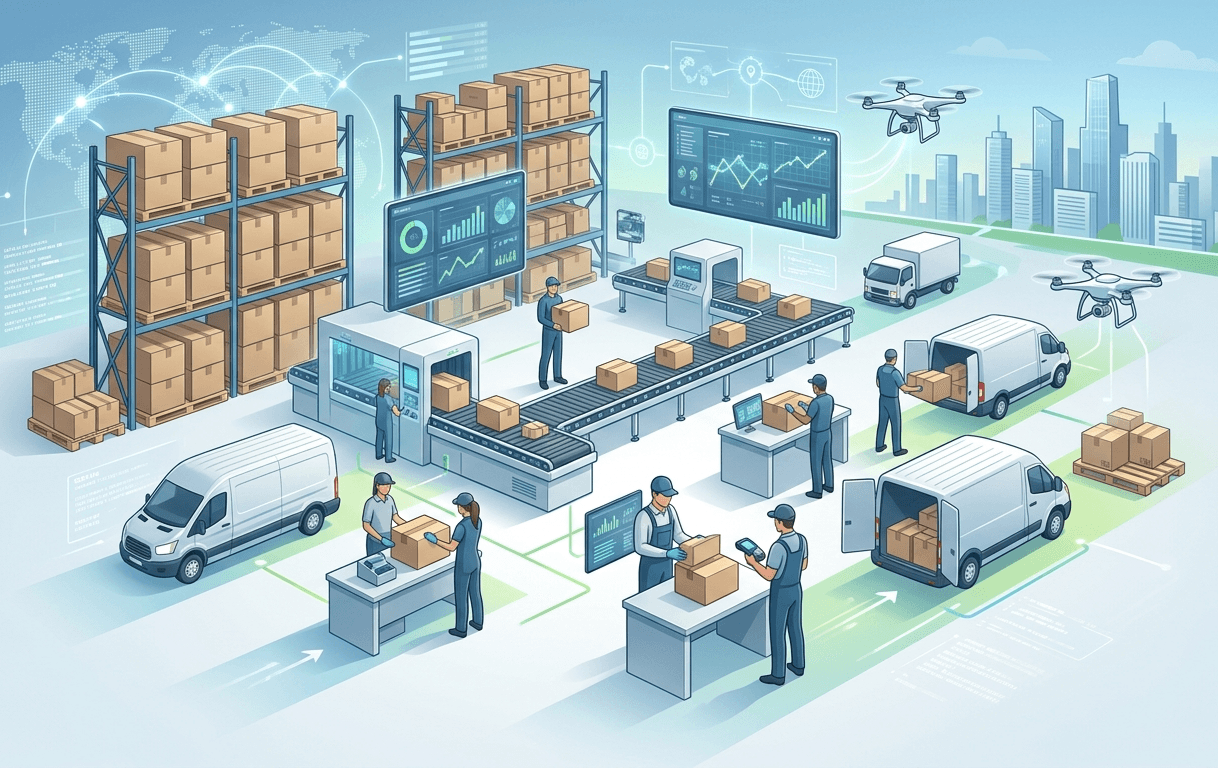
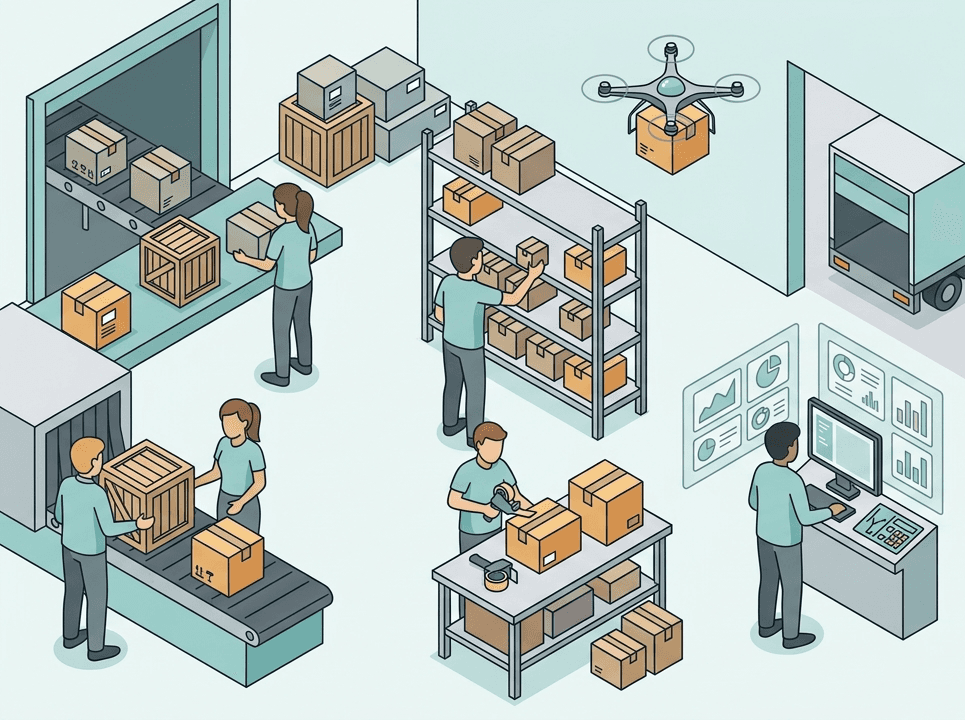
In practice, a 3PL acts as your outsourced fulfillment operation. Instead of renting warehouse space, hiring staff, buying packing supplies, and negotiating carrier rates yourself, you hand all of that off to a company that does it at scale. They receive your inventory, store it in their warehouse, and the moment a customer places an order on your Shopify store (or Amazon, or Faire, or wherever you sell), the 3PL picks the items, packs them, and ships them out.
The “third-party” label is simpler than it sounds: you’re the first party (the brand), your customer is the second party, and the 3PL is the third party operating between you. Don’t confuse 3PLs with freight brokers (who just move pallets between locations), carriers like UPS or FedEx (who deliver packages but don’t store or pack anything), or 4PLs (who manage your entire supply chain strategy but typically don’t touch a box).
What a 3PL Actually Does Day-to-Day
The core workflow is straightforward. Your 3PL receives inbound freight, pallets of product arriving from your manufacturer. They check it in, catalog the SKUs, and store everything in their warehouse. When orders come in, a warehouse associate picks the correct items from shelving, packs them into the right-sized box with any branded inserts or marketing materials, and hands the package off to a carrier for delivery.
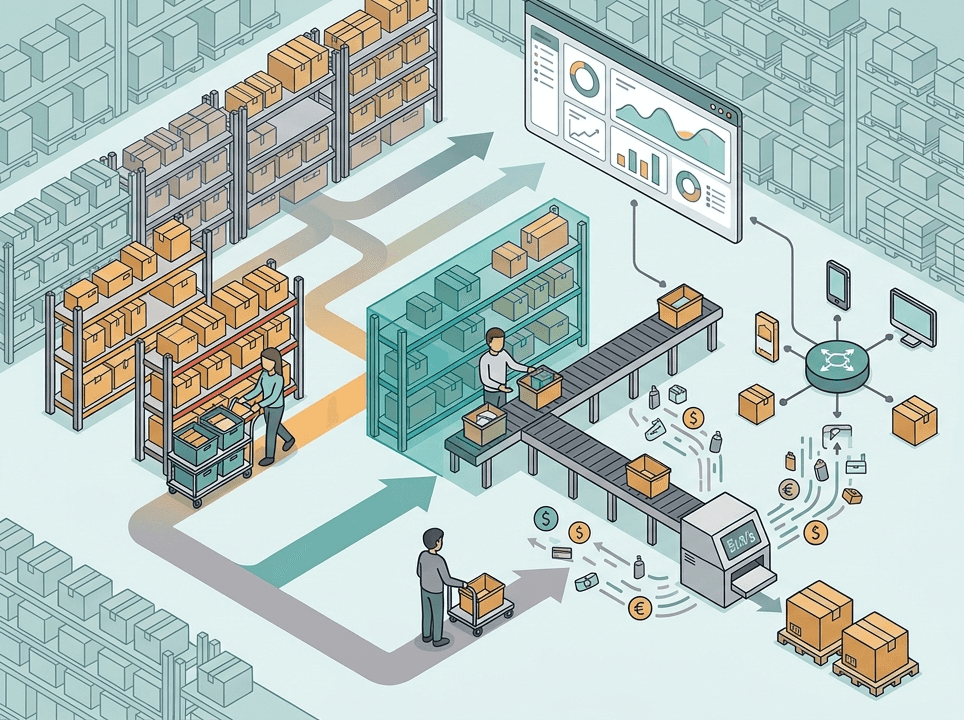
This “pick and pack” process is what confuses most first-time founders. It’s not just “put stuff in a box.” A well-run 3PL is scanning barcodes at every step, verifying quantities, selecting the optimal box size to minimize dimensional weight charges, and printing carrier labels at negotiated rates that are almost always lower than what you’d get on your own.
Beyond the basics, many 3PLs offer value-added services: kitting (bundling multiple products into one package), custom packaging inserts, subscription box assembly, and returns processing. The scope varies by provider, so always ask what’s included vs. what’s an add-on.
There’s also a technology layer most founders don’t think about. A good 3PL connects directly to your sales channels through integrations or a warehouse management system (WMS). Orders flow in automatically, inventory counts sync in real time, and tracking numbers push back to your store without you touching a thing. If your 3PL still requires you to email order spreadsheets, that’s a red flag.
The bottom line: a good 3PL isn’t just a warehouse. It’s an operational extension of your business that should reduce errors, cut shipping costs, and free up your time to focus on product development, marketing, and growth.
The Garage-to-3PL Tipping Point — How Do You Know It’s Time?
Forget the arbitrary order thresholds you’ve read on other blogs. The real signal that you need a 3PL isn’t a specific number, it’s operational drag. Here are the signs founders actually cite when they finally make the switch:
You’re spending more than 10–15 hours per week on fulfillment instead of growing the business.
Shipping errors are increasing: wrong items, late shipments, damaged products.
Inventory is spilling into your living room, garage, or that “temporary” storage unit.
You can’t negotiate meaningful carrier discounts at your volume.
You’re experiencing stockouts because you have no real inventory visibility.
As a rough benchmark, most founders start seriously evaluating 3PLs somewhere between 50 and 200 orders per month. But the real trigger is opportunity cost. Calculate what your time is worth per hour, multiply by the hours you spend on fulfillment each week, and compare that to the cost of outsourcing. The math almost always favors a 3PL earlier than founders expect.
For CPG operators specifically, there’s an additional inflection point: the moment you land your first retail account. Retail fulfillment requires case packs, EDI compliance, routing guides, and specific labeling, none of which are realistic to handle from a garage. A 3PL with retail distribution experience becomes essential, not optional.
How 3PL Pricing Actually Works (No More Sticker Shock)
Let’s demystify the part that makes most founders nervous: cost. 3PL pricing isn’t a single number, it’s a stack of fees that cover each stage of the fulfillment process. Here’s how the standard model breaks down:
Receiving fees — charged per pallet or per unit when your inventory arrives at the warehouse.
Storage fees — billed monthly, usually per pallet, per bin, or per cubic foot of space your inventory occupies.
Pick and pack fees — a per-order base charge plus a small fee for each additional item in the order.
Outbound shipping — either passed through at the 3PL’s negotiated carrier rates or marked up slightly.
There’s no universal pricing model across the industry. Some 3PLs charge per order, some per SKU, and some require monthly minimums. The only way to get a real comparison is to ask each provider for a landed cost per order estimate based on your actual order profile, your SKU count, average units per order, and typical package weight and dimensions.
Watch for hidden fees. Account setup charges, long-term storage surcharges, returns processing fees, and carrier rate markups are the most common surprises. A transparent 3PL will lay out every possible charge before you sign anything.
What Separates a Good 3PL from a Frustrating One
Choosing a 3PL is a high-stakes decision because switching providers is painful, it means moving inventory, re-integrating systems, and enduring weeks of disruption. Spending two weeks evaluating properly saves months of operational headaches down the road. Here’s what to look for:
Accuracy and speed. Ask about their order error rate (anything above 1% should raise eyebrows) and their shipping cutoff times. Same-day fulfillment for orders placed by a reasonable cutoff (say, 2 PM local time) is the standard you should expect.
Communication and accountability. A 3PL that goes dark when there’s a problem is a liability. Before you sign, ask who your day-to-day point of contact will be, what the escalation process looks like, and whether they have SLA commitments with real consequences for missed targets. If you’re getting routed to an overseas call center or an email ticketing system, that’s a warning sign.
Integration depth. Does the 3PL integrate natively with your tech stack, Shopify, Amazon, WooCommerce, ShipStation, subscription platforms like ReCharge? Or will you need workarounds and manual processes? The more seamless the integration, the fewer errors and delays you’ll deal with.
Geographic positioning. Where the warehouse sits relative to your customer base directly impacts shipping speed and cost. A 3PL with facilities on both coasts can offer 2–5 day ground delivery to most of the continental US, which is increasingly the baseline expectation for DTC brands.
Is a 3PL Right for Every DTC Brand?
Honestly? No. If you’re shipping fewer than 30 orders a month and fulfillment takes you a couple hours a week, the cost of a 3PL probably doesn’t make sense yet. If your product requires extremely specialized handling that only you can provide, outsourcing may introduce more risk than it removes.
But for the vast majority of DTC and CPG brands that have found product-market fit and are starting to scale, a 3PL is the single highest-leverage operational decision you can make. It gives you back your time, reduces shipping costs through negotiated rates, cuts errors through systemized processes, and positions you to handle volume spikes, whether that’s a viral TikTok moment or your first big retail order.
The question isn’t whether you’ll eventually need a 3PL. It’s whether you’re going to make the switch proactively, or wait until fulfillment is actively holding your business back.
Ready to Simplify Your Fulfillment?
Let's build a custom pricing model for your brand. No contracts required to start the conversation.