Zone Skipping Fulfillment: How Smart 3PLs Cut Shipping Costs Beyond Dual-Coast

Michael DeSarno
8 min read
Industry Guides
Share
KEY TAKEAWAYS
• Zone skipping consolidates orders by region and injects them at local carrier hubs, cutting per-package costs by $3 to $7 on lanes skipping 3+ zones.
• It layers on top of dual-coast warehousing to optimize the high-cost corridors that two locations alone cannot eliminate.
• A multi-brand 3PL can aggregate volume across clients, making zone skipping viable even if your brand alone lacks the density.
• Brands shipping 200+ packages per day to one region can save $30,000+ monthly on a single lane.
Last Updated:
You already know that shipping from two coasts is better than shipping from one. If you have been running an eCommerce brand for more than a year, the math on that is obvious. But dual-coast warehousing is just the starting line for serious shipping cost reduction. The next level? Zone skipping fulfillment.
Zone skipping is one of those strategies that large retailers have used for decades, but most DTC and CPG brands never hear about it until their 3PL brings it up (or, more often, never brings it up at all). If your fulfillment partner is not actively working on zone skipping logistics as part of your shipping strategy, you are leaving real money on the table.
Let's break down what zone skipping actually is, how it works in practice, and why it matters for brands doing meaningful volume.
What Is Zone Skipping Fulfillment?
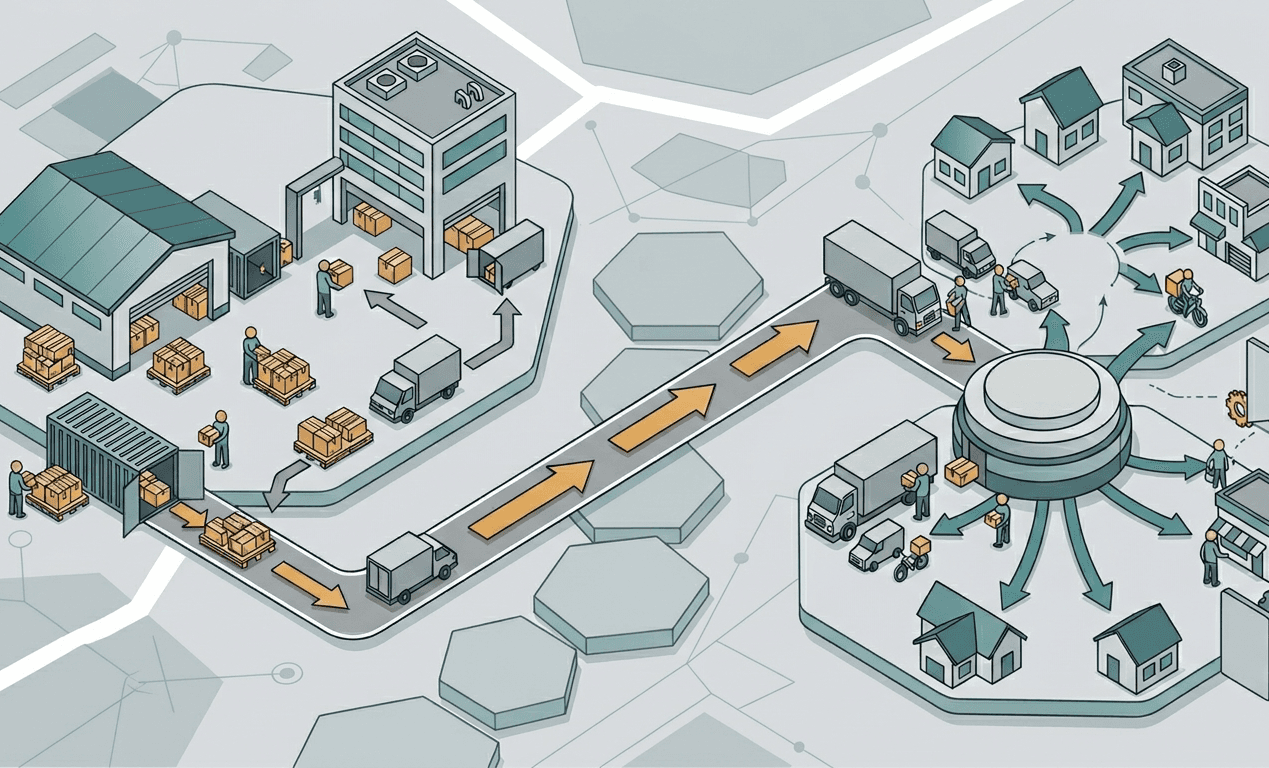
Zone skipping is a shipping cost reduction strategy where you consolidate individual orders headed to the same geographic region into a single bulk shipment. Instead of handing each parcel to a carrier at your warehouse and letting it travel through the entire carrier network (crossing multiple shipping zones along the way), you transport a pallet or truckload of orders directly to a carrier hub closer to the final destination. From there, the carrier handles only the last-mile delivery.
Why does this matter? Because parcel carriers price shipments based on zones. The more zones a package crosses, the more it costs. A package going from New Jersey to Zone 8 (say, the West Coast) costs dramatically more than the same package traveling within Zone 2. Zone skipping lets you bypass those intermediate zones entirely.
Think of it this way: instead of paying FedEx or UPS to move 500 individual packages from New Jersey to Los Angeles through their entire sort network, you load those 500 packages onto a truck headed straight to a carrier injection point in Southern California. The carrier then treats each package as a local delivery. Your cost per package drops significantly because you are only paying for Zone 1 or Zone 2 rates on the final leg.
How Zone Skipping Works in a 3PL Shipping Strategy
Zone skipping fulfillment is not something you can easily do on your own from a garage or a single warehouse. It requires volume, coordination, and infrastructure. Here is the typical flow:
1. Order consolidation: Your 3PL batches orders by destination region. Instead of shipping each order individually as it comes in, orders destined for the same metro area or zone are grouped together.
2. Bulk transport: The consolidated shipment moves via LTL (less-than-truckload) or FTL (full truckload) freight to a carrier injection point near the destination zone. This leg is much cheaper per package than individual parcel shipping.
3. Carrier injection: At the destination hub, individual packages are inducted into the carrier's local delivery network. From the carrier's perspective, these are essentially local shipments.
4. Last-mile delivery: The carrier delivers each package as if it originated locally, at local zone rates.
The key requirement is volume. You need enough orders going to a specific region to justify the consolidated shipment. This is where working with a 3PL that handles multiple brands becomes a real advantage. Even if your brand alone does not generate enough West Coast volume to fill a truck from New Jersey, your 3PL might be consolidating your orders alongside other brands headed to the same region.
At ShipDudes, the [dual-coast warehouse setup](https://shipdudes.com/blog/nationwide-3pl-fulfillment-why-a-two-coast-setup-beats-a-single-warehouse) with facilities in Northern New Jersey and Las Vegas already reduces the average zone distance for most orders. But zone skipping takes that foundation and pushes costs down even further, particularly for high-volume corridors.
Dual-Coast Is the Foundation, Zone Skipping Is the Optimization
Let's be clear about the relationship between these two strategies. They are not either/or. They are layers.
[Dual-coast warehousing](https://shipdudes.com/blog/fulfillment-centers-east-and-west-coast) solves the broadest problem: getting inventory closer to customers on both sides of the country so that most orders ship within Zone 1 through Zone 4. For brands doing nationwide DTC fulfillment, this alone can cut shipping spend by 20% to 30% compared to a single central warehouse.
Zone skipping addresses the remaining high-cost lanes. Even with two warehouse locations, there are scenarios where orders still cross multiple zones. A brand shipping heavy pet supplements from New Jersey to customers in the Southeast, for instance, might find those Zone 4 and Zone 5 shipments adding up. Zone skipping lets you consolidate those southeastern orders and inject them closer to home.
The brands that benefit most from zone skipping fulfillment tend to share a few characteristics:
- High daily order volume (typically 100+ orders per day, though thresholds vary by region)
- Heavier or bulkier products where zone-based pricing differences are amplified (think [beverages](https://shipdudes.com/blog/beverage-fulfillment-challenges-glass-liquid-restrictions-and-shipping-solutions), supplements, or pet food)
- Concentrated customer clusters in specific metros or regions
- Margin sensitivity where even a $1 to $2 per order savings materially impacts profitability
The Math: Why Zone Skipping Adds Up Fast
Let's walk through a simplified example. Say you are a CPG brand shipping a 3-pound box. Your negotiated rate from your New Jersey warehouse to Zone 7 (Mountain West) might be around $12 to $14 per package. That same package delivered locally (Zone 1 or 2) at the destination might cost $6 to $8.
The difference is $5 to $7 per package. If you are shipping 200 packages a day to that region, that is $1,000 to $1,400 in daily savings. Over a month, you are looking at $30,000 to $42,000 in shipping cost reduction on just one lane.
Of course, you have to factor in the cost of the consolidated freight move. But LTL and FTL rates spread across hundreds of packages typically add only $1 to $2 per package. The net savings remain substantial.
This is the kind of [shipping cost optimization](https://shipdudes.com/blog/shipping-cost-optimization) that separates brands hitting 8 figures from those stuck at 7. It is not glamorous. Nobody posts about zone skipping on LinkedIn. But it directly impacts your contribution margin in a way that most marketing tactics cannot.
What to Ask Your 3PL About Zone Skipping
If your current fulfillment partner has never mentioned zone skipping to you, that is a yellow flag. It does not necessarily mean they are a bad partner, but it does mean they are not proactively optimizing your shipping spend. Here are the questions worth asking:
"Do you consolidate shipments across brands for zone skipping?" This is the big one. A 3PL that only handles your brand may not have the volume to make zone skipping work. But a 3PL handling dozens or hundreds of brands can aggregate volume across clients to hit the thresholds for consolidated shipments. ShipDudes, for example, manages fulfillment for 150+ brands across categories like beauty, supplements, beverages, and general CPG, which creates natural consolidation opportunities.
"Which lanes are candidates for zone skipping right now?" A good 3PL should be able to look at your order data and identify the specific origin-destination corridors where zone skipping would save you money. If they cannot answer this, they are not analyzing your shipping data.
"How does zone skipping affect delivery speed?" This is a fair concern. Because orders are batched and consolidated, there can be a slight delay (usually 12 to 24 hours) compared to shipping each order individually the moment it is placed. For brands already committed to [reliable processing windows rather than same-day promises](https://shipdudes.com/blog/why-7-day-processing-fulfillment-beats-same-day-promises), this tradeoff is almost always worth it.
"What carrier injection points do you use?" The answer reveals how sophisticated their zone skipping logistics really are. The best 3PLs have relationships with multiple carriers and injection points across the country.
When you are [evaluating 3PL contracts](https://shipdudes.com/blog/3pl-contract-red-flags-12-terms-that-will-cost-you-(and-what-to-negotiate-instead)), make sure shipping optimization strategies like zone skipping are part of the conversation, not an afterthought.
Zone Skipping for B2B and Retail Distribution
Zone skipping is not just a DTC play. Brands doing [B2B and retail distribution](https://shipdudes.com/blog/b2b-order-fulfillment-edi-integration-and-retail-distribution-essentials) can benefit even more because B2B shipments tend to be larger, heavier, and more concentrated by destination. If you are shipping cases to retailers or distributors in specific regions, consolidating those shipments and injecting them closer to destination can slash your freight costs.
This is especially relevant for brands selling through multiple channels. An [omnichannel fulfillment](https://shipdudes.com/blog/omnichannel-fulfillment) approach that includes DTC, Amazon, retail, and wholesale creates more total volume, which makes zone skipping more viable across all channels.
When Zone Skipping Does Not Make Sense
Zone skipping is not a silver bullet. Here are the scenarios where it is less effective:
- Low order volume: If you are only shipping 20 orders a day total, you probably do not have enough density to any single region to justify consolidation.
- Geographically dispersed orders: If your customers are spread evenly across the country with no concentration, there are fewer consolidation opportunities.
- Ultra-time-sensitive products: If every order absolutely must ship within hours of being placed, the batching required for zone skipping may not work (though for most brands, this urgency is self-imposed rather than customer-driven).
- Already shipping locally: If your [dual-coast setup](https://shipdudes.com/blog/d2c-fulfillment-why-8-figure-brands-need-dual-coast-warehousing) means 90%+ of orders already ship within Zone 1 to 2, the marginal gains from zone skipping are smaller.
For most growing CPG brands doing meaningful volume, though, zone skipping fulfillment represents one of the highest-ROI logistics optimizations available. It is the kind of strategic move that a proactive 3PL shipping strategy should include by default.
The Bigger Picture: Shipping Strategy as a Growth Lever
Here is what most brands miss. Shipping cost reduction is not about being cheap. It is about freeing up margin to reinvest in growth. Every dollar you save on shipping is a dollar you can put into customer acquisition, product development, or [better packaging](https://shipdudes.com/blog/custom-packaging-and-branded-fulfillment-elevate-your-unboxing-experience).
Zone skipping, combined with smart [inventory management](https://shipdudes.com/blog/inventory-management-for-dtc-brands), dual-coast positioning, and carrier rate negotiation, can transform shipping from your biggest cost center into a competitive advantage. The brands that win long-term are the ones treating logistics as a strategic function, not just a cost to be endured.
ShipDudes was built by eCommerce operators who lived this reality. The dual-coast footprint in New Jersey and Las Vegas, the 75+ platform integrations, and the all US-based team exist because those are the things that actually move the needle for growing brands. Zone skipping is one more layer of that operator-first approach to fulfillment.
Ready to Optimize Your Shipping Spend?
If you are doing 100+ orders per day and your current 3PL has never talked to you about zone skipping, carrier injection, or lane-level cost analysis, it is time for a different conversation. Book a call with the ShipDudes team at [shipdudes.com/book-a-call](https://shipdudes.com/book-a-call) and let's look at your actual shipping data together. No pitch decks, just math.
Frequently Asked Questions
What is zone skipping fulfillment?
Zone skipping fulfillment is a shipping strategy where individual orders headed to the same geographic region are consolidated into a bulk shipment and transported directly to a carrier injection point near the destination. The carrier then handles only the last-mile delivery at local zone rates, significantly reducing per-package shipping costs.
How much can zone skipping save on shipping costs?
Savings vary based on order volume, package weight, and the zones being skipped. Brands typically save $3 to $7 per package on lanes where they can skip 3 or more zones. For a brand shipping 200+ packages per day to a single region, this can translate to $30,000 or more in monthly savings.
What order volume do you need for zone skipping to work?
Most zone skipping programs require at least 100 orders per day going to a specific region to justify the consolidated freight move. However, 3PLs like ShipDudes that handle multiple brands can aggregate volume across clients, making zone skipping viable for individual brands with lower volumes.
Does zone skipping slow down delivery times?
Zone skipping can add 12 to 24 hours to the fulfillment process because orders are batched before being shipped. However, once injected at the local carrier hub, last-mile delivery is often faster because the package avoids the carrier's long-haul sort network. Most customers see no noticeable difference in delivery speed.
Can zone skipping work with a dual-coast warehouse setup?
Absolutely. Dual-coast warehousing and zone skipping are complementary strategies. A dual-coast setup reduces the average zone distance for most orders, while zone skipping further optimizes the remaining high-cost lanes that still cross multiple zones.
Ready to Simplify Your Fulfillment?
Let's build a custom pricing model for your brand. No contracts required to start the conversation.