3PL Disaster Recovery Planning: What Happens When Your Warehouse Goes Down

Michael DeSarno
8 min read
Risk & Contingency
Share
KEY TAKEAWAYS
• A single-warehouse 3PL is a single point of failure that can cost brands tens of thousands per outage.
• Geographic redundancy across two or more regions is the most critical element of 3PL disaster recovery.
• ShipDudes operates 4 warehouses across 2 coasts (NJ and Las Vegas) for built-in fulfillment continuity.
• Ask your 3PL for their Recovery Time Objective (RTO), tested plans, and carrier diversification strategy.
Last Updated:
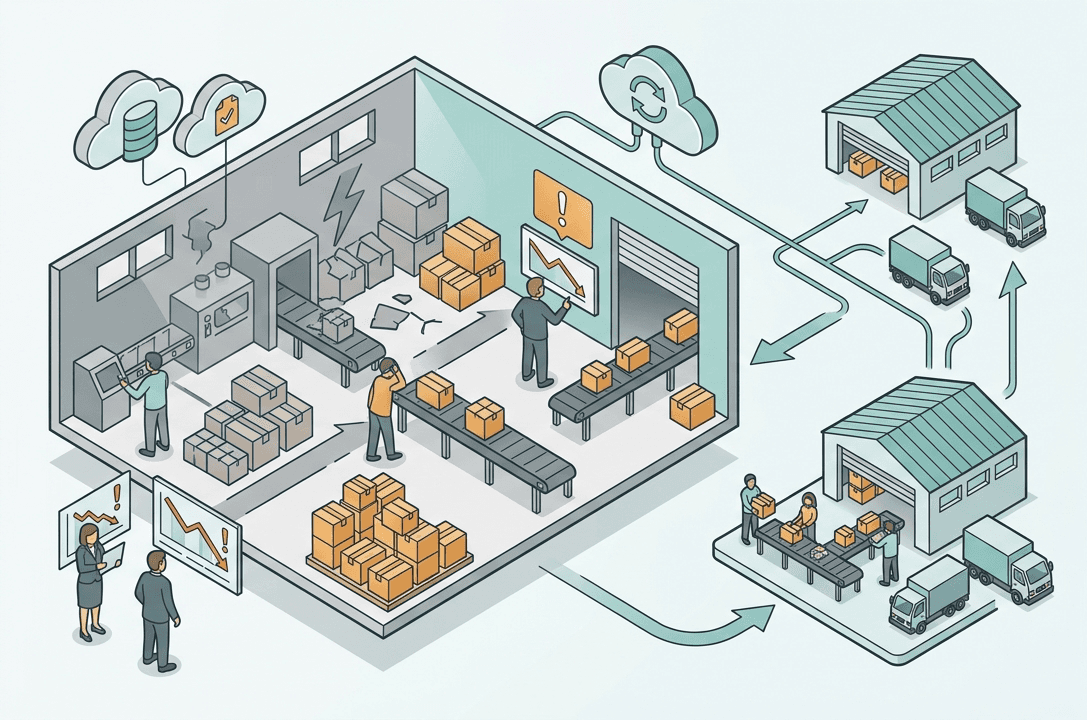
It's a Tuesday afternoon. Your Shopify store is running a promotion that's converting at 4x your normal rate. Then your 3PL emails you: the warehouse is offline. Maybe it's a fire. Maybe it's a flood. Maybe the building's power grid failed and there's no ETA on restoration. Whatever the cause, orders are piling up with no one to pick, pack, or ship them.
This isn't a hypothetical exercise. Warehouse disruptions happen more often than most brand founders want to admit. And the brands that survive them without losing customers, revenue, or their minds are the ones that invested in 3PL disaster recovery planning before the crisis hit.
Let's walk through what actually happens when a warehouse goes down, what a real disaster recovery plan looks like, and how to evaluate whether your current fulfillment partner has one.
The Real Cost of Warehouse Downtime
When your warehouse goes offline, the financial damage starts immediately and compounds quickly. Here's what you're looking at:
Lost revenue. Every hour your fulfillment is down, orders either bounce (customers abandon at checkout when shipping timelines look off) or pile up into a backlog that takes days to clear.
Customer trust erosion. One late delivery might be forgivable. A week of silence and delayed shipments? That's a brand reputation problem, especially if you're selling on Amazon, where late shipments directly impact your seller metrics.
Retail compliance penalties. If you're fulfilling B2B orders for retailers like Target or Walmart, missed ship windows mean chargebacks. EDI compliance doesn't care about your warehouse problems. Those penalties are automatic and expensive.
Inventory risk. Depending on the disaster type, you may be dealing with damaged or destroyed inventory on top of the operational disruption. If you're working with [expiration-sensitive products](https://shipdudes.com/blog/expiration-date-management-fifo-fulfillment-cpg-brands), a multi-day disruption can mean entire batches become unsellable.
The bottom line: a single warehouse outage can cost a growing CPG brand tens of thousands of dollars in direct losses, and significantly more in downstream customer acquisition costs to replace churned buyers.
Common Causes of Warehouse Disruptions
Disaster recovery planning starts with understanding what can actually go wrong. The threats fall into a few categories:
Natural disasters. Hurricanes, flooding, earthquakes, wildfires, and extreme heat events. These aren't rare anymore. Climate-related disruptions have increased significantly over the past decade, and warehouse locations in flood zones or fire-prone areas face elevated risk.
Infrastructure failures. Power outages, HVAC system failures (critical for [temperature-controlled fulfillment](https://shipdudes.com/blog/temperature-controlled-fulfillment-cold-chain-requirements-for-beauty-and-supplements)), internet connectivity loss, and warehouse management system crashes. These are less dramatic but more frequent than natural disasters.
Labor disruptions. Strikes, walkouts, or sudden workforce shortages. If your 3PL relies on temp labor during peak season, a staffing agency failure can effectively shut down operations.
Technology failures. WMS crashes, integration breakdowns between your ecommerce platform and the warehouse, or cybersecurity incidents. A ransomware attack on your 3PL's systems can take operations down for weeks.
Building-specific issues. Fires, structural damage, lease disputes, or code violations that force closures. These are surprisingly common with smaller, single-facility 3PLs.
What a Real 3PL Disaster Recovery Plan Looks Like
Not all disaster recovery plans are created equal. Some 3PLs will tell you they have a plan, but what they actually have is a document no one has read since it was written. Here's what a legitimate 3PL disaster recovery plan should include:
Geographic Redundancy
This is the single most important element of fulfillment business continuity. If your 3PL operates from one warehouse in one location, your disaster recovery plan is essentially "hope nothing goes wrong." That's not a plan.
[Geographic redundancy](https://shipdudes.com/blog/3pl-geographic-redundancy-fulfillment-disaster-recovery) means having multiple fulfillment locations in different geographic regions, so that if one goes down, the other can absorb the workload. At ShipDudes, this is built into the operating model with [dual-coast warehousing](https://shipdudes.com/blog/fulfillment-centers-east-and-west-coast): two facilities in Northern New Jersey and two in Las Vegas. If a natural disaster or infrastructure failure hits one coast, the other coast continues shipping. It's not a theoretical backup. It's an active, operational redundancy.
Inventory Distribution Strategy
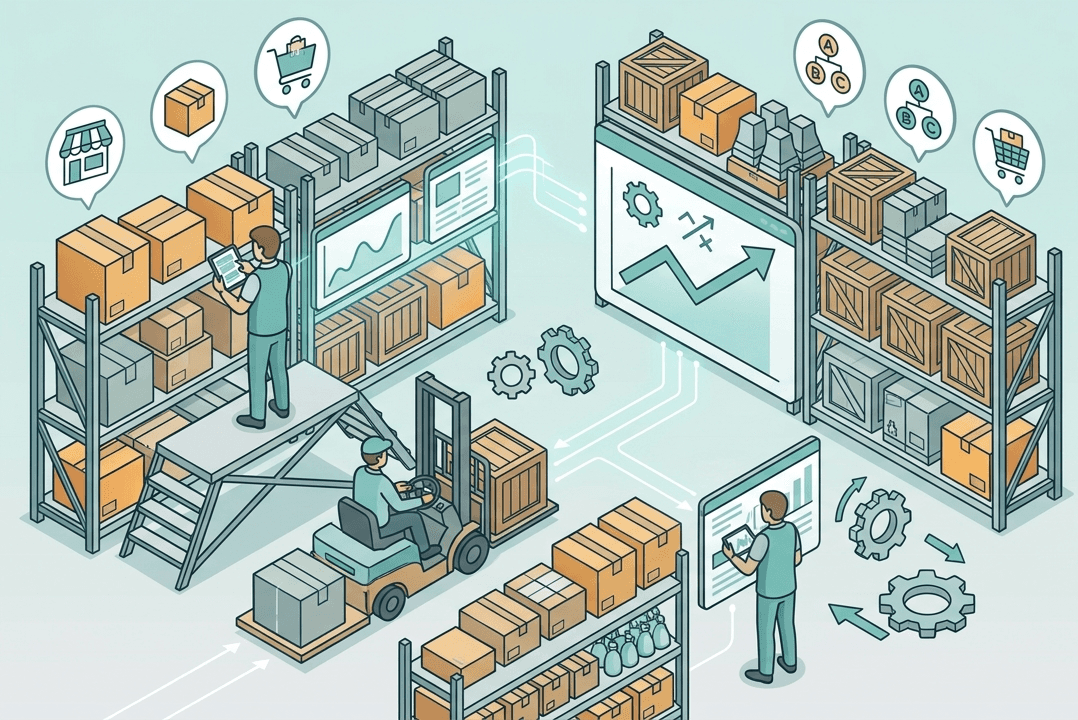
Geographic redundancy only works if inventory is actually distributed across locations. If 100% of your stock sits in one warehouse, having a second empty facility doesn't help. Smart [inventory allocation strategies](https://shipdudes.com/blog/inventory-allocation-strategies-multi-channel-brands-prevent-stock-conflicts) split stock based on demand patterns, so both locations carry enough inventory to sustain operations independently during a disruption.
Technology Failover Protocols
Your 3PL's warehouse management system needs redundancy too. That means cloud-based systems with automatic failover, regular data backups, and the ability to restore operations quickly after a tech disruption. Ask your 3PL about their [technology infrastructure](https://shipdudes.com/blog/3pl-technology-integration-apis-webhooks-and-real-time-data-sync) and what happens if their primary systems go offline.
Communication Protocols
During a disruption, the worst thing a 3PL can do is go silent. A real disaster recovery plan includes defined communication protocols: who contacts the brand, how quickly, through what channels, and with what level of detail. This is where having a [US-based team](https://shipdudes.com/blog/the-real-cost-of-3pl-overseas-support-why-us-based-teams-matter-for-your-brand) matters enormously. When a crisis hits at 2pm Eastern, you need to reach a real person who understands your account, not a call center halfway around the world reading from a script.
Carrier Diversification
If your 3PL ships exclusively through one carrier, a disruption at that carrier level (think UPS strikes or FedEx system outages) can shut down fulfillment even if the warehouse is fully operational. [Carrier diversification](https://shipdudes.com/blog/3pl-carrier-diversification-why-single-carrier-strategies-fail-during-peak-season) is a critical component of supply chain risk management. Your 3PL should have relationships with multiple carriers and the ability to reroute shipments quickly.
Questions to Ask Your 3PL About Disaster Recovery
If you're evaluating a new 3PL or pressure-testing your current partner, here are the questions that separate prepared operators from the rest:
1. How many warehouse locations do you operate, and in which regions? A single-facility 3PL is a single point of failure. Period.
2. What percentage of my inventory will be stored at each location? If all your stock is in one place, redundancy doesn't exist.
3. When was the last time you activated your disaster recovery plan? If they've never tested it, it's not a plan. It's a wish.
4. What's your Recovery Time Objective (RTO)? This is the maximum time to restore fulfillment operations after a disruption. Anything over 48 hours should raise serious concerns.
5. What happens to my orders if your primary WMS goes down? Look for answers involving cloud backups, failover systems, and specific protocols, not vague reassurances.
6. How will you communicate with me during a disruption? You need a named contact, a defined cadence, and a communication channel that works even if their email systems are down.
ShipDudes handles these conversations openly because the [dual-coast, four-facility model](https://shipdudes.com/blog/nationwide-3pl-fulfillment-why-a-two-coast-setup-beats-a-single-warehouse) is designed specifically to address these risks. Brands working with ShipDudes have active inventory in both New Jersey and Las Vegas, with 75+ platform integrations syncing in real time across both hubs.
Building Your Own Fulfillment Business Continuity Plan
Even with a solid 3PL partner, your brand needs its own continuity plan. Here's what to build:
Document your critical fulfillment workflows. Know exactly which platforms, integrations, and processes drive your orders. If you need to communicate with a backup 3PL or shift channels, you need this documented and accessible.
Maintain a [3PL backup plan](https://shipdudes.com/blog/3pl-backup-plan-emergency-contingency-fulfillment-strategies). Identify a secondary fulfillment option. Even if you never use it, knowing who you'd call and what the onboarding timeline looks like gives you options when you need them most.
Keep your own inventory records. Don't rely solely on your 3PL's system for inventory counts. Maintain your own records, reconcile regularly through [cycle counting](https://shipdudes.com/blog/fulfillment-center-cycle-counting-how-to-maintain-inventory-accuracy-at-scale), and ensure you have documentation for insurance claims if inventory is damaged or destroyed.
Review your [3PL insurance coverage](https://shipdudes.com/blog/3pl-insurance-requirements-cargo-coverage-liability-and-what-brands-actually-need). Understand what your 3PL's insurance covers and where the gaps are. Most standard warehouse legal liability policies have per-unit caps that won't come close to covering your actual inventory value. You may need your own inland marine or stock throughput policy.
Test your recovery plan. At least once a year, walk through a disruption scenario with your team. Can you redirect orders to a second warehouse? Can you pause your Shopify store and communicate with customers quickly? Can you shift [B2B fulfillment](https://shipdudes.com/blog/b2b-order-fulfillment-edi-integration-and-retail-distribution-essentials) to protect retail relationships? The time to find gaps is before the crisis, not during it.
Why Single-Warehouse 3PLs Are a Risk You Can't Afford
Let's be direct about this. If your 3PL operates from one building in one city, your entire business runs through a single point of failure. It doesn't matter how great their pick accuracy is or how fast their processing times are. One hurricane, one fire, one power grid failure, and you're offline with no fallback.
This is especially critical for brands selling across multiple channels. If you're on Shopify, Amazon, TikTok Shop, and Faire simultaneously, a fulfillment disruption cascades across every channel. Amazon penalizes you for late shipments. TikTok Shop customers leave negative reviews. Faire retailers lose trust. The damage multiplies with every channel you sell on.
ShipDudes was built by ecommerce entrepreneurs who understood this risk firsthand. The [dual-coast warehouse network](https://shipdudes.com/blog/3pl-geographic-expansion-adding-new-markets-without-changing-fulfillment-partners) isn't a nice-to-have feature. It's a foundational architecture decision that ensures no single event can take your fulfillment offline completely.
FAQ: 3PL Disaster Recovery Planning
What is 3PL disaster recovery planning?
3PL disaster recovery planning is the process of creating protocols, redundancies, and backup systems to ensure fulfillment operations can continue or quickly resume after a warehouse disruption. This includes geographic redundancy, technology failover, carrier diversification, and communication protocols.
How does geographic redundancy protect against warehouse disasters?
Geographic redundancy means distributing inventory and fulfillment operations across multiple warehouse locations in different regions. If one location is affected by a natural disaster, power outage, or other disruption, the other location(s) can continue processing and shipping orders without interruption.
What should I look for in a 3PL's disaster recovery plan?
Look for multiple warehouse locations in different geographic regions, documented Recovery Time Objectives (RTOs), cloud-based WMS with automatic failover, carrier diversification, defined communication protocols, and evidence that the plan has been tested. A plan that hasn't been tested is not a reliable plan.
How quickly should a 3PL be able to recover from a warehouse disruption?
A well-prepared 3PL with geographic redundancy should be able to redirect fulfillment to a backup location within 24 to 48 hours. 3PLs operating from a single facility may take a week or more to resume operations, depending on the severity of the disruption.
Does ShipDudes have a disaster recovery plan?
Yes. ShipDudes operates four warehouse facilities across two coasts (Northern New Jersey and Las Vegas), providing built-in geographic redundancy. Inventory is distributed across locations, and the all US-based team maintains direct communication with brands during any disruption.
Protect Your Fulfillment Before You Need To
Disaster recovery planning isn't exciting. It's not going to boost your conversion rate or make your Instagram ads perform better. But it is the difference between a disruption that costs you a day and one that costs you a quarter's worth of revenue, customer trust, and retail relationships.
If your current 3PL can't clearly articulate their disaster recovery plan, or if they operate from a single facility with no geographic redundancy, it's time to have a serious conversation about your supply chain risk.
ShipDudes operates dual-coast facilities in Northern New Jersey and Las Vegas, with an all in-house, US-based team, 75+ platform integrations, and a track record as the 39th fastest-growing company on the Inc. 5000 list. The infrastructure is designed so your fulfillment keeps running even when the unexpected happens.
Ready to talk about building real resilience into your fulfillment? [Book a call with ShipDudes](https://shipdudes.com/book-a-call) and let's walk through how dual-coast fulfillment protects your brand.
Ready to Simplify Your Fulfillment?
Let's build a custom pricing model for your brand. No contracts required to start the conversation.