
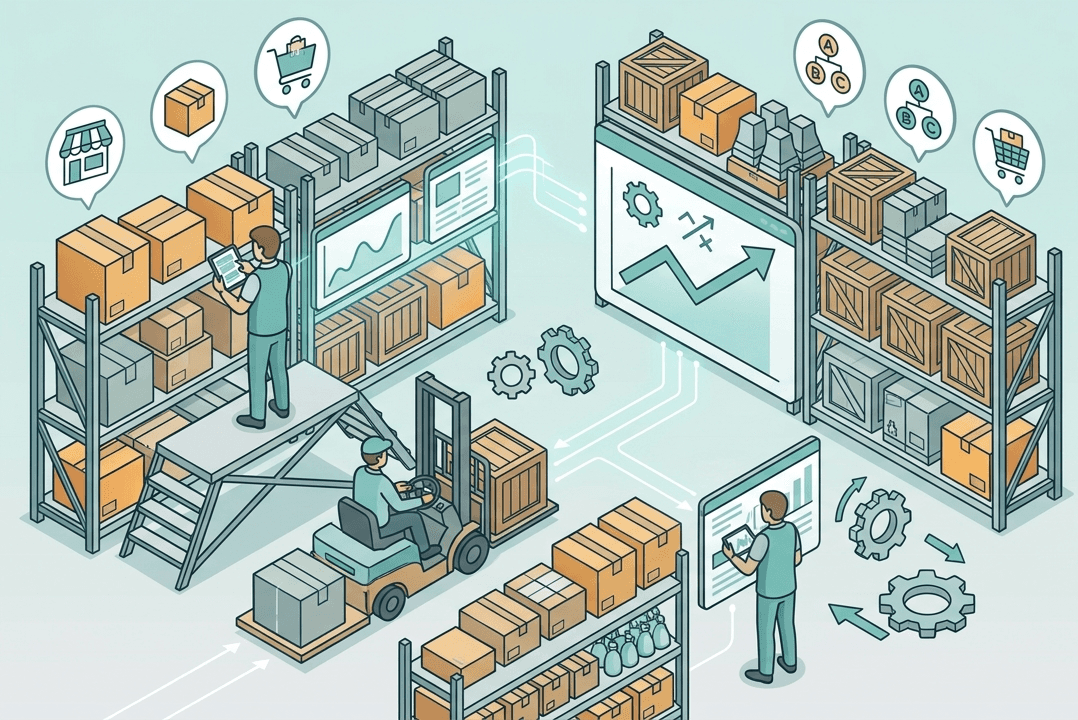
Warehouse Cycle Counting for CPG Brands: Protecting Your Inventory Investment

Michael DeSarno
8 min read
Fulfillment Operations
Share
KEY TAKEAWAYS
• Warehouse cycle counting (ABC, random, usage-based) is the most effective method for closing the ~63% average inventory accuracy gap in U.S. warehouses.
• CPG brands selling across multiple channels need cycle counting to prevent oversells, expired stock write-offs, and failed retail audits.
• A strong 3PL should offer blind counts, root cause analysis for variances, real-time WMS updates, and client-facing accuracy reporting.
• ShipDudes runs ABC-classified blind counts across 4 warehouses with real-time sync to 75+ integrations.
Last Updated:
Here's a number that should make any CPG founder uncomfortable: the average inventory accuracy rate across U.S. warehouses sits around 63%. That means more than a third of what your system says you have on shelves doesn't match reality. For a brand selling across Shopify, Amazon, TikTok Shop, and retail partners simultaneously, that gap translates directly into oversells, stockouts, unhappy customers, and lost revenue.
Warehouse cycle counting is the single most effective discipline for closing that gap. Not a full physical inventory that shuts down operations for days. Not hoping your WMS is right. Systematic, ongoing counts that keep your numbers honest and your business protected.
If you're evaluating 3PL partners or trying to improve your current fulfillment setup, understanding how cycle counting works (and what to demand from your warehouse partner) is essential.
What Is Warehouse Cycle Counting, and Why Does It Matter for CPG?
An inventory cycle count is a method of auditing warehouse stock by counting a small subset of inventory on a rotating schedule, rather than shutting everything down for a single wall-to-wall count. Over time, every SKU in your catalog gets counted, discrepancies get identified, and root causes get addressed before they snowball.
For CPG brands specifically, cycle counting matters more than it does in most industries. Here's why:
- Expiration dates create urgency. If your system shows 500 units but you actually have 300, and 100 of those are approaching expiry, you need to know now. Brands managing supplements, food, or beverages can't afford phantom inventory. Proper [expiration date management and FIFO fulfillment](https://shipdudes.com/blog/expiration-date-management-fifo-fulfillment-cpg-brands) depends on accurate counts.
- Multi-channel selling multiplies risk. When you're selling on five or six platforms with a [shared inventory pool](https://shipdudes.com/blog/inventory-pooling-strategies-shared-stock-across-sales-channels), even a small count discrepancy can trigger oversells on one channel and phantom stockouts on another.
- Lot tracking and recall readiness require precision. If the FDA comes knocking, you need to know exactly what you have, where it is, and which lot codes are involved. That starts with accurate counts. Learn more about [lot tracking fulfillment requirements](https://shipdudes.com/blog/lot-tracking-fulfillment-cpg-brand-recall-traceability-requirements).
- Your cash is sitting on those shelves. For most CPG brands, inventory is the single largest asset on the balance sheet. You wouldn't let your accountant guess at your bank balance. Don't let your warehouse guess at your inventory.
The Three Main Cycle Counting Methods
Not all cycle counting approaches are created equal. The right method depends on your SKU count, velocity, and how much risk you can tolerate.
ABC Analysis Counting
This is the most common approach for CPG brands. You classify SKUs into tiers based on value or velocity:
- A items (top 20% of SKUs driving 80% of revenue): counted most frequently, often weekly or biweekly
- B items (middle tier): counted monthly or quarterly
- C items (slow movers, low value): counted quarterly or semi-annually
ABC counting focuses your effort where inaccuracy hurts most. If your hero SKU is off by 50 units, that's a bigger problem than a slow-moving accessory being off by 10.
Random Sample Counting
A set number of randomly selected locations or SKUs are counted each day. This method is simple to implement and ensures every item eventually gets touched. It works well for brands with relatively uniform SKU values, though it can miss chronic problem areas.
Usage-Based (Transaction) Counting
SKUs are triggered for a count after a certain number of picks, receipts, or adjustments. High-velocity items naturally get counted more often. This method catches errors close to the point where they happen, making root cause analysis much easier.
At ShipDudes, we use a combination of these approaches across our Northern New Jersey and Las Vegas facilities, tailoring the counting cadence to each brand's product profile, channel mix, and risk tolerance.
What Good Warehouse Inventory Control Looks Like
A cycle count program is only as good as the processes surrounding it. Here's what separates real warehouse inventory control from checking a box.
Defined Tolerance Thresholds
Your 3PL should have clear accuracy targets, typically 99.5% or higher for pick accuracy, with specific thresholds for count variances that trigger investigation. If a count comes back off by more than 1-2%, that should initiate a root cause review, not just an adjustment in the system.
Root Cause Analysis, Not Just Adjustments
The worst thing a warehouse can do is find a discrepancy and simply adjust the number without understanding why it happened. Was it a receiving error? A mispick? Damage that wasn't recorded? Shrinkage? Each cause has a different fix. A strong [3PL inventory management system](https://shipdudes.com/blog/3pl-inventory-management-systems-real-time-visibility-and-control) tracks adjustment reasons and identifies patterns over time.
Integration with Your WMS and Sales Channels
Cycle count results need to flow back into your inventory system in real time so that your [multi-channel inventory sync](https://shipdudes.com/blog/multi-channel-inventory-sync-how-to-prevent-overselling-across-shopify-amazon-and-tiktok-shop) stays accurate. If counts happen on paper and get entered days later, you're still flying blind during the gap.
Segregation of Duties
The person who picks orders shouldn't be the only person counting those same locations. Good programs rotate counters and use blind counts (where the counter doesn't see the expected quantity) to prevent confirmation bias.
How Cycle Counting Connects to Broader Inventory Strategy
Cycle counting doesn't exist in isolation. It's one piece of a larger CPG inventory accuracy strategy that includes several interconnected practices.
Inventory forecasting depends on accurate starting numbers. If your current on-hand data is wrong, your demand forecasts are wrong, and your reorder points are wrong. Garbage in, garbage out. Brands running [inventory forecasting for multi-channel sales](https://shipdudes.com/blog/inventory-forecasting-for-multi-channel-brands-preventing-stockouts-across-all-sales-channels) need cycle counting as the foundation.
Inventory aging analysis requires knowing what you actually have. You can't make smart decisions about [liquidating dead stock](https://shipdudes.com/blog/inventory-aging-analysis-liquidate-dead-stock-cash-flow) if your system shows phantom units that don't physically exist.
Inventory turnover calculations become meaningless with bad data. If you're tracking your [inventory turnover ratio](https://shipdudes.com/blog/inventory-turnover-ratio-calculation-cpg-brand-kpis) to benchmark operational health, the denominator (average inventory) needs to be accurate.
SKU proliferation management gets harder without accurate counts. As your catalog grows, so does the surface area for errors. Brands dealing with [complex product catalogs](https://shipdudes.com/blog/sku-proliferation-management-how-3pls-handle-complex-product-catalogs) need more frequent counting, not less.
What to Ask Your 3PL About Cycle Counting
If you're evaluating fulfillment partners (or auditing your current one), these questions will tell you a lot about how seriously they take warehouse inventory control:
1. What counting methodology do you use? Look for a specific answer, not "we count regularly."
2. How often are my SKUs counted? Get frequency by category, not a vague average.
3. What's your current inventory accuracy rate? Top-performing 3PLs track this as a [core performance metric](https://shipdudes.com/blog/3pl-performance-metrics-that-actually-matter-kpis-beyond-order-accuracy) and share it with clients.
4. How do you handle discrepancies? You want to hear about root cause analysis, not just system adjustments.
5. Can I see count results in real time? If the answer is no, their technology isn't where it needs to be. Review how your [3PL's tech integration](https://shipdudes.com/blog/3pl-technology-integration-apis-webhooks-and-real-time-data-sync) supports visibility.
6. Do you perform blind counts? This is a strong indicator of counting program maturity.
7. What happens during peak season? Some 3PLs reduce counting during high-volume periods, which is exactly when accuracy matters most. Make sure your partner has a solid [peak season fulfillment strategy](https://shipdudes.com/blog/peak-season-fulfillment-strategy) that doesn't sacrifice inventory accuracy.
For a deeper dive into this process, our guide on [fulfillment center cycle counting at scale](https://shipdudes.com/blog/fulfillment-center-cycle-counting-how-to-maintain-inventory-accuracy-at-scale) covers the operational details.
How ShipDudes Approaches Cycle Counting
At ShipDudes, we built our cycle counting program the way we'd want it if we were still running our own eCommerce brands (because we were). Our approach includes:
- ABC classification with counting frequencies matched to SKU velocity and value
- Blind counts performed by trained team members who rotate locations
- Real-time WMS updates that sync across all 75+ platform integrations
- Root cause investigation for every variance above threshold, with corrective action tracking
- Client-facing reporting so you can see accuracy metrics without asking
With four warehouse facilities across Northern New Jersey and Las Vegas, we maintain [dual-coast coverage](https://shipdudes.com/blog/fulfillment-centers-east-and-west-coast) while keeping counting standards consistent at every location. Our all in-house, US-based team means the people doing the counts are trained, accountable, and accessible when you have questions.
We also understand that cycle counting is just one part of [protecting your inventory from loss](https://shipdudes.com/blog/fulfillment-center-security-protecting-your-inventory-from-theft-and-loss). Security protocols, receiving accuracy (starting with a solid [warehouse receiving process](https://shipdudes.com/blog/warehouse-receiving-process)), and proper [quality control systems](https://shipdudes.com/blog/3pl-quality-control-systems-how-to-prevent-order-errors-before-they-reach-customers) all work together.
The Cost of Not Counting
Let's be blunt about what poor inventory accuracy costs CPG brands:
- Oversells that damage customer trust and platform standing (especially on Amazon)
- Emergency reorders at premium pricing because you didn't know you were low until it was too late
- Write-offs on expired product that you didn't know was sitting there
- Failed audits for retail partners who require EDI compliance and accurate ASN data
- Tax and insurance overpayment based on inflated inventory figures
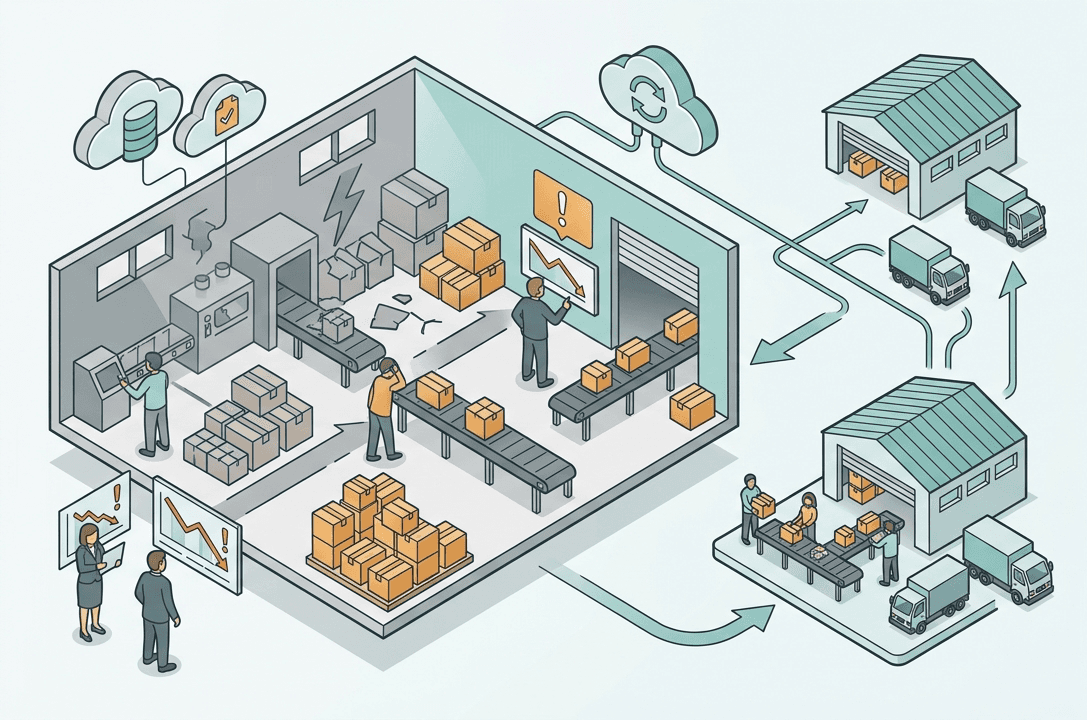
Most brands don't realize how much inventory inaccuracy costs them because it shows up in a dozen different line items, not a single obvious charge. But it compounds. Brands shipping thousands of orders per month can lose tens of thousands of dollars annually to preventable count errors.
Start Protecting Your Inventory
Warehouse cycle counting isn't glamorous. It doesn't make for exciting investor updates. But it's the foundation that every other inventory decision sits on. If your counts are wrong, your forecasts are wrong, your channel allocations are wrong, and your P&L is wrong.
If your current 3PL can't answer basic questions about their counting methodology, accuracy rates, and root cause processes, that's a red flag worth taking seriously.
ShipDudes was built by eCommerce operators who know what it feels like to get burned by a fulfillment partner who treated inventory accuracy as an afterthought. We don't do that. We count, we investigate, and we report, because your inventory is your business.
Ready to work with a 3PL that takes inventory accuracy as seriously as you do? [Book a call with ShipDudes](https://shipdudes.com/book-a-call) and let's talk about how we protect your inventory investment across every channel.
Ready to Simplify Your Fulfillment?
Let's build a custom pricing model for your brand. No contracts required to start the conversation.