3PL API Integration Guide: Technical Requirements for Seamless Connectivity

Michael DeSarno
8 min read
Channels & Integration
Share
KEY TAKEAWAYS
• A 3PL API integration must cover order management, real-time inventory sync, shipment tracking, and returns endpoints to prevent data drift and overselling.
• Shopify 3PL API connections use webhooks and REST calls; verify your 3PL supports the latest API version, multi-location inventory, and Shopify Plus features.
• Integration testing should include edge cases, error handling, volume stress tests, and webhook reliability, not just a few test orders.
• ShipDudes supports 75+ native platform integrations with US-based support across 2 NJ and 2 Las Vegas warehouses.
Last Updated:
You have spent months building your eCommerce tech stack. Your Shopify store is dialed in, your inventory management system is humming, and your marketing channels are firing. Now you need a 3PL partner that actually plugs into all of it without creating a second full-time job of managing data sync issues.
The reality is that most fulfillment partnerships fail not because of warehouse operations, but because of bad integrations. Orders get stuck. Inventory counts drift. Tracking numbers never make it back to customers. And you are left playing middleman between systems that should be talking to each other automatically.
This guide breaks down the actual technical requirements for 3PL API integration, what your fulfillment API requirements should look like, and how to evaluate whether a provider's connectivity will hold up as you scale across channels.
Why 3PL Integration API Documentation Matters More Than You Think
When brands evaluate 3PL partners, they tend to focus on pricing, location, and SLAs. Those all matter. But the quality of a provider's integration layer determines whether you will spend your time growing your brand or troubleshooting data flow problems.
Good 3PL integration API documentation tells you exactly how orders, inventory, shipments, and returns data moves between your systems and the warehouse. It covers authentication protocols, endpoint specifications, rate limits, error handling, and webhook configurations. If a 3PL cannot hand you clear documentation before you sign a contract, that is a red flag worth paying attention to.
At ShipDudes, we support [75+ platform integrations](https://shipdudes.com/blog/3pl-technology-integration-apis-webhooks-and-real-time-data-sync) across Shopify, Amazon, TikTok Shop, WooCommerce, Faire, and dozens of other platforms. That breadth did not happen by accident. It happened because integration quality is foundational to how we operate.
Core API Endpoints Every 3PL Integration Should Cover
Not all 3PL APIs are created equal. Here are the critical endpoint categories your fulfillment partner needs to support:
Order Management Endpoints
This is the backbone of any fulfillment integration. Your 3PL's API should handle:
- Order creation: Automatically pushing new orders from your sales channels to the WMS
- Order status updates: Real-time status changes (received, processing, shipped, delivered)
- Order cancellation and modification: The ability to cancel or update orders before they hit the pick queue
- Bulk order import: For brands running flash sales or high-volume promotions where orders need to flow in batches
If you are running [flash sales](https://shipdudes.com/blog/flash-sale-fulfillment-handling-sudden-order-volume-spikes), your API connection needs to handle sudden volume spikes without throttling or dropping orders.
Inventory Endpoints
Inventory sync issues are the number one cause of overselling across channels. Your 3PL's API needs to provide:
- Real-time inventory levels: Available, allocated, on-hold, and damaged quantities
- Inventory adjustments: Manual and automated adjustments that sync back to your platform
- Receiving confirmations: Automated updates when inbound shipments are received and put away
- Low-stock alerts: Webhook notifications when SKUs drop below defined thresholds
For brands selling on multiple channels, this inventory data needs to feed into a [multi-channel inventory sync](https://shipdudes.com/blog/multi-channel-inventory-sync-how-to-prevent-overselling-across-shopify-amazon-and-tiktok-shop) system that prevents overselling across Shopify, Amazon, and TikTok Shop simultaneously.
Shipment and Tracking Endpoints
Once an order ships, tracking data needs to flow back to your storefront and customer communication tools immediately. Required endpoints include:
- Shipment confirmation with tracking numbers: Pushed back to the originating platform
- Carrier and service level details: So your customer support team knows exactly how an order was shipped
- Proof of delivery data: Delivery confirmation timestamps and signatures where applicable
Returns Endpoints
Returns are a growing operational burden for CPG brands. Your 3PL's API should support [returns processing automation](https://shipdudes.com/blog/returns-processing-automation-how-smart-3pls-turn-returns-into-revenue-recovery) with endpoints for:
- RMA creation: Generating return merchandise authorizations programmatically
- Return receipt confirmation: Notification when returned items arrive at the warehouse
- Disposition updates: Whether returned items are restocked, quarantined, or disposed of
Shopify 3PL API: What Brands Need to Know
Shopify is the most common platform we see among growing DTC brands, and the Shopify 3PL API integration has specific nuances worth understanding.
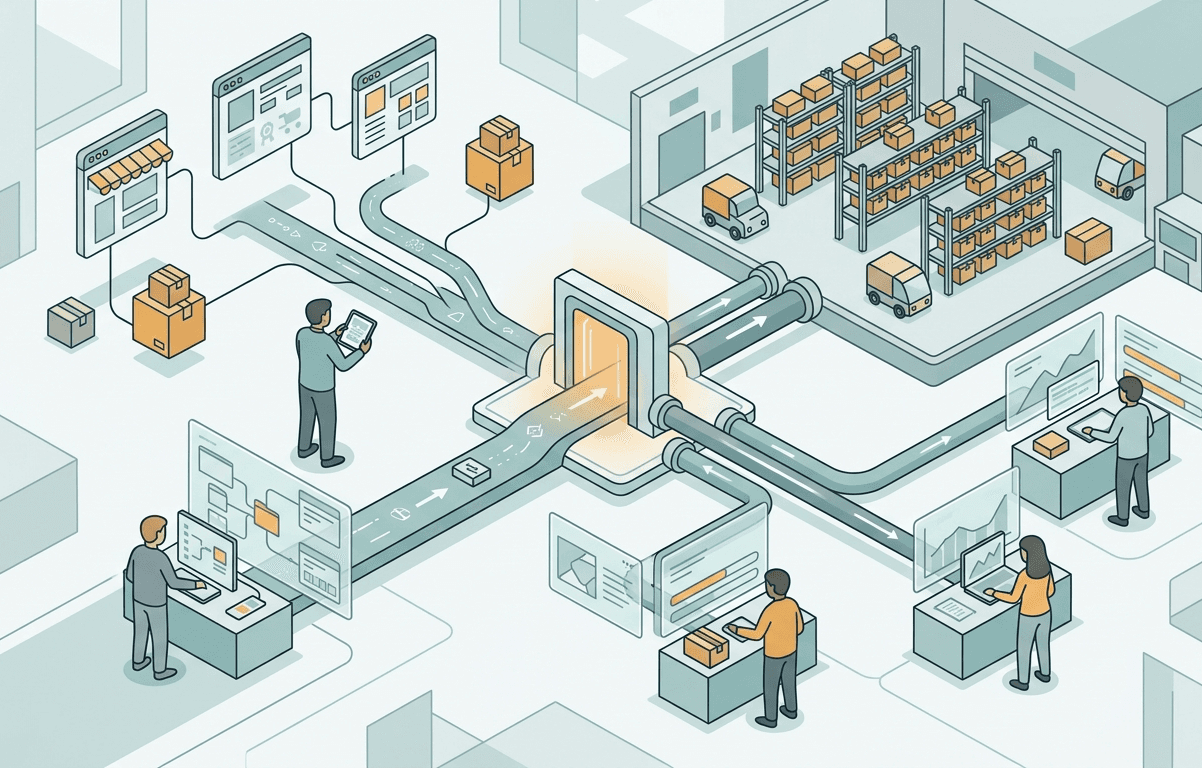
Shopify's Fulfillment API uses a webhook-driven model. When a new order is placed, Shopify fires a webhook to your 3PL. The 3PL processes the order and sends a fulfillment request back via the API with tracking information. Shopify then updates the order status and notifies the customer.
Here is what to verify with any 3PL that claims Shopify integration:
- Do they support Shopify's latest API version? Shopify regularly deprecates older API versions. Your 3PL needs to stay current.
- Can they handle multi-location inventory? If you are splitting inventory between [East Coast and West Coast warehouses](https://shipdudes.com/blog/fulfillment-centers-east-and-west-coast), the integration needs to manage location-specific stock levels.
- Do they support Shopify's draft orders and B2B channels? If you are doing wholesale through Shopify, the integration needs to handle those order types correctly.
- How do they manage Shopify tags and custom attributes? Special instructions, gift messages, and custom properties need to pass through to the warehouse floor.
ShipDudes maintains native Shopify integration that handles all of these requirements out of the box, along with support for Shopify Plus features that high-volume brands rely on.
WMS Integration Guide: Understanding the Warehouse Side
Your 3PL's warehouse management system is where order data becomes physical action. A solid WMS integration guide should explain how data flows from API intake through to the warehouse floor.
Key WMS integration requirements include:
- Order routing logic: How the WMS decides which warehouse fulfills each order (especially important for [dual-coast operations](https://shipdudes.com/blog/nationwide-3pl-fulfillment-why-a-two-coast-setup-beats-a-single-warehouse))
- Pick list generation: How API orders translate into pick instructions for warehouse staff
- Lot and batch tracking: Critical for CPG brands in supplements, food, and beauty that need [lot code tracking](https://shipdudes.com/blog/lot-tracking-fulfillment-cpg-brand-recall-traceability-requirements) for FDA compliance
- Kitting and assembly instructions: How bundled or kitted orders are interpreted from API data and executed on the floor
If your 3PL cannot explain how their WMS processes your API data end to end, you are likely going to discover gaps after go-live when it is too late to fix them painlessly.
Data Mapping and Transformation Requirements
One of the most overlooked pieces of 3PL API integration is data mapping. Your systems and your 3PL's systems almost certainly use different field names, data formats, and ID structures.
Before going live, you need to define mapping rules for:
- SKU identifiers: Your internal SKUs versus the 3PL's warehouse SKU format
- Address formatting: How shipping addresses are parsed and validated
- Product dimensions and weights: Units of measurement and how they are stored
- Order source identification: Tagging orders by channel (Shopify, Amazon, TikTok Shop, Faire) so fulfillment rules can be applied correctly
- Custom fields: Gift messages, subscription tags, or special handling instructions
Brands managing [complex product catalogs with SKU proliferation](https://shipdudes.com/blog/sku-proliferation-management-how-3pls-handle-complex-product-catalogs) need especially rigorous data mapping to prevent fulfillment errors.
Authentication and Security Standards
Your 3PL API should use modern authentication protocols. At minimum, look for:
- OAuth 2.0 or API key authentication: Basic auth over HTTP is not acceptable for production environments
- HTTPS/TLS encryption: All data in transit should be encrypted
- Rate limiting: Clearly documented rate limits to prevent accidental DDoS scenarios during high-volume periods
- IP whitelisting options: For brands with strict security requirements
- Webhook signature verification: So you can confirm that incoming webhook payloads actually originated from your 3PL
Integration Testing: The Step Most Brands Skip
Here is where most 3PL onboarding processes fall apart. Brands connect the API, send a few test orders, and call it done. That is not integration testing.
Real [integration testing](https://shipdudes.com/blog/3pl-integration-testing-verify-tech-stack-before-going-live) should cover:
- Happy path orders: Standard single-SKU and multi-SKU orders across all channels
- Edge cases: Partial shipments, split shipments, address corrections, and international orders
- Error handling: What happens when the API returns a 500 error? Does your system retry, queue the order, or silently drop it?
- Volume testing: Can the integration handle your [peak season order volume](https://shipdudes.com/blog/3pl-scalability-testing-how-to-stress-test-your-fulfillment-partner-before-peak-season) without degradation?
- Webhook reliability: Do you have retry logic and dead letter queues for failed webhook deliveries?
At ShipDudes, our [onboarding process](https://shipdudes.com/blog/fast-onboarding-fulfillment) includes dedicated integration testing before any live orders flow through the system. Our US-based team works directly with your developers to validate every data flow.
Monitoring and Error Handling Post-Launch
Going live is not the finish line. You need ongoing monitoring to catch integration issues before they affect customers.
Build or require the following from your 3PL:
- API health dashboards: Uptime, response times, and error rates
- Failed order alerts: Real-time notifications when orders fail to sync
- Inventory discrepancy reports: Daily or weekly reconciliation between your system and the WMS
- Webhook delivery logs: Confirmation that status updates are reaching your platform
The [performance metrics](https://shipdudes.com/blog/3pl-performance-metrics-that-actually-matter-kpis-beyond-order-accuracy) you track should include integration-specific KPIs alongside traditional fulfillment metrics.
How to Evaluate a 3PL's Integration Capabilities
When you are comparing 3PL partners, ask these questions about their integration layer:
1. Can you provide full API documentation before we sign a contract?
2. How many native platform integrations do you support?
3. Do you support custom API connections for proprietary systems?
4. What is your average integration timeline from kickoff to go-live?
5. Who handles integration support: an in-house team or outsourced developers?
6. How do you handle API versioning and breaking changes?
ShipDudes supports 75+ platform integrations with an all [US-based support team](https://shipdudes.com/blog/the-real-cost-of-3pl-overseas-support-why-us-based-teams-matter-for-your-brand). When integration issues arise, you are talking to someone who can actually fix the problem, not reading from a script.
FAQ
What is 3PL integration API documentation?
3PL integration API documentation is the technical reference that describes how a brand's eCommerce platform, ERP, or order management system connects to a third-party logistics provider's warehouse management system. It covers endpoint specifications, authentication methods, data formats, webhook configurations, and error handling protocols. Quality documentation is essential for smooth onboarding and ongoing operational reliability.
How does a Shopify 3PL API connection work?
A Shopify 3PL API connection uses webhooks and REST API calls to sync orders, inventory, and shipment data between your Shopify store and your fulfillment provider's WMS. When a customer places an order, Shopify sends a webhook to the 3PL. The 3PL processes the order and sends tracking information back via the API. ShipDudes maintains native Shopify integration that supports multi-location inventory, draft orders, and Shopify Plus features.
What are the minimum fulfillment API requirements for a 3PL?
At minimum, a 3PL's fulfillment API should support order creation and status updates, real-time inventory sync, shipment tracking, and returns processing. It should use OAuth 2.0 or API key authentication, HTTPS encryption, and have clearly documented rate limits. The API should also support webhooks for real-time event notifications rather than relying solely on polling.
How long does a typical 3PL API integration take?
For native integrations with platforms like Shopify, Amazon, or WooCommerce, a 3PL API integration can be completed in one to two weeks. Custom API integrations with proprietary systems typically take three to six weeks depending on complexity. The timeline heavily depends on the quality of the 3PL's documentation and the responsiveness of their integration team.
What should I test before going live with a 3PL API integration?
Before going live, test standard orders across all sales channels, edge cases like partial shipments and address corrections, error handling and retry logic, volume capacity for peak season loads, and webhook delivery reliability. Also verify that inventory levels sync accurately between your platform and the WMS.
Ready to Connect Your Tech Stack to a 3PL That Actually Gets Integration Right?
If you are evaluating 3PL partners and want to see what a well-built integration layer looks like in practice, ShipDudes offers 75+ native platform integrations backed by an in-house US-based team. No overseas support tickets. No black-box API connections. Just clean data flow between your systems and our dual-coast warehouses in New Jersey and Las Vegas.
[Book a call with ShipDudes](https://shipdudes.com/book-a-call) to walk through your integration requirements and see how your specific tech stack connects to our fulfillment operations.
Ready to Simplify Your Fulfillment?
Let's build a custom pricing model for your brand. No contracts required to start the conversation.