3PL Inventory Management Systems: Real-Time Visibility and Control

Michael DeSarno
8 min read
Inventory Management
Share
KEY TAKEAWAYS
• A modern 3PL inventory management system syncs stock in real time across all sales channels to prevent oversells, stockouts, and ghost inventory.
• Key capabilities to evaluate: native platform integrations, multi-location visibility, lot/expiration tracking, cycle count accuracy above 99.5%, and returns integration.
• Poor inventory visibility directly causes Amazon suppressions, wholesale chargebacks, and expired product shipments.
• ShipDudes provides real-time inventory visibility across 4 warehouses (NJ + Las Vegas) with 75+ integrations and US-based support.
Last Updated:
You built a great product. Customers love it. Orders are climbing. And then one morning you wake up to discover you oversold a SKU that ran out two days ago, your Shopify store is showing stock you don't actually have, and your Amazon listing just got suppressed because of a cancellation rate spike. The root cause isn't demand forecasting or bad luck. It's a lack of real-time inventory visibility.
For growing CPG brands selling across multiple channels, 3PL inventory management is the operational backbone that determines whether you scale smoothly or drown in stockouts, oversells, and manual spreadsheet chaos. This guide breaks down what a modern inventory management system looks like inside a third-party logistics operation, why it matters for your brand, and what to look for when evaluating 3PL partners.
If you're still figuring out what a 3PL actually does, start with our explainer on [what a 3PL is](https://shipdudes.com/blog/what-is-a-3pl) before diving in here.
Why Inventory Management Is the Foundation of Fulfillment
Fulfillment gets a lot of attention for speed. Two-day shipping, same-day pick and pack, next-flight-out promises. But none of that matters if the inventory numbers are wrong. Every fulfillment workflow depends on accurate stock data: receiving, putaway, picking, packing, shipping, returns, and replenishment. If the inventory count in your system doesn't match what's physically on the shelf, the entire chain breaks.
Here's what poor inventory management actually costs you:
- Oversells and cancellations. You sell a unit that doesn't exist. The customer gets a cancellation email. You lose revenue and trust.
- Stockouts on your best sellers. Without real-time inventory tracking, you don't know a SKU is low until it's gone.
- Ghost inventory. Units that show as available in the system but are damaged, misplaced, or stuck in a returns queue.
- Channel conflicts. Your Amazon FBA inventory says one thing, your DTC store says another, and your wholesale portal shows a third number.
- Cash flow problems. You can't make smart purchasing decisions without knowing what you actually have on hand, what's allocated, and what's available to sell.
This isn't a niche problem. It hits every CPG vertical: beauty, supplements, pet products, beverages, shelf-stable food, and electronics. If you sell physical products across more than one channel, inventory management is your highest-leverage operational investment.
What a Modern 3PL Inventory Management System Actually Does
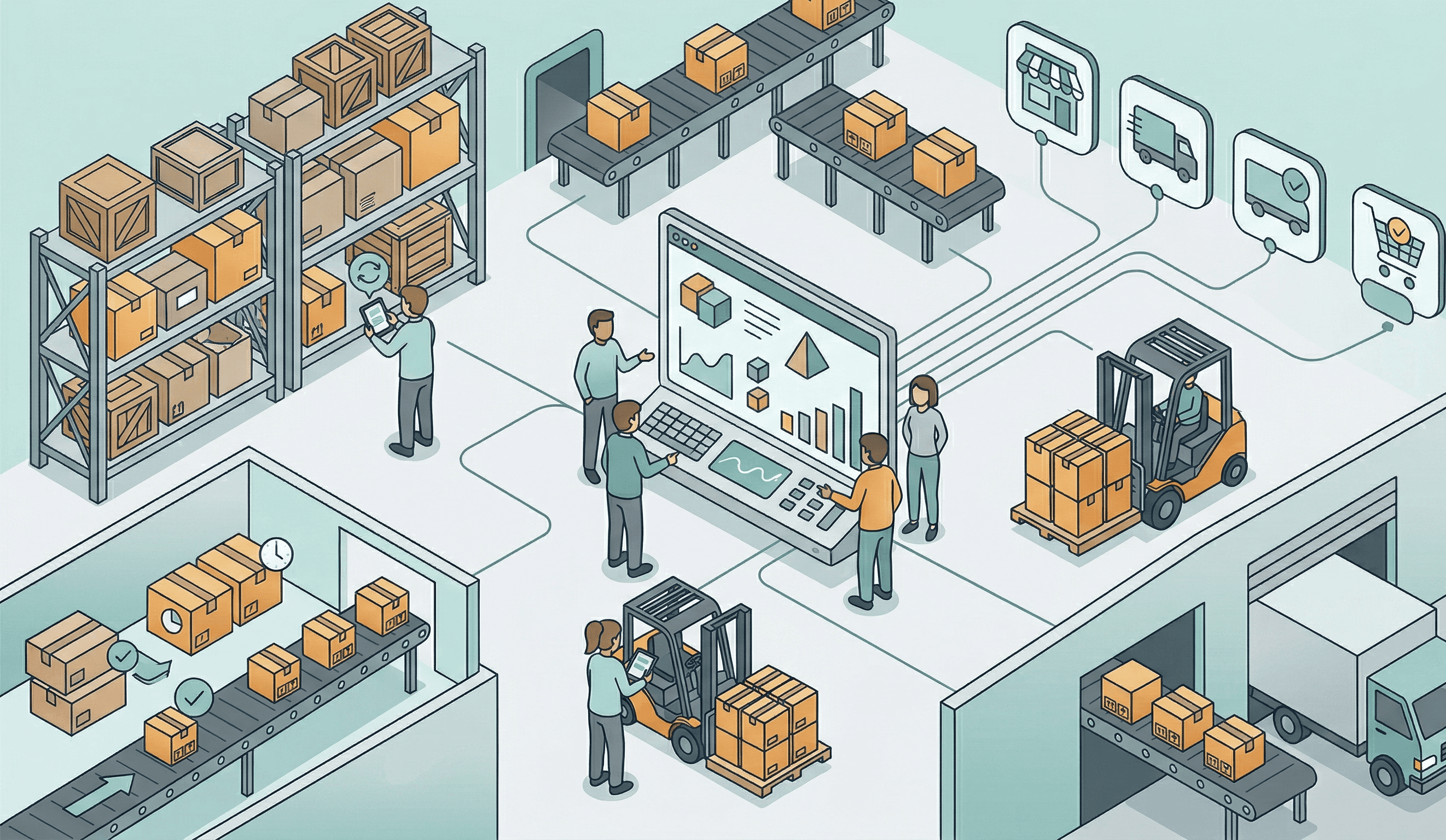
When we talk about 3PL inventory management, we're not talking about a spreadsheet someone updates at the end of each day. A modern warehouse management system (WMS) integrated with your sales channels provides continuous, automated inventory tracking at every stage of the product lifecycle. Here's what that looks like in practice.
Real-Time Stock Counts Across Locations
A good 3PL inventory management system maintains a live count of every SKU across every warehouse location. If your 3PL operates multiple facilities (like ShipDudes, which runs dual-coast warehouses in Northern New Jersey and Las Vegas), the system should show you exactly how many units of each product sit in each location at any given moment.
This isn't just about a total number. You need to see breakdowns: available inventory, allocated inventory (already assigned to orders), inventory in receiving (not yet put away), and inventory in quarantine or hold status. That level of granularity prevents overselling and lets you make smart replenishment decisions.
For more on why a [dual-coast warehouse setup](https://shipdudes.com/blog/nationwide-3pl-fulfillment-why-a-two-coast-setup-beats-a-single-warehouse) matters for coverage and transit times, we've covered that separately.
Automated Channel Syncing
The biggest inventory visibility gap for omnichannel brands is the disconnect between sales channels. You sell a unit on Shopify. Does Amazon know? Does your Faire wholesale portal update? Does the TikTok Shop listing reflect the change?
A strong 3PL inventory management system integrates directly with your sales platforms and syncs inventory counts automatically. When a unit is picked and packed, the count decreases across all connected channels. When new inventory is received and put away, counts increase. This happens without you manually updating anything.
ShipDudes integrates with 75+ platforms, including Shopify, Amazon, TikTok Shop, Faire, WooCommerce, and more. That level of [omnichannel fulfillment](https://shipdudes.com/blog/omnichannel-fulfillment) integration is what prevents the oversell nightmares that crush growing brands.
Lot Tracking and Expiration Management
If you sell supplements, food, beverages, or any product with a shelf life, your inventory management system needs to track more than just quantities. It needs lot numbers, manufacture dates, and expiration dates. A proper system enforces FEFO (First Expired, First Out) picking logic so you're always shipping the oldest eligible inventory first.
This is especially critical for brands in regulated categories. Our guide on [supplement fulfillment and FDA compliance](https://shipdudes.com/blog/supplement-fulfillment-fda-compliance-lot-tracking-and-expiration-management) covers the specific requirements in detail.
Receiving Accuracy
Inventory visibility starts at the dock door. When inbound shipments arrive at the warehouse, the receiving process needs to verify quantities, inspect for damage, and reconcile against your purchase orders. If this step is sloppy, every downstream number is wrong.
A good WMS captures receiving data in real time: what arrived, what was expected, any discrepancies, and the exact location where each SKU was put away. We've written a full breakdown of the [warehouse receiving process](https://shipdudes.com/blog/warehouse-receiving-process) and why it's the most underrated step in fulfillment.
Low Stock Alerts and Reorder Triggers
Reactive inventory management means you find out about problems after they've already cost you sales. Proactive stock management means your system alerts you when a SKU drops below a threshold you've set, giving you time to reorder before you run out.
The best systems also surface velocity data: how fast each SKU is selling, seasonal trends, and projected stockout dates based on current sell-through rates. This turns your 3PL inventory management system into a planning tool, not just a record keeper.
The Real Cost of Bad Inventory Visibility
Let's get specific about what happens when inventory tracking breaks down. These aren't hypothetical scenarios. They're patterns that play out every week across thousands of ecommerce brands.
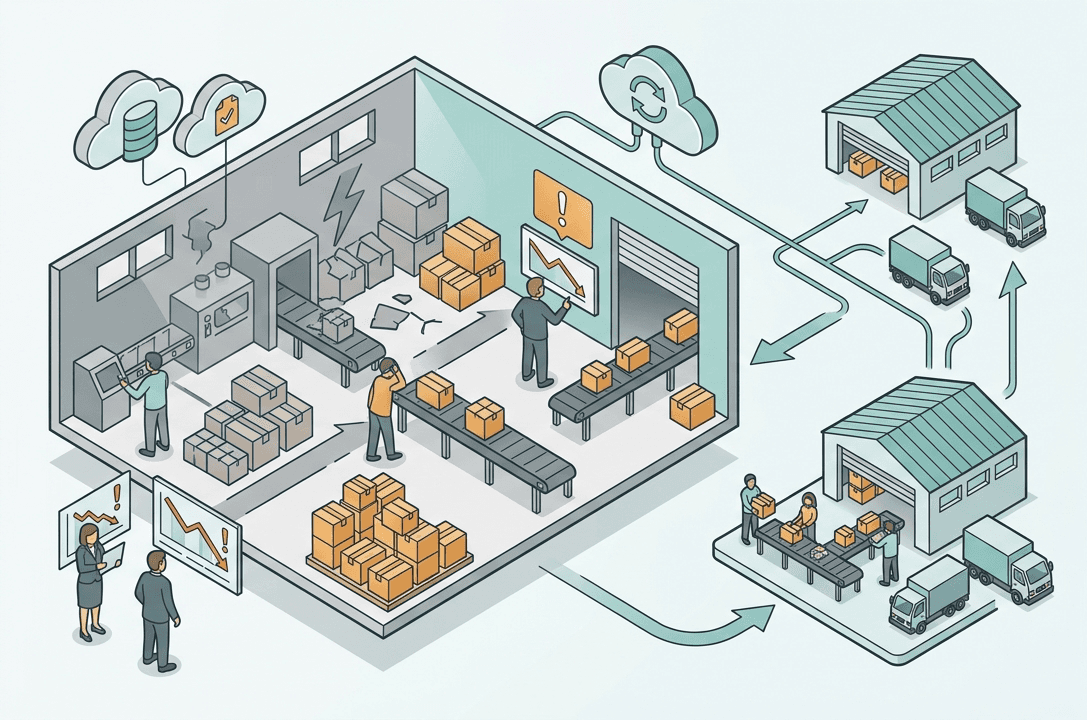
Scenario 1: The Amazon Suppression. Your Amazon listing shows 50 units available, but the warehouse only has 12. You sell 30 units over the weekend. 18 orders get canceled. Your cancellation rate spikes. Amazon suppresses your listing. You lose organic ranking that took months to build.
Scenario 2: The Wholesale Shortship. You get a B2B order from a retail partner through EDI. Your system shows 500 units available, but 200 are actually allocated to DTC orders that haven't shipped yet. You shortship the retailer. They charge you a chargeback and flag your vendor scorecard. Understanding [B2B order fulfillment and EDI integration](https://shipdudes.com/blog/b2b-order-fulfillment-edi-integration-and-retail-distribution-essentials) is critical here.
Scenario 3: The Expired Product. You ship a supplement with an expiration date three weeks out. The customer posts a one-star review. Your brand takes a hit because the warehouse didn't enforce FEFO picking.
Every one of these problems traces back to the same root: the inventory data was wrong, delayed, or incomplete.
What to Look for in a 3PL's Inventory Management Capabilities
When you're evaluating 3PL partners (or reconsidering your current one), inventory management should be near the top of your criteria list. Here's what to ask and what to look for.
Platform Integrations
Does the 3PL connect natively with your sales channels? Not through some clunky middleware that adds latency and breaks during peak season, but through direct, maintained integrations. The more channels you sell on, the more this matters. If you're considering your first 3PL, our guide on [how to choose a 3PL](https://shipdudes.com/blog/how-to-choose-a-3pl) covers the full evaluation framework.
Dashboard and Reporting Access
Can you log in and see your inventory in real time, or do you have to email someone and wait for a report? A modern 3PL should give you a client portal with live dashboards showing stock levels, order status, receiving updates, and historical data. If you need to send a Slack message to find out how many units you have, that's a red flag.
Multi-Location Inventory Visibility
If your 3PL operates more than one warehouse, can you see inventory at each location independently and in aggregate? Can you set allocation rules to determine which warehouse fulfills orders for which regions? ShipDudes provides this through their four facilities across [New Jersey](https://shipdudes.com/blog/new-jersey-3pl-fulfillment-why-nj-is-the-strategic-hub-for-east-coast-dtc-brands) and [Las Vegas](https://shipdudes.com/blog/las-vegas-3pl-fulfillment-the-west-coast-hub-smart-dtc-brands-are-choosing), giving brands bi-coastal inventory visibility from a single interface.
Cycle Counts and Accuracy Metrics
Ask your 3PL how they maintain inventory accuracy. Do they run regular cycle counts? What's their inventory accuracy rate? A good benchmark is 99.5% or higher. If they can't tell you their accuracy rate, they probably aren't tracking it.
Returns Integration
Returns are one of the biggest sources of inventory discrepancy. When a customer returns a product, does it go back into available inventory automatically, get inspected first, or disappear into a black hole? Your 3PL's [returns management](https://shipdudes.com/blog/returns-management-3pl) process needs to feed cleanly back into the inventory system.
US-Based Support
When there's an inventory discrepancy at 2 PM on a Tuesday, you need to get someone on the phone who can walk into the warehouse and check the shelf. That's nearly impossible with overseas support teams operating in different time zones and without physical warehouse access. We've analyzed the [real cost of overseas 3PL support](https://shipdudes.com/blog/the-real-cost-of-3pl-overseas-support-why-us-based-teams-matter-for-your-brand) and why US-based teams make a measurable difference.
Inventory Management for DTC Brands: Special Considerations
Direct-to-consumer brands face unique inventory management challenges. High SKU counts from product variants (sizes, flavors, colors), promotional inventory sets, subscription allocations, and kitting components all add complexity.
If you're running subscription boxes, your system needs to reserve inventory for upcoming subscription cycles before making it available for one-time purchases. If you're doing kitting, the system needs to track both finished kits and individual components. Our posts on [inventory management for DTC brands](https://shipdudes.com/blog/inventory-management-for-dtc-brands) and [kitting and assembly services](https://shipdudes.com/blog/kitting-and-assembly-services) go deeper on these topics.
Brands that have outgrown their garage or self-fulfillment setup often find that inventory management is the breaking point. It's one of the clearest signs that it's [time to switch to a 3PL](https://shipdudes.com/blog/when-to-switch-to-3pl).
How ShipDudes Handles 3PL Inventory Management
ShipDudes was founded by ecommerce entrepreneurs who experienced the pain of poor fulfillment partners firsthand. That operator background shows up in how inventory management is handled across the operation.
With four warehouse facilities spanning Northern New Jersey and Las Vegas, ShipDudes provides brands with real-time inventory visibility across all locations. The system integrates with 75+ platforms, syncing stock counts automatically as orders flow in and out. Lot tracking, expiration management, and cycle counting are built into standard operations.
Every client gets access to a dashboard showing live inventory data, and the entire support team is US-based and in-house. No overseas call centers, no ticket queues that take 48 hours to resolve. When you need an answer about your stock, you talk to someone who can physically verify what's on the shelf.
For brands managing [omnichannel fulfillment](https://shipdudes.com/blog/omnichannel-fulfillment) across DTC, Amazon, retail wholesale, and marketplaces, this level of inventory visibility isn't a luxury. It's the baseline for scaling without chaos.
FAQ: 3PL Inventory Management
What is 3PL inventory management?
3PL inventory management refers to the systems and processes a third-party logistics provider uses to track, store, and manage a brand's product inventory across warehouse locations and sales channels. It includes real-time stock counts, automated channel syncing, lot tracking, receiving verification, and reporting dashboards.
How does a 3PL track inventory in real time?
Modern 3PLs use warehouse management systems (WMS) that update inventory counts automatically as products are received, picked, packed, shipped, and returned. These systems integrate with ecommerce platforms and marketplaces to sync available quantities across all sales channels without manual updates.
Why is inventory visibility important for omnichannel brands?
Omnichannel brands sell across multiple platforms simultaneously, including Shopify, Amazon, TikTok Shop, Faire, and retail partners. Without real-time inventory visibility, brands risk overselling on one channel when stock runs out, leading to cancellations, chargebacks, and damaged marketplace rankings.
What should I look for in a 3PL's inventory management system?
Key features include real-time dashboard access, native integrations with your sales channels, multi-location inventory visibility, lot and expiration tracking, automated low-stock alerts, cycle count accuracy above 99.5%, and returns processing that feeds back into available inventory.
Can a 3PL manage inventory across multiple warehouses?
Yes. Leading 3PLs like ShipDudes operate multiple warehouse locations and provide unified inventory visibility across all facilities. This allows brands to split inventory strategically for faster shipping while maintaining a single source of truth for stock levels.
Take Control of Your Inventory
If you're spending hours reconciling spreadsheets, fielding customer complaints about out-of-stock items, or losing sleep over whether your inventory counts are accurate, it's time to talk to a 3PL that treats inventory management as a core competency, not an afterthought.
ShipDudes gives growing CPG brands the real-time inventory visibility, automated channel syncing, and operational accuracy they need to scale across every sales channel. Dual-coast warehouses, 75+ integrations, and a US-based team that actually answers the phone.
[Book a call with ShipDudes](https://shipdudes.com/book-a-call) to see how real-time 3PL inventory management works for your brand.
Ready to Simplify Your Fulfillment?
Let's build a custom pricing model for your brand. No contracts required to start the conversation.