Cross-Docking 3PL Services: When to Skip the Warehouse for Faster Fulfillment

Michael DeSarno
8 min read
Industry Guides
Share
KEY TAKEAWAYS
• Cross-docking skips warehouse storage: inbound products are sorted and shipped out within 24 hours, cutting days off delivery timelines.
• Best fit for high-velocity SKUs, promotional launches, retail replenishment, and import container deconsolidation.
• Not ideal for products needing QC inspection, kitting, or brands with unpredictable demand patterns.
Last Updated:
Not every product needs to sit on a shelf before it ships to your customer. If you are running a CPG brand and dealing with time-sensitive inventory, promotional launches, or high-velocity SKUs that fly out as fast as they come in, traditional warehousing might actually be slowing you down.
That is where cross-docking comes in. It is one of the most misunderstood (and underused) fulfillment strategies in the DTC and omnichannel world. When executed correctly through a capable 3PL partner, cross docking fulfillment can shave days off your delivery timeline, reduce storage costs, and keep your supply chain lean.
Let's break down exactly what cross-docking is, when it makes sense, and how to tell if your brand is a good fit for this approach.
What Cross-Docking Actually Means (No Buzzwords)
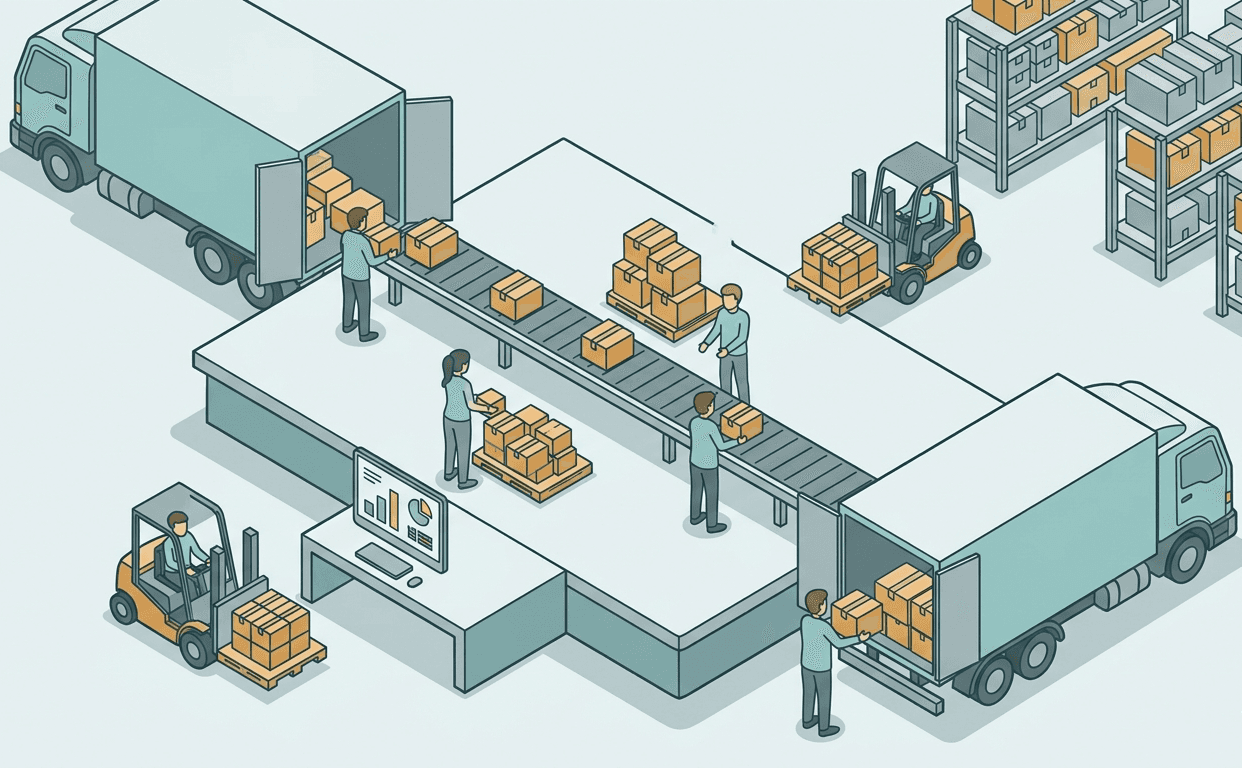
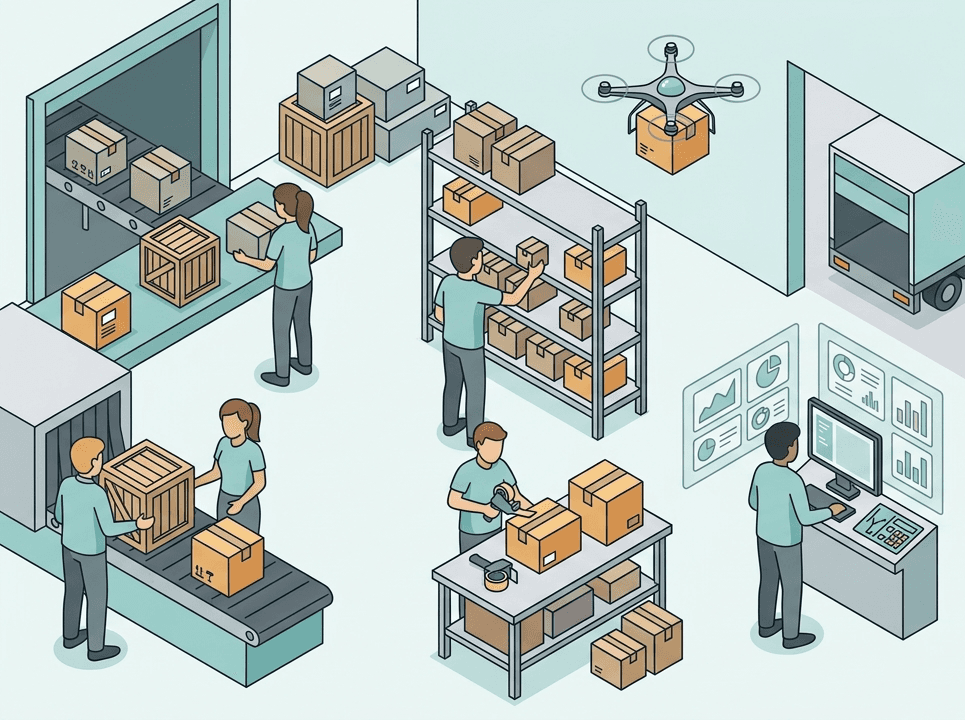
Cross-docking is simple in concept: inbound freight arrives at a warehouse or distribution center, gets sorted and consolidated, and ships out to its final destination with minimal or zero storage time in between. Products essentially "cross" the loading dock from the receiving side to the shipping side.
In a traditional [pick and pack fulfillment](https://shipdudes.com/blog/pick-and-pack-fulfillment) workflow, your inventory arrives, gets checked in, goes to a shelf, sits there until an order comes in, gets picked, packed, and shipped. Cross-docking eliminates the middle steps. There is no putaway, no shelving, no picking from bin locations.
For a cross docking 3PL setup, the process typically looks like this:
1. Inbound shipment arrives (from your manufacturer, supplier, or import container)
2. Products are unloaded and immediately sorted by destination or order
3. Items are consolidated with other outbound shipments if needed
4. Everything ships out, often within the same day or within 24 hours
The key distinction: cross-docking is not the same as drop shipping. You still control the product. It still passes through a physical facility. The difference is that it does not park there.
When Cross-Docking Makes Sense for CPG Brands
Cross-docking is not a universal solution. It works exceptionally well in specific scenarios, and knowing which ones apply to your business is the difference between a faster supply chain and a messy one.
High-velocity SKUs that sell as fast as they arrive. If you have hero products that consistently sell through within days of receiving, storing them on shelves is a waste of time and money. A 3PL cross docking setup lets you redirect those units straight to outbound shipping.
Promotional launches and flash sales. Running a big campaign on TikTok Shop or launching a limited drop on Shopify? If you know the demand is already there (pre-orders, waitlists, or proven ad performance), cross-docking lets you fulfill those orders the moment inventory hits the dock. This is especially relevant for brands managing [omnichannel fulfillment](https://shipdudes.com/blog/omnichannel-fulfillment) across multiple sales platforms.
Retail replenishment and B2B distribution. When your retail partners need EDI-compliant shipments on a tight schedule, cross-docking helps you turn around [B2B orders](https://shipdudes.com/blog/b2b-order-fulfillment-edi-integration-and-retail-distribution-essentials) without the delay of a full receiving and putaway cycle. Product comes in, gets sorted by retailer or PO number, and ships out palletized and labeled.
Seasonal inventory surges. During [peak season](https://shipdudes.com/blog/peak-season-fulfillment-strategy), warehouse space is at a premium. Cross-docking lets you process high-demand inventory without expanding your storage footprint. Products flow through instead of stacking up.
Import container deconsolidation. If you are bringing in containers from overseas and need to split that inventory across multiple destinations (your own warehouses, retail partners, Amazon FBA), cross-docking at a strategically located facility is the fastest way to distribute. Brands working with a [customs brokerage 3PL](https://shipdudes.com/blog/customs-brokerage-for-dtc-brands-how-your-3pl-should-handle-international-compliance) can integrate this seamlessly into their import workflow.
When Cross-Docking Does NOT Make Sense
Honesty matters here. Cross-docking is not the right call for every situation, and a good 3PL partner will tell you that upfront.
Unpredictable demand patterns. If you do not have strong [inventory forecasting](https://shipdudes.com/blog/inventory-forecasting-for-multi-channel-brands-preventing-stockouts-across-all-sales-channels) or your sales velocity fluctuates heavily, cross-docking creates risk. You need to know that outbound orders will be waiting when inbound product arrives. Otherwise, you are just creating chaos at the dock.
Products requiring inspection or quality control. If your [warehouse receiving process](https://shipdudes.com/blog/warehouse-receiving-process) includes detailed QC checks, counting, or condition assessments, cross-docking does not give you enough time. Products that need careful inspection (especially if you have had issues with [damaged inventory](https://shipdudes.com/blog/when-fulfillment-goes-wrong-how-to-handle-damaged-inventory-and-shipping-claims)) should go through a standard receiving workflow.
Kitting or assembly required. If products need to be bundled, kitted, or assembled before shipping, they need shelf time. [Kitting and assembly services](https://shipdudes.com/blog/kitting-and-assembly-services) require staging, labor, and quality checks that are not compatible with a pure cross-dock model.
Low-volume, long-tail SKUs. Cross-docking works best with high volume and predictable flow. If you are dealing with slow-moving SKUs that trickle out over weeks, traditional [3PL inventory management](https://shipdudes.com/blog/3pl-inventory-management-systems-real-time-visibility-and-control) is more appropriate.
What to Look for in a Cross Docking 3PL Partner
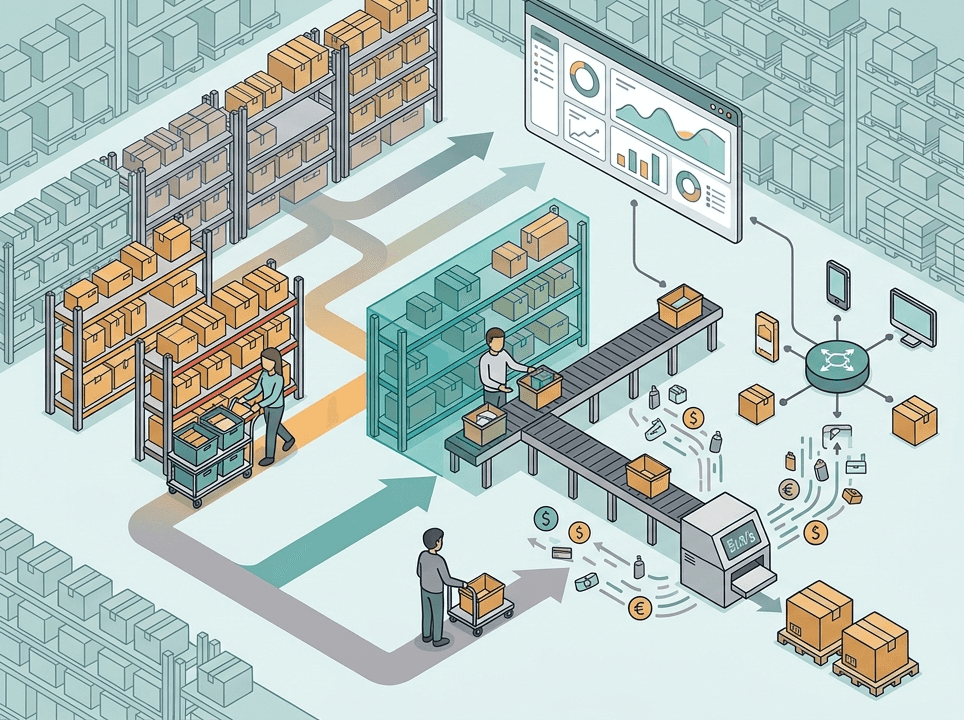
Not every 3PL can execute cross-docking well. It requires tight coordination, real-time visibility, and a team that actually communicates. Here is what separates a capable cross docking 3PL from one that will fumble your inventory.
Strategic warehouse locations. Cross-docking is all about speed, so location matters. You want facilities positioned near major transit hubs and population centers. ShipDudes operates [dual-coast warehouses](https://shipdudes.com/blog/fulfillment-centers-east-and-west-coast) in Northern New Jersey and Las Vegas, giving brands the ability to cross-dock on either coast and reach customers in two to three days ground across the country. The [New Jersey facilities](https://shipdudes.com/blog/new-jersey-3pl-fulfillment-why-nj-is-the-strategic-hub-for-east-coast-dtc-brands) are positioned perfectly for East Coast retail distribution, while the [Las Vegas warehouses](https://shipdudes.com/blog/las-vegas-3pl-fulfillment-the-west-coast-hub-smart-dtc-brands-are-choosing) cover the entire western half of the US.
Platform integrations that keep everything synced. When product is moving through a facility in hours instead of days, your systems need to keep up. Inventory counts, order routing, and shipping notifications all have to fire in real time. ShipDudes integrates with 75+ platforms (Shopify, Amazon, TikTok Shop, Faire, WooCommerce, and more), which means [multi-channel inventory sync](https://shipdudes.com/blog/multi-channel-inventory-sync-how-to-prevent-overselling-across-shopify-amazon-and-tiktok-shop) stays accurate even during high-speed cross-dock operations.
A team you can actually talk to. Cross-docking requires coordination. Inbound shipment delays, carrier changes, last-minute order adjustments: these things happen, and you need a [US-based fulfillment team](https://shipdudes.com/blog/the-real-cost-of-3pl-overseas-support-why-us-based-teams-matter-for-your-brand) that picks up the phone. ShipDudes runs an entirely in-house, US-based team for exactly this reason.
Flexibility to blend strategies. The best cross docking 3PL partners do not force you into one model. Some of your SKUs might be perfect for cross-docking while others need traditional storage. Your 3PL should be able to handle both workflows under one roof. This hybrid approach, where fast-moving products cross the dock while long-tail inventory sits in [outsourced warehousing](https://shipdudes.com/blog/outsourced-warehousing), is often the most cost-effective setup for growing CPG brands.
The Cost Equation: Cross-Docking vs. Traditional Warehousing
Let's talk about the financial side. Cross-docking can significantly reduce your fulfillment costs in three areas:
Storage fees. If products never hit a shelf, you are not paying for bin space, pallet positions, or monthly storage. For brands dealing with [fulfillment pricing](https://shipdudes.com/blog/fulfillment-pricing-models-comparison-finding-the-right-3pl-cost-structure) that includes per-pallet or per-cubic-foot storage charges, cross-docking eliminates that line item for eligible SKUs.
Handling fees. Traditional fulfillment involves a receiving fee, a putaway step, a pick fee, and a pack fee. Cross-docking consolidates several of those steps into one handling charge. Fewer touches means lower labor costs.
Transit time and shipping costs. Faster throughput means you can ship closer to the order date, which often means you can use ground shipping instead of expedited services. Combined with [shipping cost optimization](https://shipdudes.com/blog/shipping-cost-optimization) strategies from your 3PL, the savings compound quickly.
That said, cross-docking requires precise timing and coordination. If your inbound shipments are unreliable or your demand forecasting is off, you could end up paying for expedited outbound shipping to make up for delays, which wipes out the savings.
How ShipDudes Handles Cross-Docking for CPG Brands
At ShipDudes, cross-docking is part of a broader fulfillment toolkit designed for brands that sell across multiple channels. Founded by eCommerce entrepreneurs who lived through the pain of unreliable fulfillment partners, ShipDudes approaches cross-docking the same way it approaches everything: practically, transparently, and with a focus on what actually works for your business.
The process starts with understanding your product flow. During onboarding (which ShipDudes is known for making [fast and painless](https://shipdudes.com/blog/fast-onboarding-fulfillment)), the team maps out which SKUs are candidates for cross-docking and which ones need traditional storage. This is not a one-size-fits-all conversation.
For brands that also need [Amazon FBA prep](https://shipdudes.com/blog/amazon-fba-prep), retail distribution, or DTC fulfillment running simultaneously, ShipDudes can split inbound containers at the dock. Part of your shipment goes straight to Amazon, part gets prepped for retail, and part flows into standard DTC inventory. All from the same facility, all coordinated by one team.
Is Cross-Docking Right for Your Brand?
Here is a quick gut check. Cross-docking is probably a fit if you can answer yes to two or more of these:
- You have SKUs that consistently sell through within a week of arriving at the warehouse
- You run frequent promotional launches with pre-built demand
- You are importing containers that need to be split across multiple destinations
- Your storage costs are eating into margins on high-velocity products
- You distribute to retail partners on tight replenishment schedules
If that sounds like your business, it is worth a conversation about how cross docking fulfillment could fit into your operations.
FAQs About Cross-Docking 3PL Services
What is a cross docking 3PL?
A cross docking 3PL is a third-party logistics provider that offers cross-docking services, where inbound products are sorted and shipped out with minimal or no storage time. This approach reduces handling costs and speeds up delivery times for high-velocity or time-sensitive inventory.
How does cross-docking differ from traditional warehousing?
In traditional warehousing, products are received, stored on shelves, picked when orders come in, and then shipped. Cross-docking skips the storage step entirely. Products move from the inbound dock to the outbound dock, often within the same day.
What types of products work best for cross-docking?
High-velocity SKUs, promotional or seasonal items with pre-built demand, retail replenishment orders, and import containers being deconsolidated for multiple destinations are all strong candidates for cross-docking fulfillment.
Can I use cross-docking and traditional warehousing at the same time?
Yes. Most brands benefit from a hybrid approach where fast-moving products cross the dock while slower-moving inventory is stored traditionally. A good 3PL like ShipDudes can manage both workflows under one roof.
Does ShipDudes offer cross-docking services?
Yes. ShipDudes offers cross-docking as part of its full-service fulfillment operations across dual-coast facilities in New Jersey and Las Vegas. The service integrates with 75+ platforms and is managed entirely by a US-based team.
Ready to Speed Up Your Fulfillment?
If your current setup has fast-selling products sitting on shelves when they could be shipping, cross-docking might be the missing piece. ShipDudes works with CPG brands across beauty, supplements, beverages, pet products, and more to design fulfillment strategies that match how your products actually move.
Book a call with the ShipDudes team to talk through your product flow and find out if cross-docking (or a hybrid approach) makes sense for your brand: [shipdudes.com/book-a-call](https://shipdudes.com/book-a-call)
Ready to Simplify Your Fulfillment?
Let's build a custom pricing model for your brand. No contracts required to start the conversation.