Crowdfunding Fulfillment: From Kickstarter Success to Smooth Delivery
Michael DeSarno
8 min read
Industry Guides
Share
KEY TAKEAWAYS
• Crowdfunding fulfillment requires surge capacity, kitting flexibility, and a 3PL that can handle thousands of orders in a compressed window.
• Start vetting fulfillment partners during your campaign, not after, to avoid margin-killing surprises.
• A dual-coast warehouse setup (like ShipDudes' NJ and Las Vegas facilities) cuts transit times and shipping costs for backers nationwide.
• Your Kickstarter 3PL should also support post-campaign eCommerce, Amazon, and retail so you never have to re-migrate inventory.
Last Updated:
You ran a killer campaign. Backers believed in your product, the funding goal got crushed, and now you're sitting on thousands of orders that need to ship. Here's the part nobody warns you about: kickstarter fulfillment is where most crowdfunded brands either build their reputation or destroy it.
The campaign was the easy part. Getting physical product into the hands of thousands of backers spread across the country (or the world) without blowing your margins, missing deadlines, or drowning in customer service tickets is the real challenge. This guide breaks down exactly how to approach crowdfunding logistics so you can deliver on your promises and turn backers into lifelong customers.
Why Kickstarter Fulfillment Is Fundamentally Different
Standard eCommerce fulfillment follows a predictable rhythm. Orders trickle in daily, you ship them out, and inventory replenishes on a cycle. Crowdfunding logistics flips that model upside down.
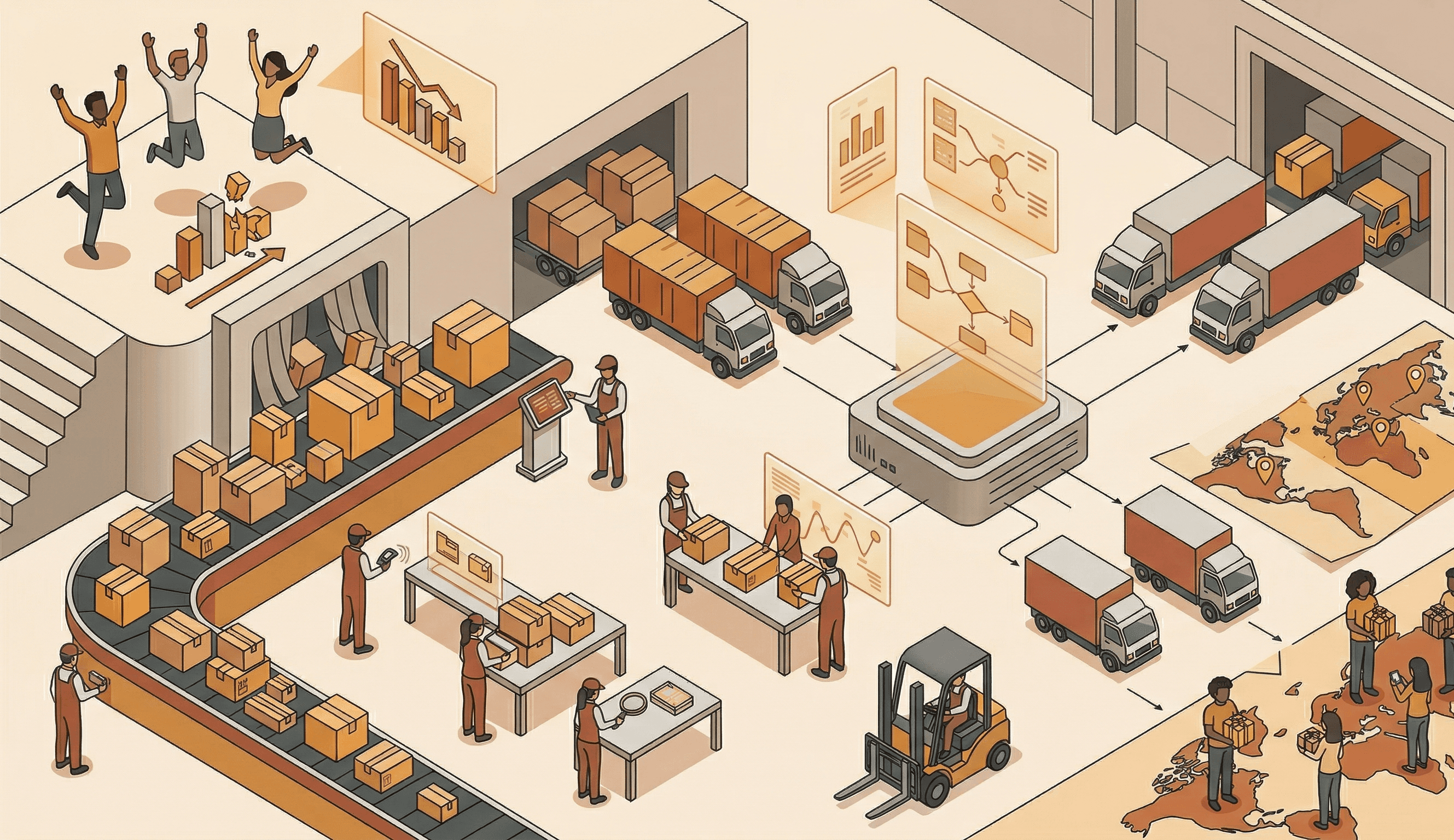
With campaign fulfillment, you're dealing with a massive spike of orders that all need to ship within a compressed window. There's no gradual ramp. One day you have zero orders, and the next you have 5,000 backers expecting their rewards. The unique challenges include:
Bulk inbound, bulk outbound. Your manufacturer delivers thousands of units at once, and they all need to go out the door fast. This puts enormous pressure on [warehouse receiving processes](https://shipdudes.com/blog/warehouse-receiving-process) and outbound operations simultaneously.
Multiple reward tiers. Most campaigns offer different backer levels, which means different SKU combinations. The early bird backer gets one thing, the super supporter gets a bundle, and the VIP tier gets a custom kit. Each tier is essentially a unique order configuration.
Zero margin for error on first impressions. These backers took a risk on you before the product existed. The unboxing experience is your first real-world interaction with them. A damaged product, wrong reward tier, or late delivery can turn your biggest advocates into your loudest critics.
Unpredictable timelines. Manufacturing delays are common with crowdfunded products. Your fulfillment partner needs to be flexible enough to handle shifting delivery windows without charging you a fortune in storage fees while you wait.
The Crowdfunding Fulfillment Timeline: What to Plan and When
Most founders make the mistake of thinking about fulfillment after the campaign ends. By then, you're already behind. Here's a realistic timeline.
During the Campaign
Start talking to fulfillment partners while your campaign is still live. You need to understand costs, timelines, and capacity before you finalize your budget. Too many founders discover that fulfillment costs eat 30% of their per-unit margin after they've already locked in backer pricing.
This is also when you should be mapping out your reward tiers in detail. Every variation, every add-on, every bundle needs to be documented. If you're offering [kitting and assembly](https://shipdudes.com/blog/kitting-and-assembly-services) configurations (like a starter kit with three products, a carrying case, and a branded insert), your 3PL needs to know that now, not when product arrives at the warehouse.
4 to 6 Weeks Before Product Arrives
Lock in your fulfillment partner. Finalize your backer survey to collect accurate shipping addresses. Clean your data, because bad addresses are the number one cause of failed deliveries in crowdfunding logistics. International backers especially tend to format addresses in ways that US shipping systems don't recognize.
Work with your 3PL to establish a [pick and pack](https://shipdudes.com/blog/pick-and-pack-fulfillment) workflow for each reward tier. Define packaging specs, inserts, and any special handling requirements.
Product Arrival Through Fulfillment
This is where everything either clicks or falls apart. Your manufacturer ships pallets to the warehouse, receiving needs to happen quickly, QC checks need to catch defects before they reach backers, and outbound shipping needs to begin within days, not weeks.
At ShipDudes, we handle this kind of surge capacity regularly. Our [fast onboarding process](https://shipdudes.com/blog/fast-onboarding-fulfillment) is built for brands that need to go from zero to shipping fast, which is exactly the situation crowdfunded brands face. With facilities on both coasts (Northern New Jersey and Las Vegas), we can split inventory to reduce transit times and shipping costs for backers across the country.
Choosing the Right Fulfillment Partner for Your Campaign
Not every 3PL is equipped for crowdfunding fulfillment. Many are optimized for steady-state eCommerce and simply don't have the flexibility to handle the burst nature of campaign fulfillment. Here's what to evaluate.
Surge Capacity
Can the warehouse handle receiving 10,000 units on a Monday and shipping 5,000 orders by Friday? Ask specifically about their capacity during your expected fulfillment window. If it overlaps with [peak season](https://shipdudes.com/blog/peak-season-fulfillment-strategy), you need guarantees, not vague promises.
Kitting Capabilities
Crowdfunded products almost always involve some level of assembly. Whether it's combining multiple SKUs into a single reward, adding branded inserts, or building custom packaging configurations, your 3PL needs robust [kitting and assembly fulfillment](https://shipdudes.com/blog/kitting-and-assembly-fulfillment) capabilities. This isn't optional. It's the core of what makes campaign fulfillment complex.
Technology Integration
How will you get backer data into the fulfillment system? Some 3PLs can only work with standard eCommerce platforms. For Kickstarter fulfillment, you need a partner that can ingest CSV files from BackerKit, PledgeManager, or similar tools and convert them into pick lists. ShipDudes integrates with 75+ platforms and has the flexibility to handle custom order imports, which is critical for crowdfunding logistics.
Communication
This one matters more than most founders realize. When 3,000 backers are asking "where's my order?" on your campaign comments page, you need a fulfillment partner who picks up the phone. ShipDudes runs an entirely [US-based support team](https://shipdudes.com/blog/the-real-cost-of-3pl-overseas-support-why-us-based-teams-matter-for-your-brand), which means you're not waiting 12 hours for a timezone-delayed email response when something goes sideways.
Pricing Transparency
Crowdfunding margins are tight. You calculated your unit economics during the campaign, and surprise fulfillment fees will wreck them. Make sure you understand the complete [pricing model](https://shipdudes.com/blog/fulfillment-pricing-models-comparison-finding-the-right-3pl-cost-structure) before committing. Ask about receiving fees, storage fees (especially if manufacturing delays push your timeline), pick and pack rates, kitting charges, and shipping costs.
Common Kickstarter Fulfillment Mistakes (and How to Avoid Them)
Mistake 1: Underestimating Shipping Costs
This kills more crowdfunded brands than bad products do. If you offered free shipping to backers, you're eating the full cost. Dimensional weight pricing can be brutal for bulky products. Work with your 3PL on [shipping cost optimization](https://shipdudes.com/blog/shipping-cost-optimization) before finalizing your budget.
Using a [dual-coast warehouse setup](https://shipdudes.com/blog/nationwide-3pl-fulfillment-why-a-two-coast-setup-beats-a-single-warehouse) can meaningfully reduce per-package shipping costs. Instead of shipping everything from one location, you split inventory between east and west coast facilities and route each order to the closest warehouse. ShipDudes operates this exact model with facilities in [New Jersey](https://shipdudes.com/blog/new-jersey-3pl-fulfillment-why-nj-is-the-strategic-hub-for-east-coast-dtc-brands) and [Las Vegas](https://shipdudes.com/blog/las-vegas-3pl-fulfillment-the-west-coast-hub-smart-dtc-brands-are-choosing).
Mistake 2: Not QC-ing Before Fulfillment
First production runs have higher defect rates. Period. If you ship 5,000 units without checking quality, you'll end up processing hundreds of returns. Build a QC step into your receiving process. Even a simple random sample check can catch systemic issues before they reach backers.
Mistake 3: Ignoring the Post-Campaign Store
Your campaign ends, but demand doesn't. Smart founders transition from campaign fulfillment to ongoing [eCommerce order fulfillment](https://shipdudes.com/blog/ecommerce-order-fulfillment) immediately. This means your Kickstarter fulfillment partner should also be capable of supporting your Shopify store, Amazon listings, and any retail distribution that follows.
This is one of the biggest reasons to choose a partner like ShipDudes for your campaign fulfillment. We're not a one-and-done crowdfunding logistics company. We're an [omnichannel 3PL](https://shipdudes.com/blog/omnichannel-fulfillment) that can handle your Kickstarter wave, then seamlessly transition to supporting your DTC site, Amazon (including [FBA prep](https://shipdudes.com/blog/amazon-fba-prep)), retail distribution via [EDI-compliant B2B fulfillment](https://shipdudes.com/blog/b2b-order-fulfillment-edi-integration-and-retail-distribution-essentials), and subscription boxes.
Mistake 4: DIY Fulfillment from Your Garage
If you have 200 backers, maybe. If you have 2,000 or more, trying to self-fulfill will consume your life for weeks and result in errors, delays, and burnout. There's a real inflection point where [outsourcing to a 3PL](https://shipdudes.com/blog/when-to-switch-to-3pl) becomes not just smart but necessary for your sanity and your brand's reputation.
Indiegogo Fulfillment: Same Challenges, Same Playbook
Whether you ran your campaign on Kickstarter, Indiegogo, or another platform, the fulfillment challenges are virtually identical. Indiegogo fulfillment involves the same burst of orders, the same reward tier complexity, and the same backer expectations. The platform doesn't matter. What matters is your operational plan.
One difference worth noting: Indiegogo's InDemand feature lets campaigns continue accepting orders after the initial campaign ends. This creates an ongoing trickle of orders alongside your initial backer wave, which your fulfillment partner needs to handle smoothly.
Building a Post-Campaign Brand: From Backers to Customers
The real value of a successful crowdfunding campaign isn't the initial revenue. It's the customer list. Every backer is a potential repeat customer, brand advocate, and source of user-generated content. But only if the fulfillment experience is excellent.
Think about what happens after delivery. You'll want a system for handling [returns](https://shipdudes.com/blog/returns-management-3pl) gracefully. You'll want to track [inventory](https://shipdudes.com/blog/inventory-management-for-dtc-brands) as you transition from campaign mode to ongoing sales. And you'll want a fulfillment partner who understands the full lifecycle of a growing CPG brand, not just the initial shipment.
ShipDudes was founded by eCommerce entrepreneurs who've lived this exact journey. We understand that your Kickstarter wave is chapter one, not the whole story. Our infrastructure, from [kitting and assembly](https://shipdudes.com/blog/cpg-assembly-and-fulfillment-services-kitting-packaging-and-distribution) to [7-day processing](https://shipdudes.com/blog/why-7-day-processing-fulfillment-beats-same-day-promises), is designed to grow with brands, not just service a single project.
Your Kickstarter Fulfillment Checklist
Before you commit to a fulfillment plan, make sure you've covered these essentials:
1. Map every reward tier with exact SKU combinations and packaging specs
2. Clean your backer address data thoroughly
3. Get firm quotes that include receiving, storage, kitting, pick and pack, and shipping
4. Confirm your 3PL's surge capacity for your expected volume window
5. Establish a QC process for incoming inventory
6. Plan your post-campaign eCommerce transition
7. Set up backer communication templates for shipping notifications and tracking
8. Build buffer time into your fulfillment timeline for manufacturing delays
Ready to Fulfill Your Campaign the Right Way?
If you've got a live or upcoming crowdfunding campaign and you're thinking about how to handle fulfillment, talk to ShipDudes. We've helped CPG brands across beauty, supplements, beverages, electronics, and more scale from first shipment to full omnichannel operation. Our dual-coast warehouses, in-house US-based team, and 75+ platform integrations mean we can handle your campaign wave and everything that comes after.
[Book a call with ShipDudes](https://shipdudes.com/book-a-call) and let's map out a fulfillment plan that protects your margins and delivers the backer experience your campaign deserves.
FAQ: Kickstarter Fulfillment
How long does kickstarter fulfillment typically take?
For a campaign with 2,000 to 5,000 backers, expect the full fulfillment cycle (receiving, QC, kitting, and shipping) to take two to four weeks once product arrives at the warehouse. Simpler single-SKU campaigns ship faster, while multi-tier reward structures with complex kitting take longer. Working with a 3PL that has surge capacity, like ShipDudes, can compress this timeline significantly.
Can I use the same 3PL for my Kickstarter fulfillment and my ongoing eCommerce store?
Yes, and you should. Transitioning from campaign fulfillment to ongoing DTC and retail fulfillment is much smoother when your inventory is already in the right warehouse with the right partner. ShipDudes supports omnichannel fulfillment across Shopify, Amazon, TikTok Shop, Faire, and 75+ other platforms, making the post-campaign transition seamless.
What's the difference between Kickstarter fulfillment and Indiegogo fulfillment?
The logistics are nearly identical. Both involve a surge of backer orders, multiple reward tiers, and tight delivery expectations. The main operational difference is that Indiegogo's InDemand feature allows ongoing orders after the campaign, which means your fulfillment partner needs to handle both the initial wave and a continuing trickle of new orders.
How much does crowdfunding fulfillment cost?
Costs vary based on order volume, number of reward tiers, kitting complexity, product weight and dimensions, and shipping destinations. The main cost components are warehouse receiving, storage, kitting and assembly, pick and pack fees, and outbound shipping. Get detailed quotes from your 3PL that cover every line item so there are no surprises.
Should I self-fulfill my crowdfunding campaign or use a 3PL?
If you have fewer than 200 backers with a single reward tier, self-fulfillment can work. Beyond that, the complexity and time commitment escalate quickly. A 3PL brings warehouse infrastructure, carrier rates, kitting expertise, and the ability to ship thousands of orders in days rather than weeks. For most campaigns, outsourcing to a fulfillment partner like ShipDudes is the smarter move.
Ready to Simplify Your Fulfillment?
Let's build a custom pricing model for your brand. No contracts required to start the conversation.