
Inventory Pooling Strategies: How to Share Stock Across Every Sales Channel

Michael DeSarno
8 min read
Inventory Management
Share
KEY TAKEAWAYS
• Inventory pooling maintains one shared stock pool across all sales channels, eliminating phantom stockouts from siloed allocation.
• Unified pooling can free up 15 to 30 percent of working capital by replacing per-channel safety stock buffers with one.
• Four strategies exist: full pooling, channel reserves, dynamic buffer percentages, and location-based pooling across warehouses.
• Real-time inventory sync (seconds, not minutes) and 75+ integrations are non-negotiable for pooling to work.
Last Updated:
Here is a scenario most multi-channel brand operators know too well: you have 500 units of your best-selling SKU sitting in a warehouse, but your Shopify store shows 200 available, Amazon shows 150, and your wholesale channel has 150 reserved. A flash sale hits on TikTok Shop, and you sell out of your allocated DTC stock in two hours. Meanwhile, 150 units earmarked for a wholesale order that has not even been confirmed yet are sitting untouched. You just left revenue on the table because your inventory was siloed, not pooled.
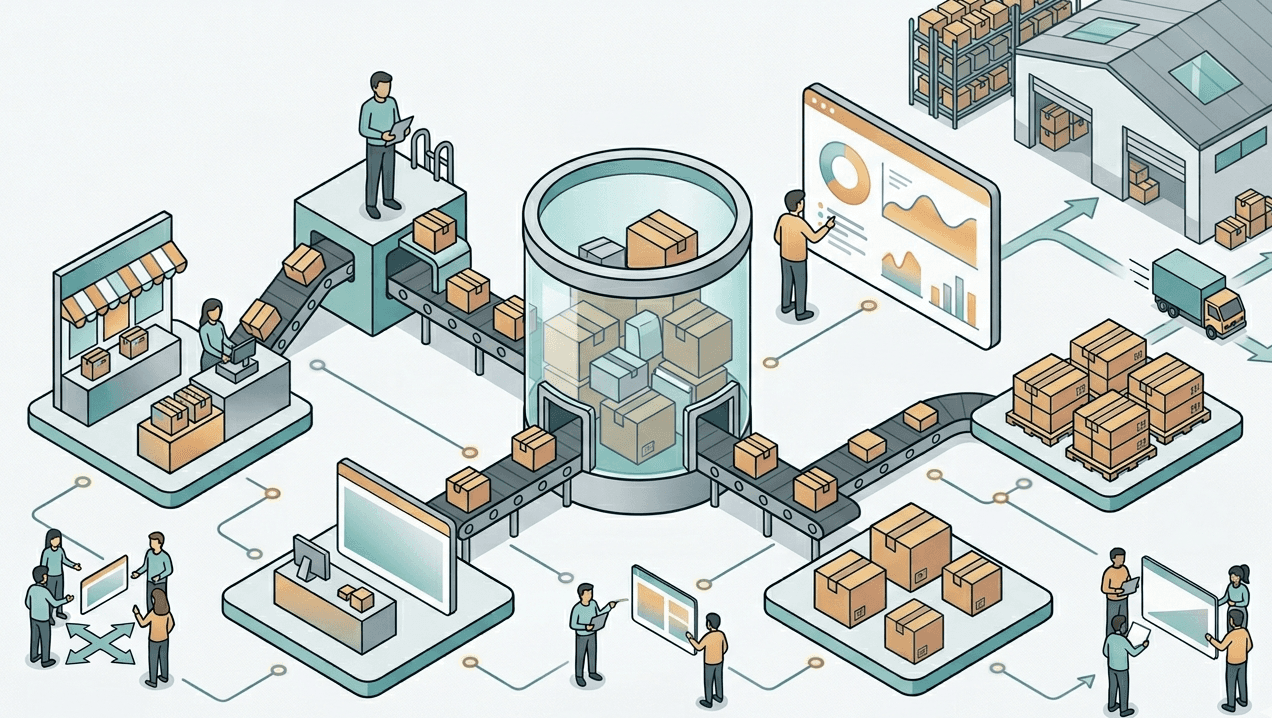
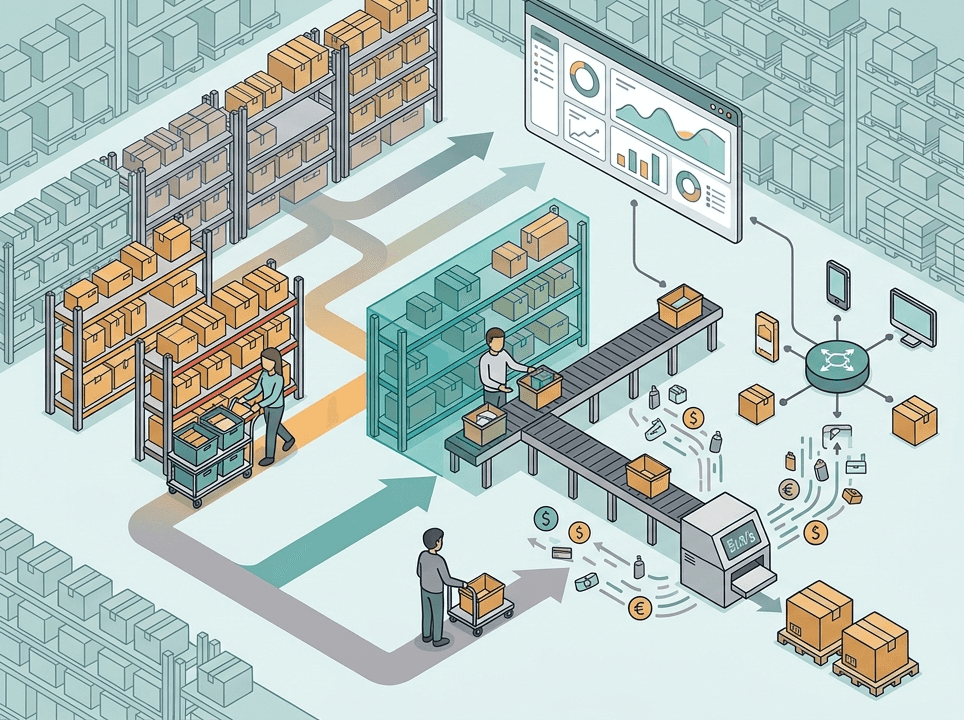
Inventory pooling strategies solve this exact problem. Instead of splitting your stock into separate buckets for each sales channel, you maintain one unified inventory pool that dynamically serves every channel from the same physical stock. The result: fewer stockouts, less dead stock, better cash flow, and a fulfillment operation that actually scales with your business.
Let's break down how inventory pooling works, when it makes sense, and how to implement it without creating chaos.
What Is Inventory Pooling (and Why Does It Matter)?
Inventory pooling is the practice of maintaining a single pool of inventory that serves multiple sales channels simultaneously. Rather than dedicating fixed quantities to Shopify, Amazon, TikTok Shop, Faire, and your B2B accounts, every unit in your warehouse is available to fulfill orders from any channel until it is picked and packed.
This is not just a theoretical optimization. For CPG brands selling across three or more channels, the math gets very real very quickly. Channel-specific allocation forces you to over-order to create safety stock buffers for each channel. With a unified inventory pool, you only need one safety stock buffer for your entire business. That difference alone can free up 15 to 30 percent of your working capital.
The concept is straightforward. The execution is where most brands struggle, because pooling inventory across channels requires your warehouse management system, your integrations, and your 3PL partner to all work together in real time. If you are still managing [inventory for your DTC brand](https://shipdudes.com/blog/inventory-management-for-dtc-brands) with spreadsheets or disconnected systems, pooling will break before it helps.
Siloed Inventory: The Hidden Cost You Are Already Paying
Before diving into strategies, let's quantify what channel-specific inventory allocation actually costs you.
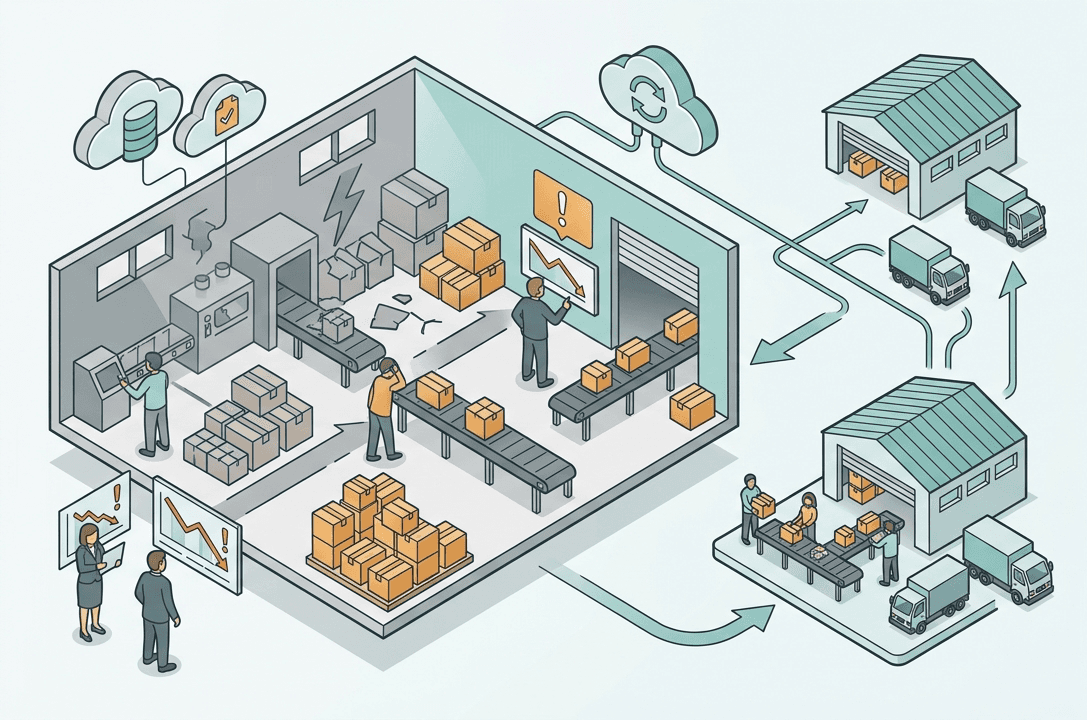
Phantom stockouts. You show "out of stock" on one channel while units sit idle in another channel's allocation. This is lost revenue that never shows up in a report because the sale simply never happened.
Excess safety stock. When each channel has its own buffer, you are multiplying your safety stock across every channel. For a brand selling on five channels, that can mean five separate safety stock buffers instead of one.
Slower inventory turns. Siloed stock means some channels burn through inventory while others accumulate aging product. If you have ever done an [inventory aging analysis](https://shipdudes.com/blog/inventory-aging-analysis-liquidate-dead-stock-cash-flow) and found dead stock in one channel while another channel was running replenishment orders, siloed allocation was the root cause.
Operational complexity. Your warehouse team is managing virtual partitions of the same physical product. More complexity means more errors, more manual intervention, and more room for things to go wrong.
For growing CPG brands, these are not minor inefficiencies. They are structural problems that compound as you add channels.
Four Inventory Pooling Strategies That Actually Work
Not all pooling approaches are the same. The right strategy depends on your channel mix, order volume, and how much control you need over specific channel availability.
1. Full Pooling (Single Unified Pool)
This is the purest form of inventory pooling. Every unit of every SKU is available to every channel. Orders are fulfilled first-come, first-served regardless of where they originate.
Best for: Brands where all channels have similar margin profiles and no channel has hard inventory commitments (like pre-booked wholesale POs).
Watch out for: A viral TikTok moment or flash sale on one channel can drain your entire pool and leave other channels empty. If you are running [flash sale fulfillment](https://shipdudes.com/blog/flash-sale-fulfillment-handling-sudden-order-volume-spikes), you need guardrails in place.
2. Pooling with Channel Reserves
You maintain one shared pool but set minimum reserve quantities for critical channels. For example, you might reserve 200 units for confirmed wholesale POs while letting the remaining stock flow freely between DTC channels.
Best for: Brands that sell both DTC and B2B, where wholesale orders have contractual commitments. This is especially important for brands managing [B2B order fulfillment](https://shipdudes.com/blog/b2b-order-fulfillment-edi-integration-and-retail-distribution-essentials) alongside their DTC operations.
Watch out for: Reserves that are too generous recreate the siloing problem. Review and adjust reserves weekly based on actual demand.
3. Dynamic Allocation with Buffer Percentages
Instead of hard reserves, you show a percentage of total available inventory on each channel. If you have 1,000 units, you might list 90 percent availability on Shopify, 85 percent on Amazon, and 80 percent on TikTok Shop. The percentages overlap, and real-time sync prevents overselling.
Best for: Brands with high velocity across multiple DTC channels that want to prevent any single channel from consuming all available stock.
Watch out for: This only works if your [multi-channel inventory sync](https://shipdudes.com/blog/multi-channel-inventory-sync-how-to-prevent-overselling-across-shopify-amazon-and-tiktok-shop) is truly real-time. Even a five-minute delay can cause overselling when multiple channels are moving fast.
4. Location-Based Pooling
For brands using dual-coast or multi-warehouse setups, you pool inventory within each location while splitting SKUs across facilities based on regional demand patterns. Each warehouse serves all channels but focuses on its geographic zone.
At ShipDudes, this is how many of our customers operate. With warehouses in Northern New Jersey and Las Vegas, brands can pool inventory at each location while optimizing for [geographic expansion](https://shipdudes.com/blog/3pl-geographic-expansion-adding-new-markets-without-changing-fulfillment-partners) and shipping cost reduction. A [nationwide dual-coast setup](https://shipdudes.com/blog/nationwide-3pl-fulfillment-why-a-two-coast-setup-beats-a-single-warehouse) naturally supports location-based pooling because each facility handles all channel orders for its region.
The Technology Stack Behind Shared Inventory Management
Inventory pooling strategies live and die by your tech stack. Here is what you actually need.
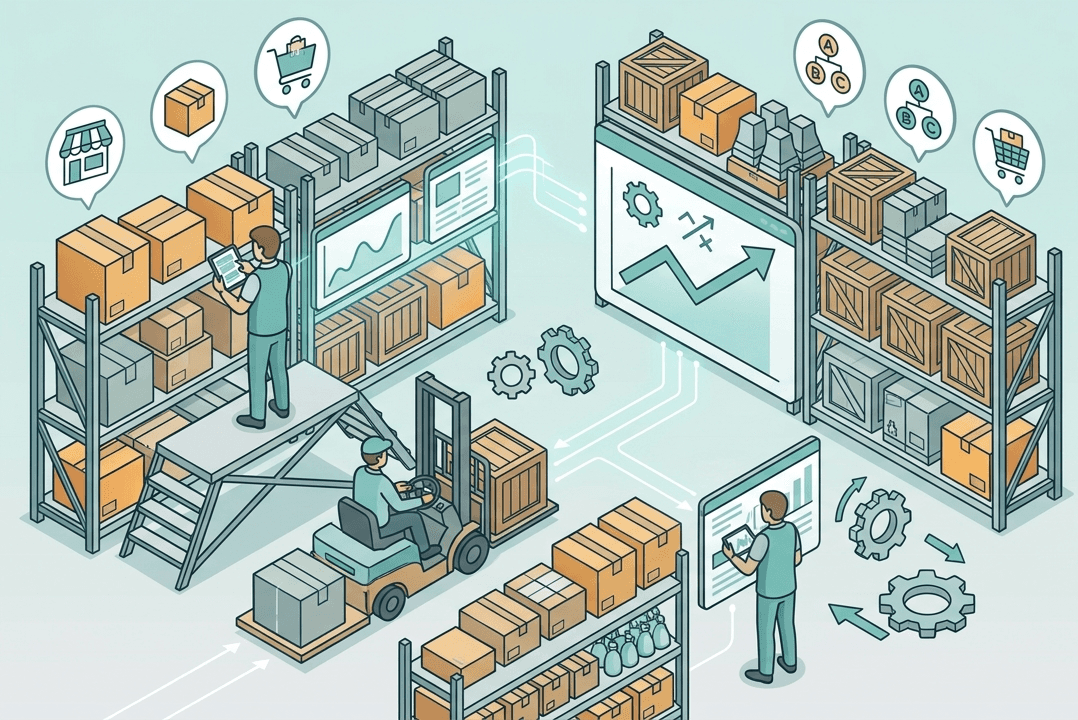
A centralized inventory management system. Your WMS or OMS needs to maintain a single source of truth for inventory counts. Every channel reads from and writes to this central system. If your 3PL's [inventory management system](https://shipdudes.com/blog/3pl-inventory-management-systems-real-time-visibility-and-control) cannot provide real-time visibility across all channels, pooling is not going to work.
Real-time integrations. Inventory counts need to sync across all platforms within seconds, not minutes. This requires robust [API and webhook integrations](https://shipdudes.com/blog/3pl-technology-integration-apis-webhooks-and-real-time-data-sync) between your sales channels and your fulfillment partner. ShipDudes integrates with 75+ platforms, including Shopify, Amazon, TikTok Shop, Faire, and WooCommerce, which makes centralized pooling operationally viable from day one.
Automated reorder triggers. When your unified pool hits reorder thresholds, your system should trigger purchase orders automatically. Because pooled inventory has lower total safety stock requirements, your [inventory forecasting](https://shipdudes.com/blog/inventory-forecasting-for-multi-channel-brands-preventing-stockouts-across-all-sales-channels) becomes both simpler and more accurate.
Integration testing before go-live. Before you flip the switch on a pooled inventory model, you need to [verify your tech stack](https://shipdudes.com/blog/3pl-integration-testing-verify-tech-stack-before-going-live) end to end. One broken integration can cause overselling across every channel simultaneously.
How to Implement Inventory Pooling Without Breaking Everything
Switching from siloed to pooled inventory is not a "flip a switch" change. Here is a phased approach that reduces risk.
Phase 1: Audit your current state. Map every SKU to its current channel allocations. Identify which SKUs have the biggest gap between total inventory and per-channel availability. These are your highest-opportunity SKUs for pooling.
Phase 2: Start with your DTC channels. Pool inventory across Shopify, your website, and social commerce channels first. These are typically the easiest to integrate and have the most flexible fulfillment requirements. Keep B2B and wholesale allocations separate initially.
Phase 3: Add wholesale with reserves. Once DTC pooling is stable, bring wholesale into the pool with hard reserves for confirmed POs. This is where having a 3PL that handles both DTC and [B2B distribution](https://shipdudes.com/blog/b2b-order-fulfillment-edi-integration-and-retail-distribution-essentials) from the same facilities becomes critical.
Phase 4: Optimize and automate. Review channel velocity data weekly. Adjust buffer percentages and reserves based on actual demand patterns. Automate reorder points based on pooled inventory levels rather than per-channel triggers.
Channel Inventory Optimization: Beyond Just Pooling
Pooling is the foundation, but true channel inventory optimization requires a few additional layers.
SKU rationalization. If you are dealing with [SKU proliferation](https://shipdudes.com/blog/sku-proliferation-management-how-3pls-handle-complex-product-catalogs), pooling will help but will not solve the underlying complexity. Consider whether every variant needs to exist on every channel.
Channel-specific kitting. You might sell the same product on multiple channels but with different packaging or bundle configurations. Your 3PL should handle [kitting and assembly](https://shipdudes.com/blog/kitting-and-assembly-services) from the same base inventory pool, creating channel-specific configurations at the time of fulfillment rather than pre-building them.
Returns reintegration. Returned products need to flow back into the unified pool quickly. A slow [returns processing](https://shipdudes.com/blog/returns-processing-automation-how-smart-3pls-turn-returns-into-revenue-recovery) workflow means returned units sit in limbo instead of being available for resale across all channels.
Cycle counting accuracy. Your pooled inventory is only as good as your count accuracy. Regular [cycle counting](https://shipdudes.com/blog/fulfillment-center-cycle-counting-how-to-maintain-inventory-accuracy-at-scale) becomes even more important when one inventory count drives availability across every sales channel.
When Inventory Pooling Does Not Make Sense
Pooling is not universally the right move. There are legitimate reasons to maintain some level of channel separation.
If you are doing Amazon FBA, that inventory is physically in Amazon's warehouses, so it cannot be pooled with your 3PL stock. However, your merchant-fulfilled and [FBA prep](https://shipdudes.com/blog/amazon-fba-prep) inventory at your 3PL can still be pooled with your other channels.
If a retail partner requires dedicated, pre-allocated inventory (some big-box retailers mandate this), you need to honor those commitments with hard reserves.
If you sell products with different [lot tracking](https://shipdudes.com/blog/lot-tracking-fulfillment-cpg-brand-recall-traceability-requirements) or regulatory requirements by channel (for example, different labeling for wholesale vs. DTC), your pooling strategy needs to account for these constraints at the SKU level.
Why Your 3PL Partner Matters More Than Your Strategy
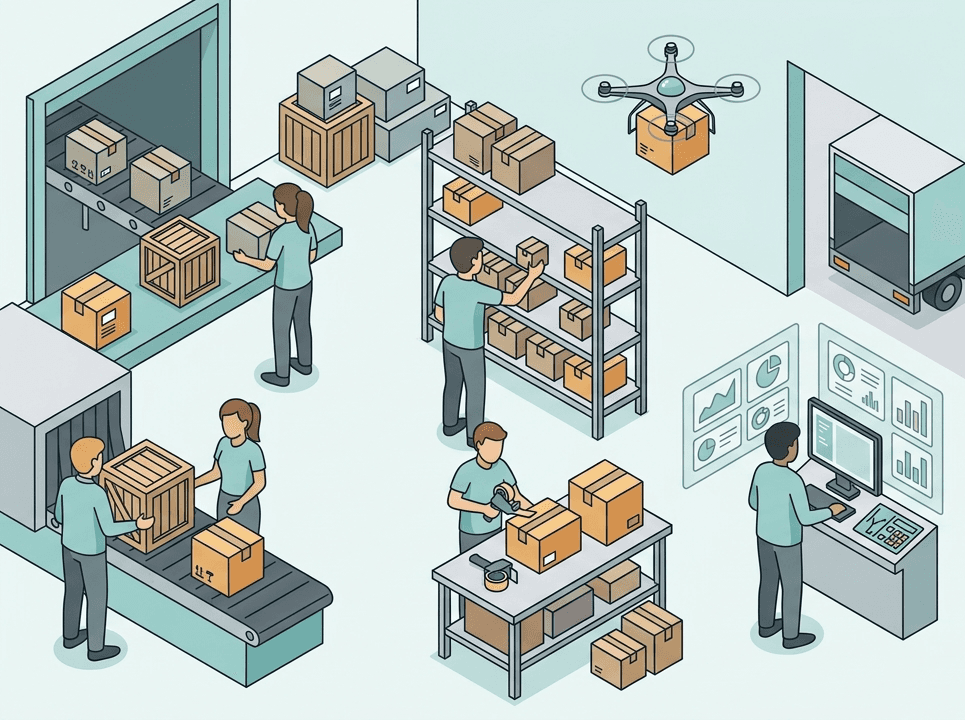
You can design the perfect inventory pooling strategy on paper, but it will fail if your fulfillment partner cannot execute it operationally. Your 3PL needs real-time WMS capabilities, native integrations with all your sales channels, and the operational discipline to maintain accurate counts across a shared pool.
ShipDudes was built for exactly this kind of [omnichannel fulfillment](https://shipdudes.com/blog/omnichannel-fulfillment). With 75+ platform integrations, dual-coast warehouses, and an all-US-based team, we help CPG brands run unified inventory pools across DTC, marketplace, and wholesale channels from the same facilities. Our customers in beauty, supplements, beverages, pet products, and general CPG use pooled inventory strategies daily because our systems and processes are designed to support shared inventory management from the ground up.
Frequently Asked Questions
What is inventory pooling in fulfillment?
Inventory pooling is a strategy where a brand maintains a single, shared stock of products that can fulfill orders from any sales channel (Shopify, Amazon, TikTok Shop, wholesale, etc.) rather than allocating separate inventory to each channel. This approach reduces total safety stock, minimizes phantom stockouts, and improves cash flow.
How does inventory pooling prevent overselling?
Inventory pooling relies on real-time inventory sync across all connected sales channels. When a unit is sold on any channel, the central inventory count updates immediately, and availability adjusts across every platform within seconds. This requires robust API integrations and a WMS that serves as a single source of truth.
Can I pool inventory if I sell on Amazon FBA and Shopify?
Inventory stored in Amazon's FBA warehouses cannot be pooled because Amazon controls that stock. However, inventory held at your 3PL (including units for Amazon Merchant Fulfilled or FBA prep shipments) can be pooled with your Shopify, TikTok Shop, and other DTC channel inventory.
What is the difference between inventory pooling and inventory allocation?
Inventory allocation assigns fixed quantities of stock to specific channels. Inventory pooling makes all stock available to all channels from a shared pool. Many brands use a hybrid approach with pooling plus minimum reserves for channels with contractual commitments, like wholesale purchase orders.
Do I need a 3PL to implement inventory pooling?
While you can implement pooling with in-house fulfillment, a 3PL with strong technology integrations and multi-channel experience makes it significantly easier. Partners like ShipDudes offer 75+ platform integrations and real-time WMS visibility, which are the technical foundations required for effective shared inventory management.
Ready to Pool Your Inventory the Right Way?
If you are running separate inventory allocations for each sales channel and feeling the pain of phantom stockouts, excess safety stock, and cash flow pressure, it is time to explore inventory pooling strategies with a fulfillment partner built for omnichannel.
ShipDudes helps CPG brands unify their inventory across every sales channel, from DTC to marketplace to retail distribution, all from dual-coast warehouses with real-time visibility.
[Book a call with ShipDudes](https://shipdudes.com/book-a-call) to see how a unified inventory pool can unlock growth across every channel you sell on.
Ready to Simplify Your Fulfillment?
Let's build a custom pricing model for your brand. No contracts required to start the conversation.