Multi-SKU Bundle Fulfillment: Complex Kitting at Scale

Michael DeSarno
8 min read
Fulfillment Operations
Share
KEY TAKEAWAYS
• Multi-SKU bundle fulfillment requires component-level inventory tracking, not just standard pick-and-pack workflows.
• Pre-kitting suits high-volume stable bundles; kit-on-demand suits seasonal or variable configurations; most brands use a hybrid.
• A 5-component bundle at 99% individual pick accuracy yields only ~95% perfect-bundle accuracy without barcode verification at every pick.
• ShipDudes runs pre-kit and kit-on-demand workflows from 2 NJ + 2 Las Vegas warehouses with 75+ platform integrations for real-time component sync.
Last Updated:
Bundles sell. That part is not controversial. Whether it is a "starter kit" with five different SKUs, a holiday gift set mixing products from three categories, or a subscribe-and-save box that rotates components monthly, complex product bundles are one of the best ways to increase AOV and move inventory. The problem is that selling bundles is easy. Fulfilling them accurately, consistently, and at scale is where most brands (and most 3PLs) fall apart.
Multi-SKU bundle fulfillment introduces a layer of operational complexity that standard pick and pack workflows were never designed to handle. You are not pulling one item off a shelf and dropping it in a box. You are coordinating multiple components, often from different warehouse zones, assembling them in a specific configuration, and doing it thousands of times per day without a single wrong item slipping through.
This guide breaks down what makes multi-component kitting so difficult, how to structure your bundle operations for scale, and what to look for in a 3PL partner who can actually execute.
Why Bundles Break Standard Fulfillment Workflows
Single-SKU fulfillment is straightforward. An order comes in, a picker grabs the item, it gets packed and shipped. The error surface is small. With multi-SKU bundle fulfillment, every additional component multiplies the potential failure points.
Here is what changes when you move from single items to bundles:
Inventory complexity explodes. Each bundle is made up of individual SKUs that also sell independently. If your "Skincare Essentials Kit" contains a cleanser, toner, and moisturizer, you now need to manage inventory for those three standalone products plus the bundle. That is four demand signals pulling from the same stock. Without real-time inventory allocation, you will oversell components across channels. For a deeper look at this exact problem, check out our guide on [inventory allocation strategies for multi-channel brands](https://shipdudes.com/blog/inventory-allocation-strategies-multi-channel-brands-prevent-stock-conflicts).
Pick paths get longer and more error-prone. A single-item order might require one stop in the warehouse. A five-component bundle requires five stops, possibly across different zones. Each stop is another chance for a wrong item, wrong quantity, or missed component entirely.
Assembly adds time and labor. Bundles often require specific arrangement inside the box: tissue paper layers, branded inserts, products placed in a particular order. This is not standard pick and pack. It is kitting and assembly work that requires documented SOPs and trained staff.
SKU proliferation gets out of control. Once you start creating bundles, the temptation is to create more. Holiday edition. Limited run. Channel-exclusive. Before you know it, you have 15 bundle variations on top of 50 individual SKUs. Managing that catalog is a challenge in itself. Our post on [SKU proliferation management](https://shipdudes.com/blog/sku-proliferation-management-how-3pls-handle-complex-product-catalogs) covers how to keep this under control.
The Two Models: Pre-Kitted vs. Kit-on-Demand
Before you can optimize multi-SKU bundle fulfillment, you need to decide how you are going to structure the actual assembly. There are two primary approaches, and each comes with trade-offs.
Pre-Kitted Bundles
With pre-kitting, you assemble the bundles in advance and store them as finished goods. When an order comes in, the picker grabs one pre-built unit and ships it.
Pros: Faster fulfillment speed, simpler pick process, lower error rates at the point of shipment.
Cons: You are tying up capital in assembled inventory. If demand does not match your forecast, you are stuck with pre-built kits that might need to be broken apart. Storage costs increase because you are storing assembled bundles alongside individual components.
Pre-kitting works best for bundles with stable, predictable demand. If you sell the same "Best Sellers Kit" year-round and move 500 per week, pre-building makes sense.
Kit-on-Demand
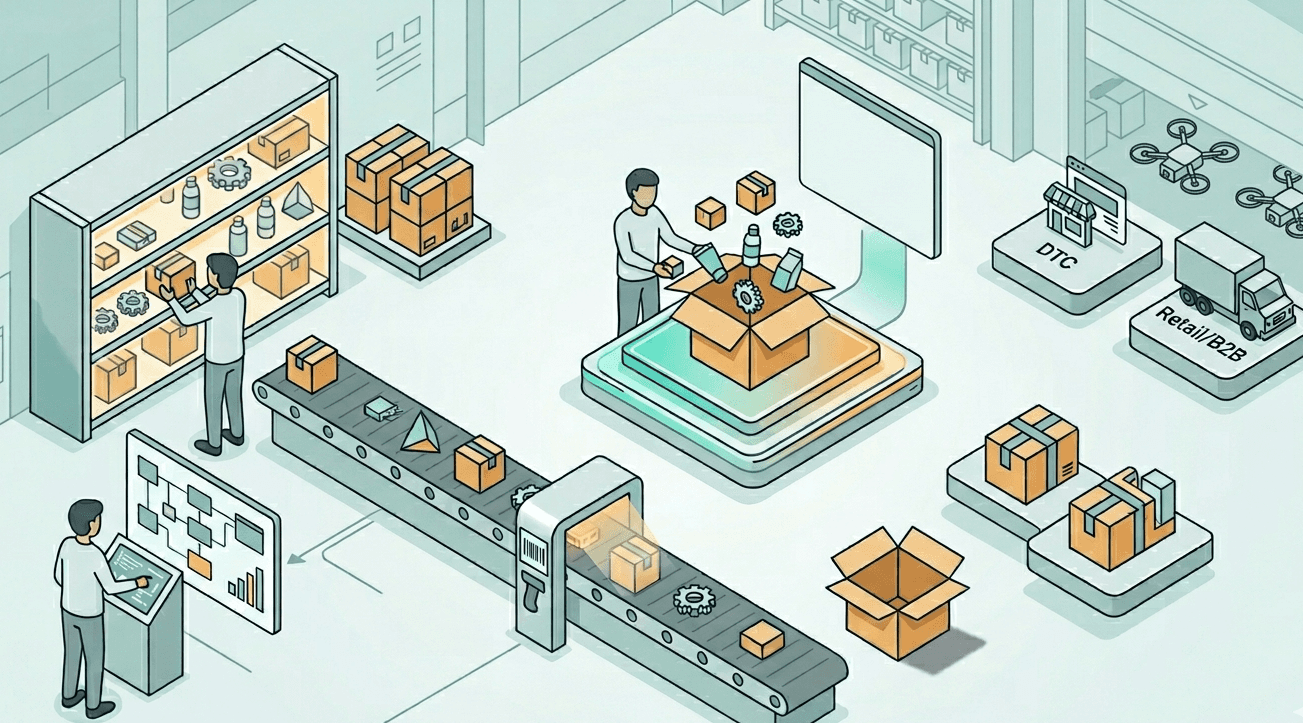
With kit-on-demand (sometimes called dynamic kitting), bundles are assembled at the time of order. Components are picked individually and assembled at a packing station before shipping.
Pros: Maximum flexibility. You can offer unlimited bundle combinations without pre-building any of them. No risk of dead stock from pre-assembled kits that do not sell. Your [inventory aging analysis](https://shipdudes.com/blog/inventory-aging-analysis-liquidate-dead-stock-cash-flow) stays cleaner because you are only holding individual components.
Cons: Slower fulfillment time per order. Higher labor cost per unit. Greater risk of assembly errors if your quality control process is not airtight.
Kit-on-demand works best for brands with a wide variety of bundle configurations, seasonal rotations, or subscription boxes with changing components.
Many brands at ShipDudes use a hybrid approach: pre-kit the top sellers, kit-on-demand for everything else. This balances speed with flexibility.
The Inventory Sync Problem (And Why It Kills Bundles)
The single biggest bundle fulfillment challenge is not the physical assembly. It is the inventory math.
Consider this scenario: You have 100 units of Product A, 80 units of Product B, and 120 units of Product C. You sell a bundle that contains one of each. How many bundles can you sell? 80, limited by Product B. But if you are also selling Products A, B, and C individually across Shopify, Amazon, and TikTok Shop, every individual sale reduces your available bundle quantity.
Without a [multi-channel inventory sync](https://shipdudes.com/blog/multi-channel-inventory-sync-how-to-prevent-overselling-across-shopify-amazon-and-tiktok-shop) that accounts for component-level allocation, you will oversell. And overselling means cancelled orders, angry customers, and platform penalties (especially on Amazon).
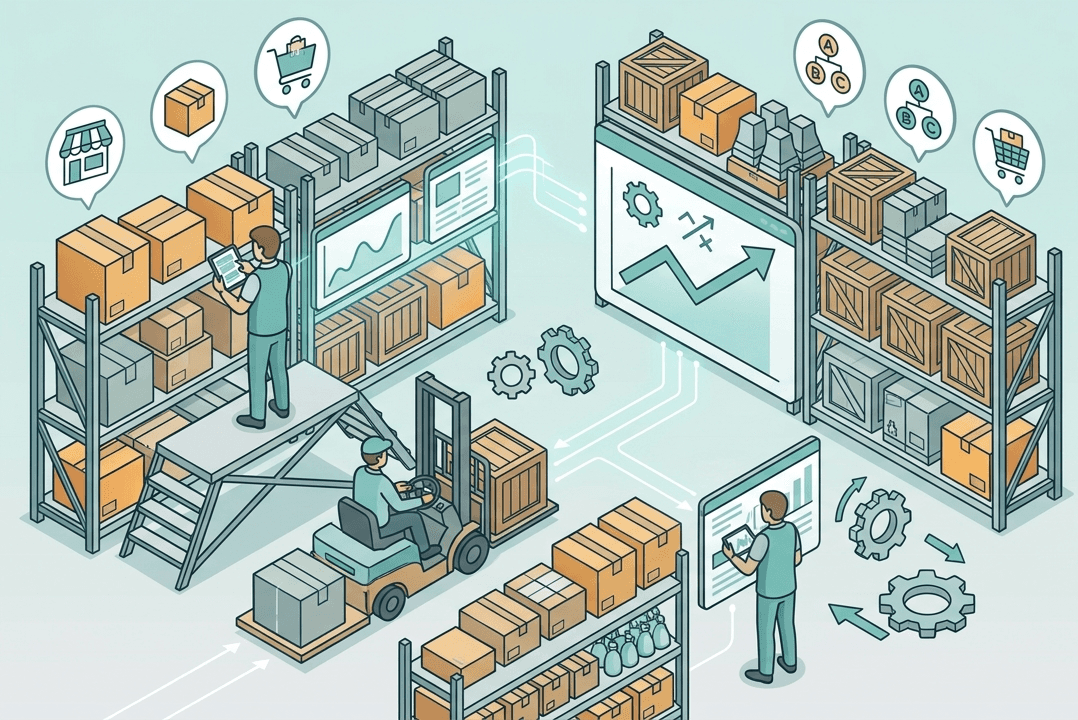
The solution requires a WMS (warehouse management system) that treats bundles as virtual SKUs tied to their component inventory in real time. When a bundle sells, component quantities decrease across all channels. When an individual component sells, available bundle quantities adjust automatically.
At ShipDudes, this is handled through our [3PL inventory management systems](https://shipdudes.com/blog/3pl-inventory-management-systems-real-time-visibility-and-control) with 75+ platform integrations. The system knows that selling one bundle reduces the available count for each component across every connected channel. No manual spreadsheet reconciliation required.
Quality Control for Multi-Component Kitting
When you are assembling bundles with three, five, or ten components, the error rate on each pick compounds. If your individual pick accuracy is 99%, a five-component bundle drops your "perfect bundle" rate to roughly 95%. That means one in twenty customers gets something wrong.
For CPG brands (supplements, beauty, food), a wrong item is not just an inconvenience. It can be a compliance issue or a safety concern. A customer who receives the wrong supplement or a product missing its [lot code tracking](https://shipdudes.com/blog/lot-tracking-fulfillment-cpg-brand-recall-traceability-requirements) information has a legitimate problem.
Effective [fulfillment center quality control](https://shipdudes.com/blog/3pl-quality-control-systems-how-to-prevent-order-errors-before-they-reach-customers) for multi-SKU bundles requires:
1. Barcode verification at each pick. Every component scanned, every time. No "I know what this looks like" shortcuts.
2. Photo documentation of assembled kits. This gives you a visual record of what went into each order. When a customer claims a missing item, you have proof.
3. Weight verification. A completed bundle should fall within a known weight range. If it is light, something is missing. If it is heavy, something extra snuck in.
4. Dedicated kitting stations. Assembly should not happen at the same stations as standard pick and pack. Kitting requires space, SOPs posted visibly, and trained team members.
How Bundle Fulfillment Changes for B2B and Retail
DTC bundles are complex enough. But when you start selling bundles through B2B channels (wholesale, retail distribution, Amazon FBA), the requirements multiply.
Retail buyers want bundles packed to their specifications: specific case pack quantities, UPC labels in exact positions, EDI-compliant documentation. A bundle going to Target looks very different from the same bundle going to a Shopify customer.
If you are shipping bundles to retail partners, your 3PL needs to handle [B2B order fulfillment with EDI integration](https://shipdudes.com/blog/b2b-order-fulfillment-edi-integration-and-retail-distribution-essentials) alongside your DTC kit-on-demand workflow. These are fundamentally different operations running in parallel, and they require a fulfillment partner built for [omnichannel fulfillment](https://shipdudes.com/blog/omnichannel-fulfillment).
For brands prepping bundles for Amazon specifically, the requirements include Amazon-specific labeling, poly bagging for multi-component sets, and FNSKU barcodes on the outer packaging. Our [Amazon FBA prep](https://shipdudes.com/blog/amazon-fba-prep) services at ShipDudes handle this alongside standard DTC bundle fulfillment from the same facilities.
Scaling Bundle Fulfillment Without Losing Accuracy
The real test of multi-SKU bundle fulfillment is not whether you can do it at 50 orders a day. It is whether you can do it at 500 or 5,000. Scaling kitting operations requires:
Documented SOPs for every bundle configuration. Each bundle needs a visual assembly guide with component list, placement instructions, and packaging specs. When you add seasonal bundles or limited editions, those SOPs need to exist before the first order hits.
Flexible labor allocation. Bundle orders spike around holidays, promotions, and product launches. Your 3PL needs the ability to [handle sudden volume spikes](https://shipdudes.com/blog/flash-sale-fulfillment-handling-sudden-order-volume-spikes) by shifting trained staff to kitting stations without pulling from standard fulfillment.
Dual-coast distribution. If your bundles are shipping nationwide, assembling everything from one warehouse means half your customers wait longer. ShipDudes operates from Northern New Jersey and Las Vegas, which means bundles can be pre-staged or assembled on-demand from whichever coast is closer to the customer. Learn more about why [dual-coast warehousing](https://shipdudes.com/blog/fulfillment-centers-east-and-west-coast) matters.
Technology that treats bundles as first-class citizens. Not an afterthought bolted onto a basic WMS. Your [3PL technology integration](https://shipdudes.com/blog/3pl-technology-integration-apis-webhooks-and-real-time-data-sync) needs to support virtual bundle SKUs, component-level inventory, and automated routing rules that determine whether to pull from pre-kitted stock or assemble on demand.
What to Ask a 3PL About Bundle Fulfillment
If you are evaluating 3PL partners for multi-component kitting, here are the questions that actually matter:
- How do you handle inventory allocation for bundle components that also sell individually?
- Do you support both pre-kitted and kit-on-demand workflows?
- What is your QC process for multi-SKU orders?
- Can you handle different bundle configurations for different channels (DTC vs. retail vs. Amazon FBA)?
- How do you manage SOPs for new bundle launches or seasonal kits?
- What does your [kitting and assembly](https://shipdudes.com/blog/kitting-and-assembly-fulfillment) pricing structure look like for varying complexity levels?
The answers will tell you quickly whether a 3PL has real bundle experience or is just winging it.
FAQ
What is multi-SKU bundle fulfillment?
Multi-SKU bundle fulfillment is the process of picking, assembling, and shipping orders that contain multiple different products combined into a single sellable unit. Unlike single-item fulfillment, it requires component-level inventory tracking, assembly workflows, and quality control processes to ensure every bundle ships complete and correct.
What is the difference between pre-kitting and kit-on-demand?
Pre-kitting means assembling bundles in advance and storing them as finished goods, ready to ship when an order comes in. Kit-on-demand means individual components are picked and assembled at the time of order. Pre-kitting is faster for high-volume, consistent bundles. Kit-on-demand offers more flexibility for varied or seasonal configurations.
How do you prevent overselling when bundle components sell individually?
The key is a WMS that tracks inventory at the component level and calculates available bundle quantities in real time across all sales channels. When an individual component sells, the available bundle count automatically adjusts. This requires tight integration between your 3PL's systems and every platform you sell on.
Can a 3PL handle bundles for both DTC and retail channels?
Yes, but not every 3PL is equipped for it. Retail bundles often require EDI compliance, specific case pack configurations, and retailer-specific labeling. Your 3PL needs to run both DTC kitting and B2B distribution workflows from the same inventory pool without conflicts.
How does ShipDudes handle multi-SKU bundle fulfillment?
ShipDudes supports both pre-kitted and kit-on-demand workflows across our dual-coast facilities in Northern New Jersey and Las Vegas. Our systems manage component-level inventory with real-time sync across 75+ platform integrations. Every bundle goes through barcode verification and quality control before shipment, with documented SOPs for each configuration.
Ready to Scale Your Bundle Operations?
If you are running multi-SKU bundles (or planning to launch them) and your current fulfillment setup is not keeping up, it is time for a conversation. ShipDudes handles complex kitting for CPG brands across beauty, supplements, food, beverages, and more, with the systems and processes to do it accurately at scale.
[Book a call with ShipDudes](https://shipdudes.com/book-a-call) to walk through your bundle configurations and get a fulfillment plan that actually works.
Ready to Simplify Your Fulfillment?
Let's build a custom pricing model for your brand. No contracts required to start the conversation.